GST Council Meeting: GST Exemption on Insurance Levy Expected:
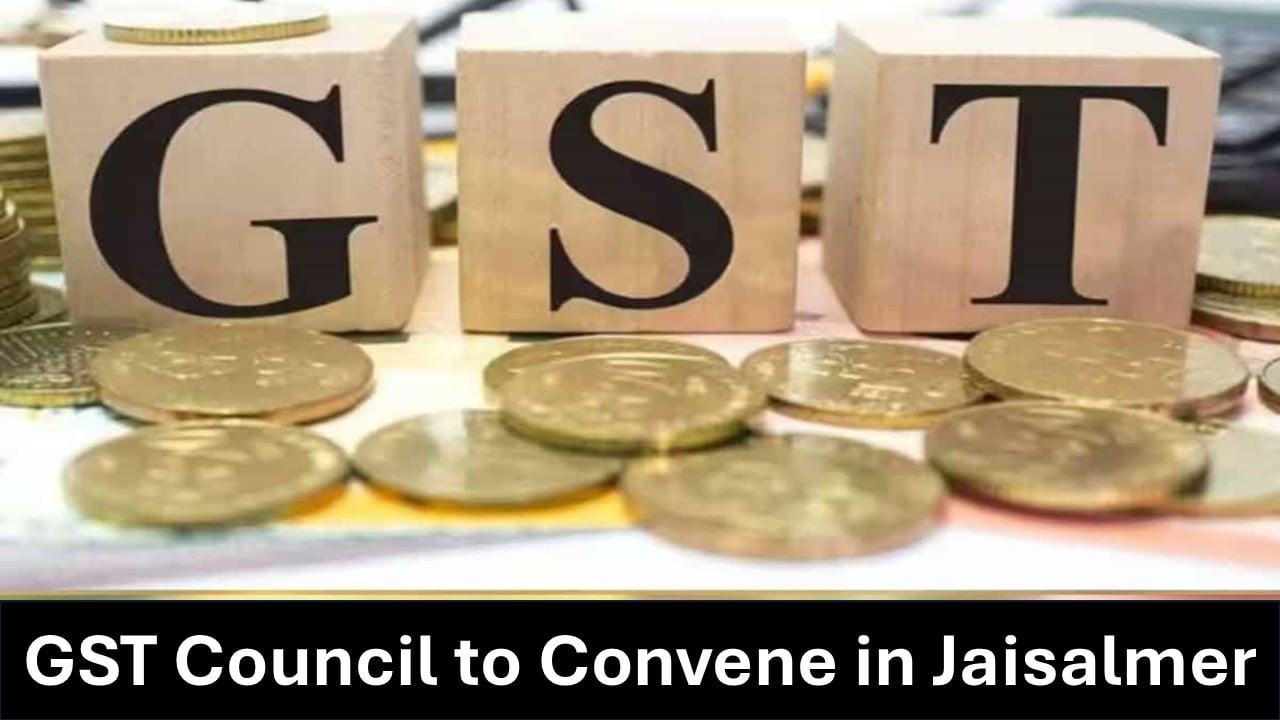
The Goods and Services Tax (GST) Council is set to hold its 55th meeting on December 21, 2024, in Jaisalmer, Rajasthan.
GST Council to Convene in Jaisalmer
 Anisha Kumari
 Nov 21, 2024
GST Council Meeting: GST Exemption on Insurance Levy Expected
The Goods and Services Tax (GST) Council is set to hold its 55th meeting on December 21, 2024, in Jaisalmer, Rajasthan. The council, led by the Union Finance Minister and comprising state finance ministers, is expected to discuss key matters, including potential exemptions or reduced GST rates for health and life insurance policies.
GST Exemption on Insurance Levy
One of the key issues on the agenda is the proposal to exempt GST on premiums for term life insurance policies and health insurance for senior citizens. Additionally, the council may consider exempting GST on premiums for health insurance policies with coverage up to Rs 5 lakh for individuals other than senior citizens. However, premiums for policies exceeding this coverage would continue to attract an 18% GST.
These recommendations were prepared by the Group of Ministers (GoM) on health and life insurance GST, which met last month to finalize its report. The council had earlier directed the GoM to submit its findings by the end of October.
GST rate rationalization measures
Beyond insurance, the council may also discuss rate rationalization measures suggested by another GoM. The recommendations include reducing the GST rate for various common items and luxury goods. Packaged drinking water in quantities of 20 liters and above could see a rate reduction from 18% to 5%. Similarly, bicycles priced under Rs 10,000 and exercise notebooks may also see their GST reduced from 12% to 5%.
Conversely, for luxury items, the GoM proposed hiking the GST rate on shoes priced above Rs 15,000 per pair and wristwatches costing over Rs 25,000 from the current 18% to 28%. These rate changes, if approved, are expected to yield a revenue gain of approximately Rs 22,000 crore.
The GST structure currently consists of four tax slabs: 5%, 12%, 18%, and 28%. Essential goods are generally taxed at the lowest rates, while luxury and demerit goods fall under the highest slab, often with an additional cess. However, with the average GST rate dropping below the revenue-neutral level of 15.3%, discussions on rationalizing GST rates have gained urgency.
These discussions and potential decisions highlight the council's ongoing efforts to balance revenue generation with the need to provide relief on essential and widely-used items, ensuring a more streamlined GST framework.
About Author


Anisha Kumari
Content Writer
Anisha is a finance content writer at StudyCafe, writing on domains like mutual funds, stock market trends, GST, income tax, and SIPs. With a knack for breaking down complex financial topics, Anisha delivers clear and insightful articles that keep readers informed and empowered. She can be reached at [email protected].
Anisha is a finance content writer at StudyCafe, writing on domains like mutual funds, stock market trends, GST, income tax, and SIPs. With a knack for breaking down complex financial topics, Anisha delivers clear and insightful articles that keep readers informed and empowered. She can be reached at [email protected].
 Studycafe
  Bokaro, Jharkhand, India
 321
321My Recent Articles
- AI Tools Catch Rs. 68 Lakh Capital Gains Tax Fraud in Hyderabad
- Bank of Baroda Chief Manager’s Suicide Raises Concerns Over Work Pressure
- CA in Trouble: ED Seizes Rs. 6.8 Cr Assets in ERDC Trust Fraud Case
- Gujarat Ambuja Exports Receives GST Demand Order of Rs. 33 Lakh
- GST AAR: Exchange of Silverscrap for finished ornaments Supply
Up Next
Loading suggestions…


Recent Posts
All Posts
Tags
No tags yet.
Recent Posts
All Posts
Tags
No tags yet.