Court: CA-Certified DCF Valuation Valid, Disclaimers Not a Basis for Rejection:
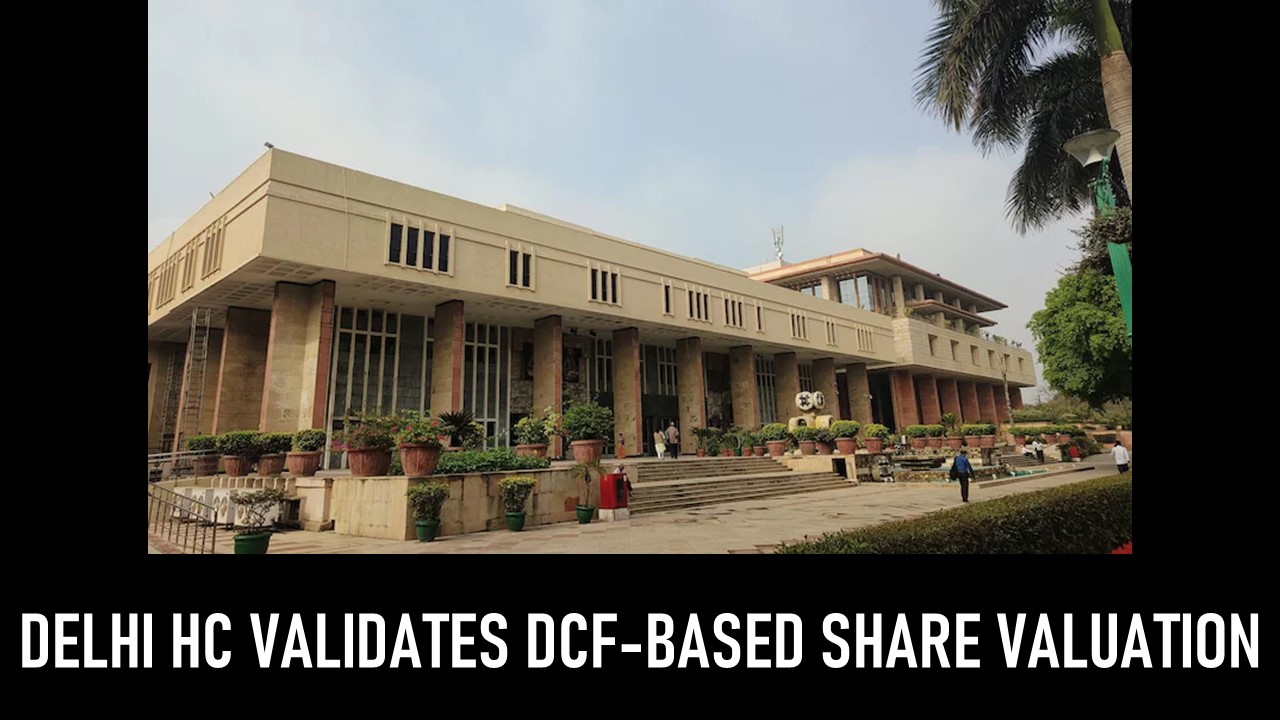
Court upholds ITAT’s acceptance of Chartered Accountant-certified DCF share valuation, dismisses Revenue's book value-based FMV approach.
Delhi HC Affirms DCF Valuation Method, Rejects 30.37 Cr Addition under Section 56(2)(viib)
 Meetu Kumari
 Jun 13, 2025
Court: CA-Certified DCF Valuation Valid, Disclaimers Not a Basis for Rejection
Based on a valuation report prepared by a Chartered Accountant using the Discounted Cash Flow (DCF) method, a software services company issued shares at a premium of Rs. 2,762 per share. The Assessing Officer rejected this valuation, citing disclaimers in the report and instead computed the fair market value (FMV) based on book value, leading to a tax addition of Rs. 30.37 crore under Section 56(2)(viib) of the Income Tax Act.
Aggrieved by the said addition, the appellant filed an appeal before the CIT(A). The CIT(A) affirmed this addition. The assessee further challenged the order passed by CIT (A) in an appeal to the ITAT, which granted the appeal, concluding that the AO had not shown any flaws in the DCF valuation's methodology or underlying assumptions. General disclaimers in valuation reports are common practice and cannot be the only reason for rejection, according to the ITAT. Challenging the decision of the ITAT, the revenue filed its appeal to the Delhi High Court.
Issues Raised Before Delhi HC: Whether the AO was justified in rejecting the DCF-based share valuation certified by a chartered accountant (only because of disclaimers) and using book value instead to calculate the Fair Market Value (FMV) as per Section 56(2)(viib) of the Income Tax Act.
Delhi HC's Decision: The Hon'ble Court reiterated the ITAT's reasoning and views, highlighting the validity of the DCF valuation as certified by a qualified expert in accordance with Rule 11UA. The valuation could not be ignored because the AO did not identify any particular flaws in the data or methodology. The Court reaffirmed that the burden of proof rests with the AO to refute or rebut FMV once it has been established by the assessee using a prescribed method.
The Court further held that there was no accusation of money laundering or tax evasion, the shares were issued on a rights basis, and the money was utilized to invest in a downstream company named SAFL. Therefore, there was no justification for the addition made under Section 56(2)(viib) of the Income Tax Act. Accordingly, the Revenue's appeal was denied by the High Court, which upheld the ITAT's ruling and confirmed the DCF-based share.
About Author


Meetu Kumari
Content Manager
Meetu Kumari is an Experienced Advocate and Content Writer with 4+ years of demonstrated history of working in the law practice industry. Skilled in Developing Content, Researching, and Drafting. Strong professional with a Bachelor of Science (B.Sc.) focused on Law from Gujarat National Law University.
Meetu Kumari is an Experienced Advocate and Content Writer with 4+ years of demonstrated history of working in the law practice industry. Skilled in Developing Content, Researching, and Drafting. Strong professional with a Bachelor of Science (B.Sc.) focused on Law from Gujarat National Law University.
 Studycafe
 Jodhpur, Rajasthan, India
 2264
2264My Recent Articles
- ITAT Condones 302-Day Delay, Restores Salary Assessment for Fresh VerificationPremium
- ITAT Condones Delay After Tax Consultant's Death, Restores Appeals for Fresh HearingPremium
- ITAT Remands Salary Addition, Says Taxability Depends on Salary Becoming Due, Not Mere ReceiptPremium
- ITAT Deletes TP Royalty Adjustment, Orders Fresh Review of Commission BenchmarkingPremium
- ITAT Quashes Reassessment Over Unsigned Section 148 Notice Issued to AssesseePremium
Up Next
Loading suggestions…


Recent Posts


All Posts


Recent Posts
All Posts