Delhi HC Confirms Validity of Reassessment Initiated Within Limitation:
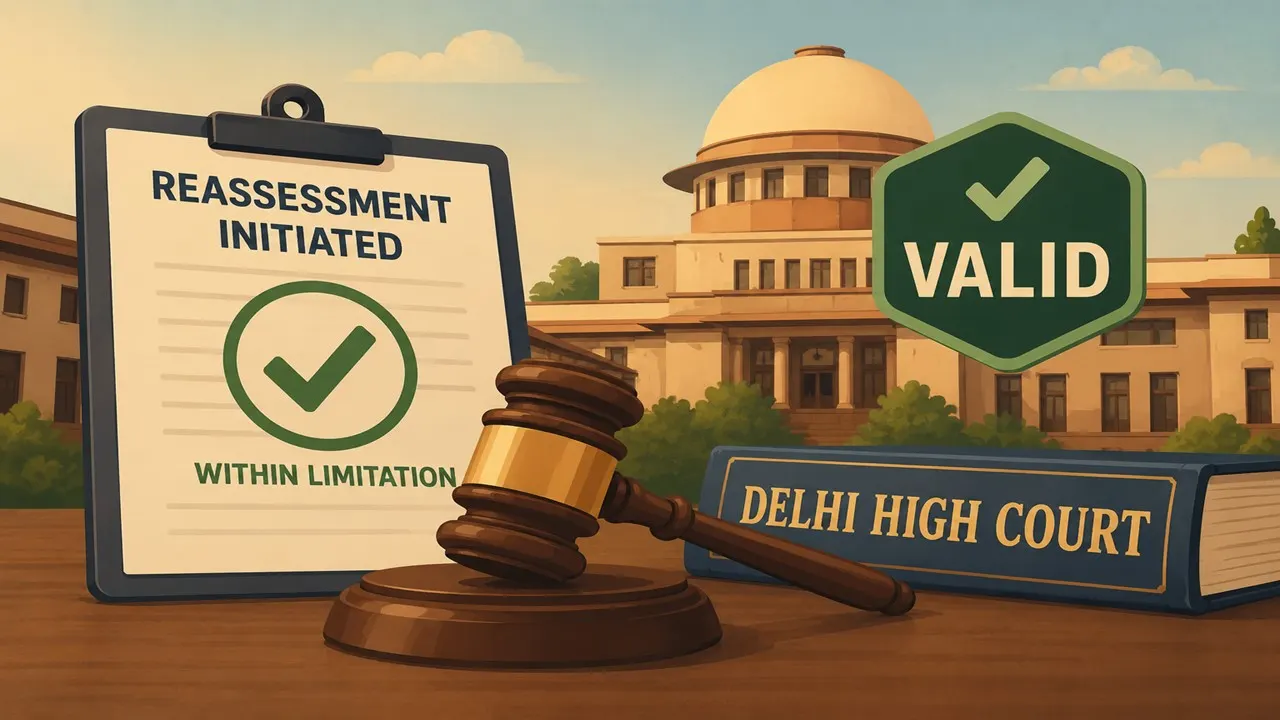
Delhi High Court upholds reassessment, holding limitation extended by statutory exclusion of reply period.
Time Granted For Reply Excluded While Computing Reassessment Limitation
 Meetu Kumari
 Jun 6, 2026
The Delhi High Court has held that reassessment proceedings initiated under Sections 148A(d) and 148 of the Income Tax Act, 1961 were within the prescribed limitation period, rejecting the taxpayer’s challenge that the proceedings had become time-barred. A Division Bench comprising Justice Dinesh Mehta and Justice Vinod Kumar dismissed the writ petition filed by Sunil Bhalla and upheld the reassessment action initiated by the Revenue.
The petitioner challenged the order passed under Section 148A(d) dated 16 April 2024 and the consequential notice issued under Section 148 on the same date. It was contended that the reassessment proceedings were barred by limitation as the notice under Section 148A(b) had been issued on 28 March 2024 and the time granted for filing a reply extended beyond 31 March 2024.

The assessee was initially granted time up to 8 April 2024 to respond to the notice under Section 148A(b). Instead of filing a reply, the petitioner sought adjournments on 5 April 2024 and again on 15 April 2024. The Assessing Officer declined the second adjournment request and proceeded to pass the order under Section 148A(d) and issue notice under Section 148 on 16 April 2024.
Before the Court, the dispute centred on the computation of limitation under the fifth and sixth provisos to Section 149 of the Act. The petitioner argued that the proceedings had become time-barred, whereas the Revenue maintained that the period available to the assessee for filing a reply was required to be excluded while computing limitation.
“A combined reading of fifth and sixth proviso to Section 149 suggests that the time between the date of notice under Section 148A(b) and the date on which the petitioner had filed reply is to be excluded.”

Relying on its judgment delivered on the same day in a connected matter, the High Court observed that where an assessee seeks adjournments and ultimately fails to file a reply, the last date on which the adjournment request is rejected can be treated as the deemed date of filing reply for the purpose of computing limitation.
The Court noted that the Assessing Officer rejected the adjournment request on 15 April 2024 and passed the order under Section 148A(d) and issued the notice under Section 148 on the very next day. It held that even after applying the statutory exclusion contemplated under the provisos to Section 149, the Revenue had sufficient time available to complete the proceedings.
“Since the order under Section 148A(d) and notice under Section 148 have admittedly been issued on 16.04.2024, the same are well within limitation.”
Holding that the reassessment proceedings were initiated within the statutory period, the High Court dismissed the writ petition and upheld the impugned order and notice.
To Read Full Judgment, Download PDF Given Below.
About Author


Meetu Kumari
Content Manager
 Studycafe
 Jodhpur, Rajasthan, India
 2264
2264My Recent Articles
- ITAT Condones 302-Day Delay, Restores Salary Assessment for Fresh VerificationPremium
- ITAT Condones Delay After Tax Consultant's Death, Restores Appeals for Fresh HearingPremium
- ITAT Remands Salary Addition, Says Taxability Depends on Salary Becoming Due, Not Mere ReceiptPremium
- ITAT Deletes TP Royalty Adjustment, Orders Fresh Review of Commission BenchmarkingPremium
- ITAT Quashes Reassessment Over Unsigned Section 148 Notice Issued to AssesseePremium
Loading suggestions…


Recent Posts



All Posts


Recent Posts
All Posts