Frequently Asked Questions on Income Tax Slabs:
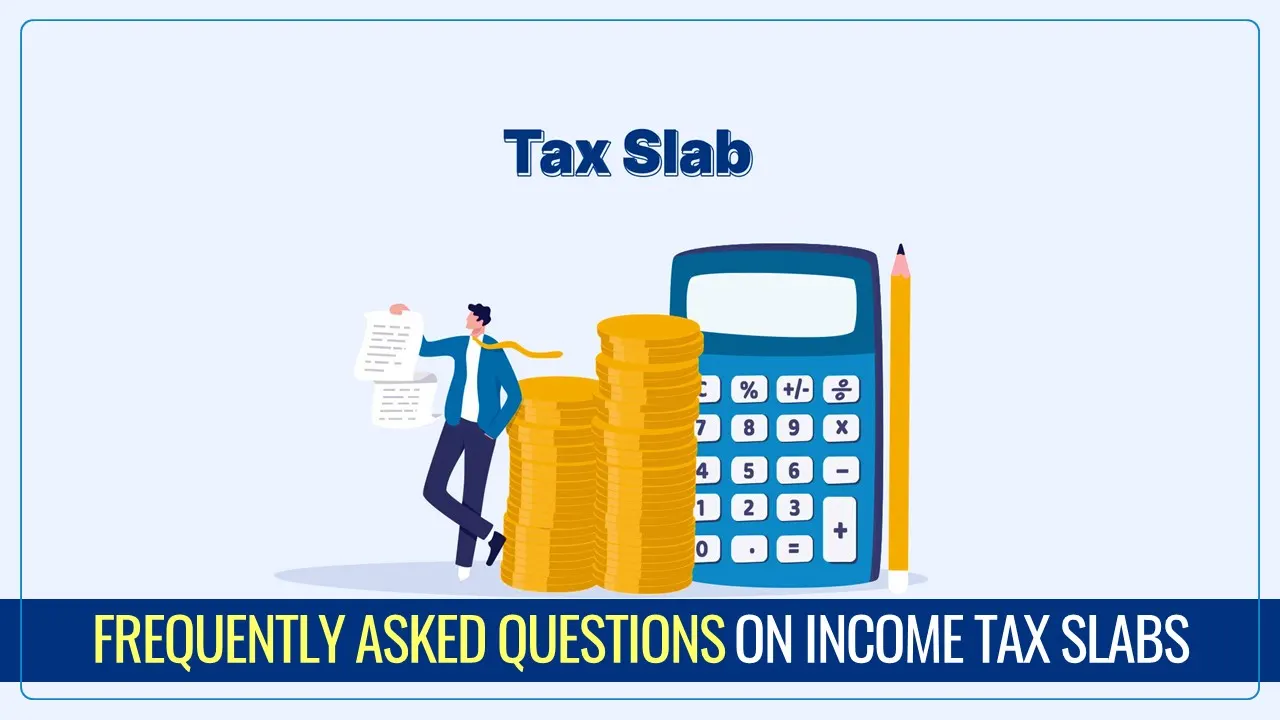
Income tax slabs determine your tax liability on your income for a financial year. The more you earn, the higher your tax rate might be.
Income Tax Slabs FAQs
 Nidhi
Nidhi Mar 12, 2025
Frequently Asked Questions on Income Tax Slabs
Income tax slabs determine your tax liability on your income for a financial year. The more you earn, the higher your tax rate might be. Understanding these slabs is necessary for effective tax planning and managing personal finances. However, understanding them can seem confusing for many taxpayers. Here are some of the frequently asked questions and their answers to clear your doubts.
Q1. Who is liable to pay Income Tax?
Ans: An individual is liable to pay income tax and file an ITR if his/her income exceeds the basic exemption limit. This basic exemption limit depends on the tax regime selected by the individual.
Q2. When is a Surcharge applicable to the Income Tax Amount?
Ans: A Surcharge is imposed on the taxable income amount if the total income of the individual is above the specified limits.
Q3. What is the Basic Exemption Limit under the Income Tax Act?
Ans: The basic exemption limit refers to the minimum income level at which an individual is not required to pay income tax. Under the old tax regime, this limit is 2.5 lakh for individuals below 60 years. For senior citizens, the basic exemption limit is Rs. 3 lakh, while for super senior citizens, the limit is Rs. 5 lakh. However, there is no age limit for the individuals under the new tax regime as the basic exemption limit is Rs. 3 lakh, regardless of age.
Q4. Who can avail of the Rebate under Section 87A of the Income Tax Act, 1961?
Ans: An individual is eligible for the rebate if the net taxable income remains below a specified limit during a financial year. Under the old tax regime, a rebate of up to Rs. 12,500 is allowed. For the new tax regime, the maximum rebate allowed is upto Rs. 25,000. This implies that individuals with a taxable income of ₹5 lakh or lower are not liable to pay any taxes under the old tax system. For those choosing the new tax system, individuals with a taxable income of ₹7 lakh or less are not liable to pay taxes.
Q5. Can a Hindu Undivided Family (HUF) select a New Income Tax Regime?
Ans: Yes, a HUF can go for the new income tax regime in a financial year.
Q6. Who are not eligible for the Rebate under Section 87A?
Ans: A HUF and NRI cannot avail of a rebate under Section 87A even if their taxable income remains below Rs. 5 lakh/Rs. 7 lakh. Therefore, they are liable to pay tax.
Q7. Is Pension Income taxable?
Ans: Yes, the pension recieved by an individual is subject to tax. Additionally, the family pension also attracts tax liability.
Q8. Which Incomes are not taxable under the Income-tax Act?
Ans: The following incomes are not taxable under the IT Act:
- The maturity amount from PPF.
- Interest earned from Sukanya Samriddhi Yojana Account.
- Agricultural income.
- Maturity amount from the Sukanya Samriddhi account.
- Interest earned from PPF account, etc.
About Author


Nidhi
Content Writer
Nidhi is a skilled content writer specializing in personal finance. She creates clear, engaging articles on mutual funds, investments, insurance, and wealth-building strategies. With a passion for simplifying complex financial topics, Nidhi helps readers make informed money decisions with confidence. She can be reached at [email protected]
Nidhi is a skilled content writer specializing in personal finance. She creates clear, engaging articles on mutual funds, investments, insurance, and wealth-building strategies. With a passion for simplifying complex financial topics, Nidhi helps readers make informed money decisions with confidence. She can be reached at [email protected]
 Studycafe
 New Delhi, Delhi, India
 1832
1832My Recent Articles
- Karnataka High Court Gives Another Chance in GST Matter Due to Lack of Hearing
- Delay Should Be Condoned if Explanation is Unrefuted: ITAT
- Non-Service of Income Tax Notice, Ill health of taxpayer, ITAT condones Appeal filing delay
- Books of Accounts Cannot be Rejected Without Any Specific Defect: ITAT Kolkata
- Karnataka High Court Sends ITC Matter Back to GST Authorities for Reconsideration
Up Next
Loading suggestions…


Recent Posts
All Posts
Tags
No tags yet.
Recent Posts
All Posts
Tags
No tags yet.