Gauhati HC Directs Tata Projects to Pursue GST Appellate Remedies; Extends Interim Protection:
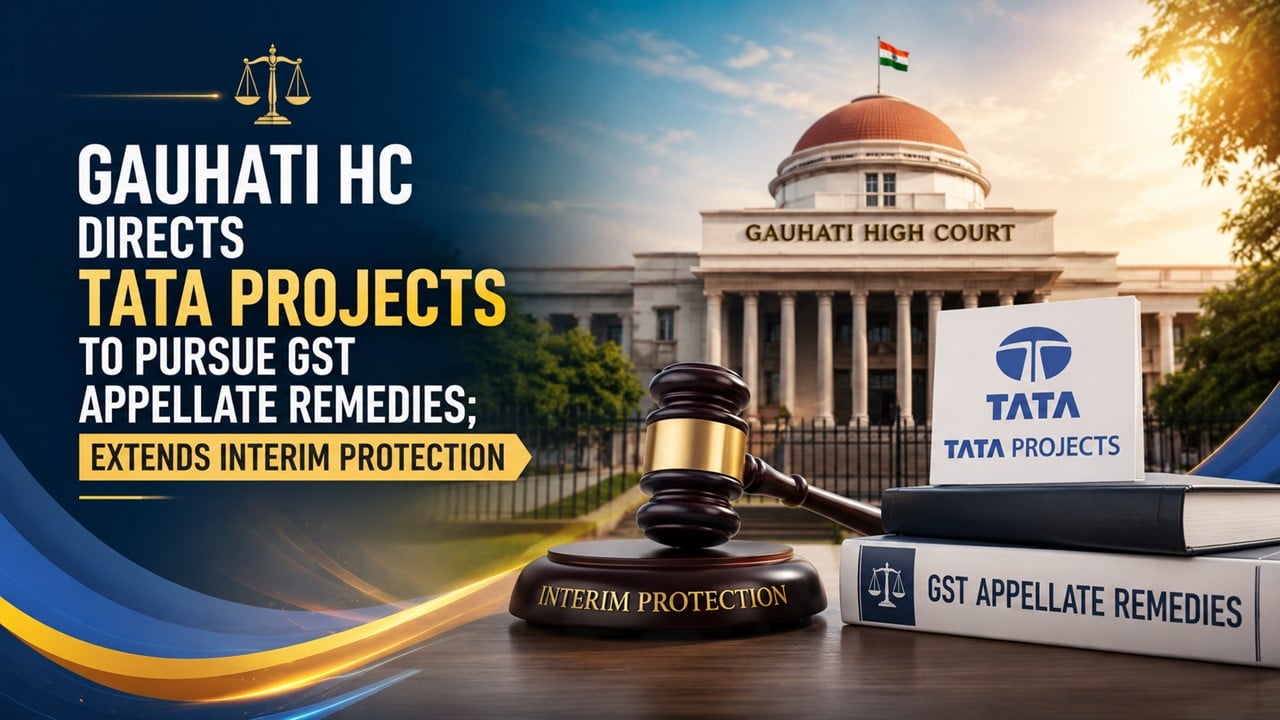
Gauhati High Court directs taxpayer to pursue GST appeals while continuing interim protection.
High Court Reiterates Need To Exhaust Statutory GST Remedies First
 Meetu Kumari
 Jun 11, 2026
M/s Tata Projects Limited, a major engineering and construction company registered under the GST regime, approached the Gauhati High Court through multiple writ petitions challenging assessment, audit and tax demand orders passed by GST authorities, including the Additional Commissioner (Audit), CGST Shillong, and the Joint Commissioner, CGST & Central Excise, Guwahati. The disputes arose from departmental audits and investigations relating to alleged GST compliance issues, resulting in adverse adjudication orders and tax demands against the company.
Instead of pursuing the statutory appellate mechanism available under the CGST and AGST Acts, Tata Projects invoked the High Court’s writ jurisdiction under Article 226 of the Constitution, seeking quashing of the assessment orders and consequential reliefs. The Revenue opposed the petitions, contending that the GST law provides a complete appellate framework and that the company should first avail the remedies prescribed under the statute.

The Gauhati High Court declined to examine the merits of the tax disputes and held that the writ jurisdiction is not the appropriate forum for adjudicating factual controversies involving tax assessments, financial records and compliance issues. The Court observed that the GST legislation constitutes a self-contained code providing adequate appellate remedies and, therefore, parties are ordinarily required to exhaust those remedies before invoking constitutional jurisdiction.

The Court further directed that if such appeals are filed within the prescribed period, they must be considered on their merits without raising objections regarding limitation. Similar relief was granted in the connected matter requiring a first appeal under Section 107 of the GST Act.
The High Court has clarified a crucial procedural aspect of GST litigation, ruling that tax authorities are fully empowered to issue a single, consolidated Show Cause Notice (SCN) or pass a unified order spanning multiple financial years under the Central Goods and Services Tax (CGST) Act, 2017. The Court held that there is no statutory restriction under the CGST Act preventing the issuance of a consolidated show cause notice covering multiple financial years. Interpreting Sections 73 and 74, the Court observed that these provisions do not confine proceedings to a single financial year and permit issuance of notices based on the existence of material facts. The reference to “financial year” under Sections 73(10) and 74(10) was held to be relevant only for the computation of limitation for passing adjudication orders. The Court ruled that there is absolutely no restriction preventing the proper officer from issuing a consolidated Show Cause Notice for different financial years together under Section 73(1) (for non-fraud cases) or Section 74(1) (for fraud or willful misstatement cases). Therefore, while limitation must be determined independently for each financial year, this does not bar the issuance of a combined show cause notice, provided the statutory timelines are complied with for each period. The Court further observed that such consolidation is procedural in nature. While declining to interfere with the impugned orders, the Court granted liberty to the petitioners to file appeals within 30 days, directed that such appeals be considered on merits without objection on limitation, and ordered continuation of interim protection against coercive recovery until the stay applications are decided.About Author


Meetu Kumari
Content Manager
 Studycafe
 Jodhpur, Rajasthan, India
 2264
2264My Recent Articles
- ITAT Condones 302-Day Delay, Restores Salary Assessment for Fresh VerificationPremium
- ITAT Condones Delay After Tax Consultant's Death, Restores Appeals for Fresh HearingPremium
- ITAT Remands Salary Addition, Says Taxability Depends on Salary Becoming Due, Not Mere ReceiptPremium
- ITAT Deletes TP Royalty Adjustment, Orders Fresh Review of Commission BenchmarkingPremium
- ITAT Quashes Reassessment Over Unsigned Section 148 Notice Issued to AssesseePremium
Loading suggestions…


Recent Posts


All Posts


Recent Posts
All Posts