HC Quashes Service Tax Demand; Extended Limitation Needs Proof of Suppression:
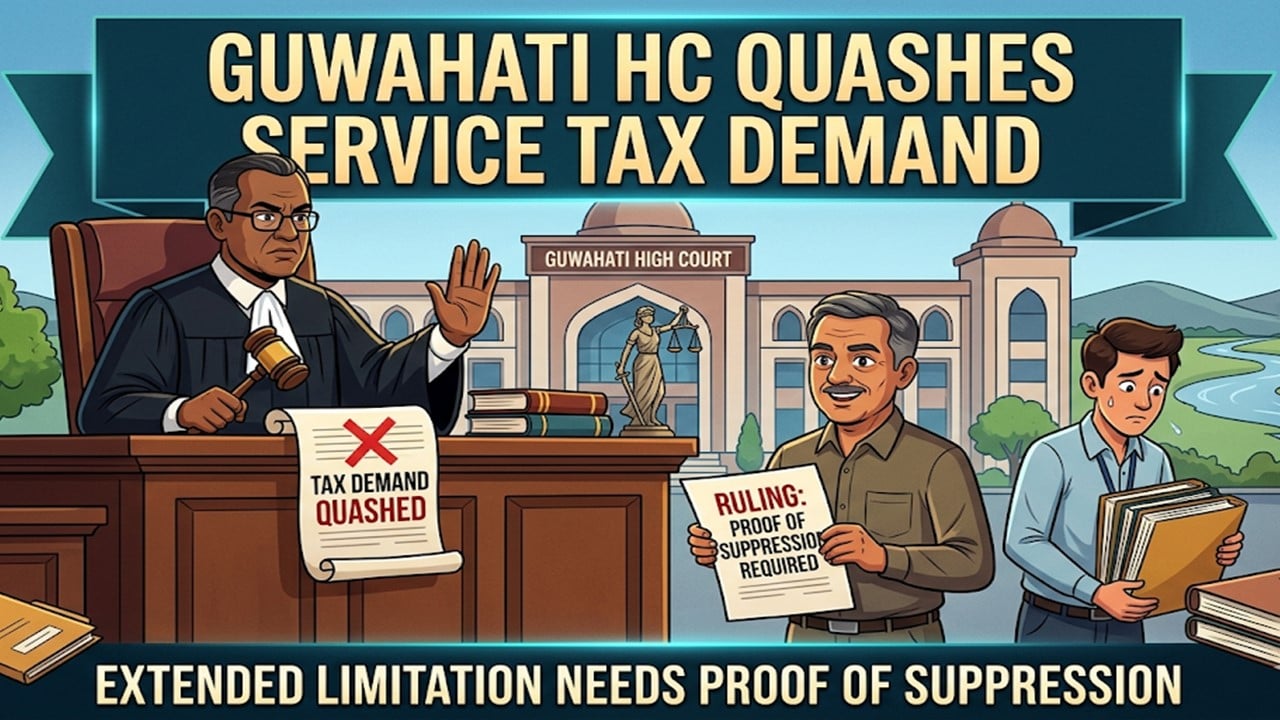
The court holds the extended limitation invalid without evidence of intent to evade tax.
No Suppression Proved; Extended Limitation Period Held Wrongly Invoked
 Meetu Kumari
 Apr 25, 2026
HC Quashes Service Tax Demand; Extended Limitation Needs Proof of Suppression
The petitioner, M/s Frontier Construction Company, a partnership firm engaged in construction activities, was served with a show-cause notice (SCN) in October 2011 for the period of 2006-2011. The GST/Service Tax Department alleged that the firm had under-declared its taxable turnover and failed to pay service tax. Crucially, the Department invoked the "extended period of limitation" under the proviso to Section 73(1) of the Finance Act, 1994, which allows demands for up to five years in cases of fraud or suppression. The petitioner argued that there was no intent to evade tax and that all figures were reflected in their audited balance sheets, making the extended limitation inapplicable. After losing at the Original and Appellate levels, the firm moved the High Court.
Central Issue: Whether the Service Tax Department was justified in invoking the extended five-year limitation period without providing specific evidence of "willful suppression" or "fraudulent intent" by the taxpayer.
HC's Ruling: The Gauhati High Court allowed the writ petition and quashed the tax demand, interest, and penalties. The Court held that the mere non-payment of tax or non-filing of returns does not automatically qualify as "suppression of facts." For the Department to invoke the extended period, there must be a positive act of concealment with the specific intent to evade tax. Since the petitioner's financial data was available in their books of accounts and audited records, the Court found no evidence of fraud. Consequently, the SCN issued beyond the normal limitation period was held to be without jurisdiction. The Court emphasised that while an alternative remedy (Tribunal) was available, it could interfere under Article 226 because the Department had fundamentally misapplied the law on limitation.
To Read Full Judgment, Download PDF Given Below
About Author


Meetu Kumari
Content Manager
Meetu Kumari is an Experienced Advocate and Content Writer with 4+ years of demonstrated history of working in the law practice industry. Skilled in Developing Content, Researching, and Drafting. Strong professional with a Bachelor of Science (B.Sc.) focused on Law from Gujarat National Law University.
Meetu Kumari is an Experienced Advocate and Content Writer with 4+ years of demonstrated history of working in the law practice industry. Skilled in Developing Content, Researching, and Drafting. Strong professional with a Bachelor of Science (B.Sc.) focused on Law from Gujarat National Law University.
 Studycafe
 Jodhpur, Rajasthan, India
 2264
2264My Recent Articles
- ITAT Condones 302-Day Delay, Restores Salary Assessment for Fresh VerificationPremium
- ITAT Condones Delay After Tax Consultant's Death, Restores Appeals for Fresh HearingPremium
- ITAT Remands Salary Addition, Says Taxability Depends on Salary Becoming Due, Not Mere ReceiptPremium
- ITAT Deletes TP Royalty Adjustment, Orders Fresh Review of Commission BenchmarkingPremium
- ITAT Quashes Reassessment Over Unsigned Section 148 Notice Issued to AssesseePremium
Up Next
Loading suggestions…


Recent Posts

All Posts


Recent Posts
All Posts