High Court Issues Guidelines for Denial of GST Input Tax Credit Due to Supplier’s Tax Default:
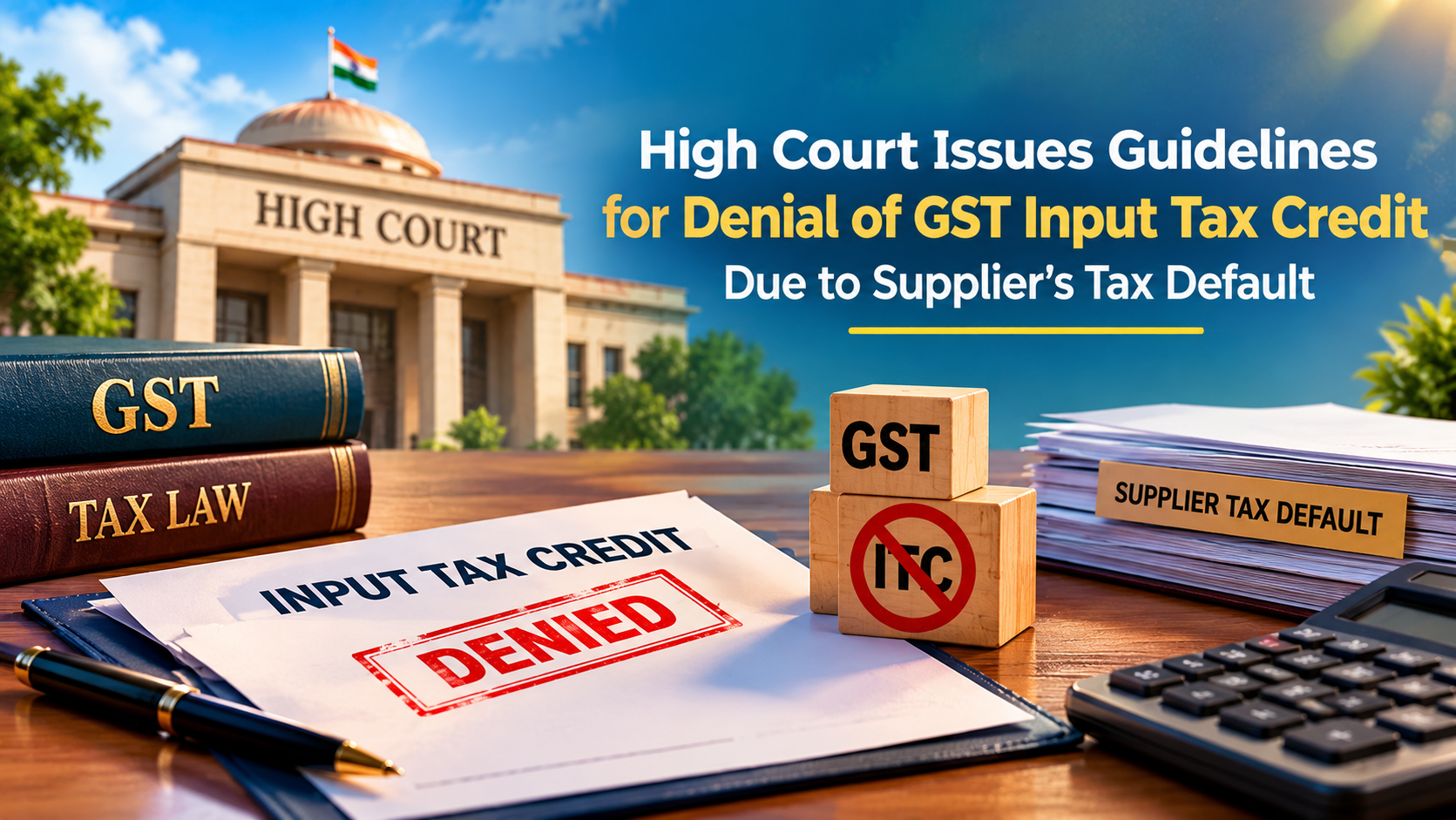
The High Court directs GST Authorities to examine genuine purchases before reversing ITC for Non-Payment of tax by suppliers.
High Court Prescribes Standards
 Saima
Saima Oct 13, 2026
The batch of writ petitions arose from disputes concerning the denial or reversal of Input Tax Credit claimed by purchasing dealers under the GST regime, primarily on the ground that the corresponding suppliers had failed to discharge their tax liabilities. In several cases, the Department relied on the subsequent or retrospective cancellation of the suppliers’ GST registrations while initiating proceedings against the purchasing dealers.
The petitioners questioned the manner in which Section 16(2)(c) of the CGST Act, 2017 was being applied, particularly where the purchases were claimed to be genuine and the buyers had complied with the other statutory conditions for availing ITC. The dispute also involved the interaction between Sections 16(2)(c), 41, 73, 74, 76 and 155 of the Act and the relevant provisions of the CGST Rules, including Rule 37A.

The High Court held that Section 16(2)(c) of the CGST Act cannot be applied as a standalone provision to mechanically impose liability upon a purchasing dealer whenever the supplier fails to deposit the tax. The provision must be interpreted harmoniously with the broader statutory framework governing ITC, including Sections 16(2)(aa) and 16(2)(ba), 41, 73, 74, 75(12), 76, 79 and 155, along with Rules 36, 37A and 88C of the CGST Rules, wherever applicable.
The Court observed that the mere failure of the supplier to discharge its tax liability cannot, by itself, justify the mechanical reversal of ITC where the purchaser produces relevant evidence, including tax invoices and material demonstrating the actual movement or receipt of goods or services. At the same time, the Court clarified that purchasing dealers cannot claim protection where the transactions involve fraud, collusion, bogus billing, a non-existent supplier, non-receipt of goods or services, or other circumstances establishing that the ITC is inadmissible.

The High Court laid down guidelines for the proper officers of the Central Government, the States of Punjab and Haryana, and the Union Territory of Chandigarh while invoking Section 16(2)(c) of the CGST Act. The principal safeguards include:
Examination of the transaction: The authority must examine the genuineness of the purchase and the evidence concerning invoices, movement or receipt of goods or services, payments and other relevant circumstances before determining ITC eligibility.
Disclosure of material: Where the show cause notice does not disclose the relevant particulars or material contemplated by the guidelines, the proper officer must supply them to the noticee.
Opportunity of hearing: A personal hearing must be afforded in accordance with Section 75(4) of the CGST Act. Requests for cross-examination of third parties whose statements are relied upon must be considered through a reasoned decision.
Reasoned adjudication: Orders must comply with Section 75(6), address the taxpayer’s reply and supporting documents, and record specific findings on each disputed condition under Section 16(2). Where Section 74 is invoked, the authority must specifically record findings regarding fraud, wilful misstatement or suppression of facts attributable to the noticee.
Correct statutory period: The officer must apply the law as it stood during the relevant tax period and must not retrospectively apply conditions or mechanisms introduced by subsequent amendments.
Cancellation of registration: A purchasing dealer’s registration cannot be cancelled merely because ITC was claimed on purchases from a supplier whose registration was subsequently cancelled. There must be an independent finding of a statutory ground under Section 29(2), together with compliance with the prescribed procedure.
The High Court disposed of the connected writ petitions by directing the GST authorities to reconsider the matters in accordance with the guidelines laid down in the judgment.
About Author


Saima
Content Writer
 StudyCafe
 Delhi, Delhi, India
 538
538My Recent Articles
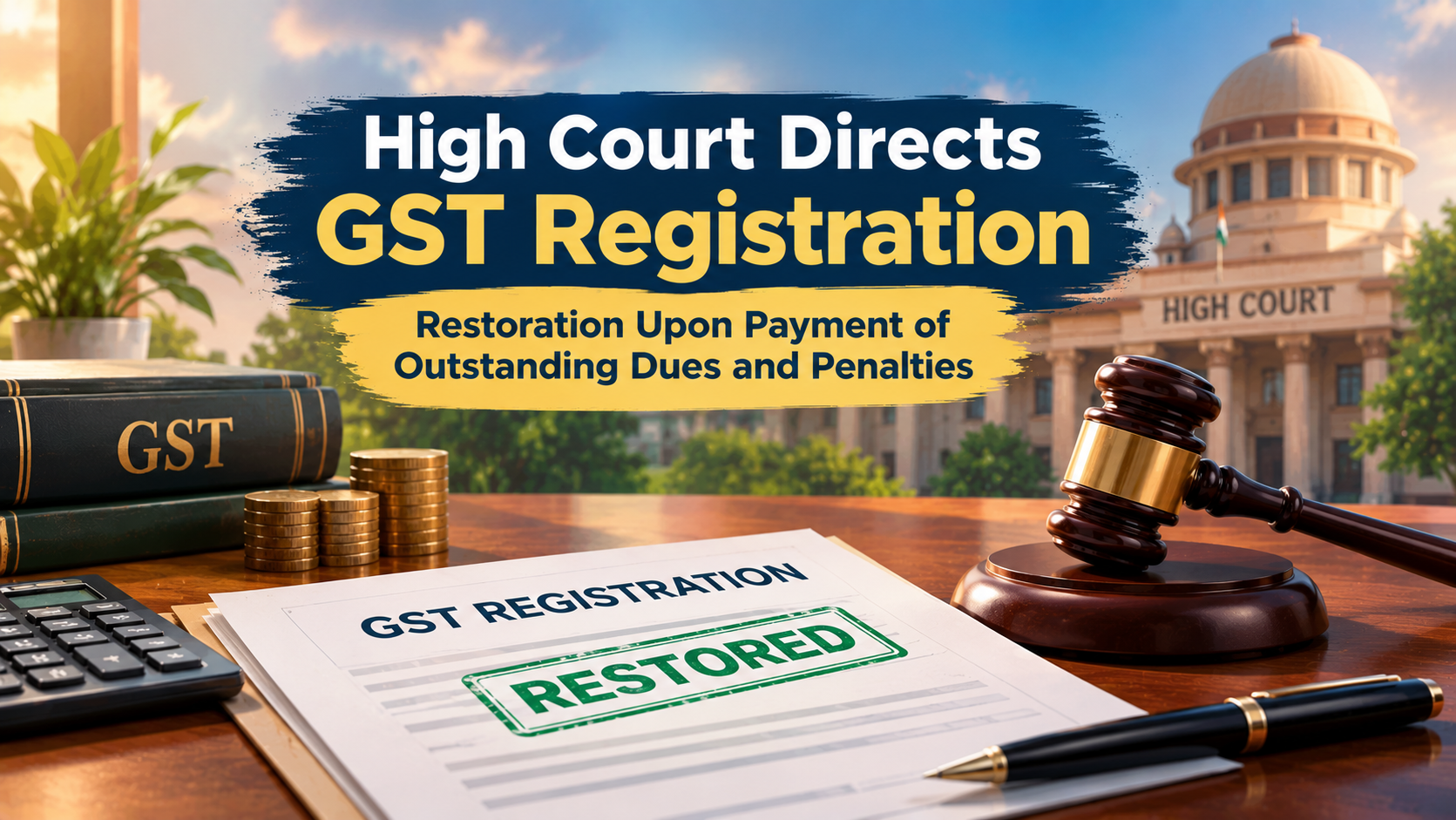
- High Court Directs GST Registration Restoration Upon Payment of Outstanding Dues and Penalties
- ITAT Quashes Section 201Order for Non-Compliance with Mandatory DIN Requirement
- ITAT Deletes Section 270A Penalty of Rs. 1.24 Lakh
- Supreme Court Holds GRD Powder and GRD Mix Not Taxable as Non-Alcoholic Beverages
- ITAT Remands Appeal Over Incorrect Email Service
Loading suggestions…


Recent Posts
All Posts
Recent Posts
All Posts