ITAT Condones 2157-Days Delay, Criticises CIT(A) For Not Hearing Case on Merits and Dismissing Appeal Ex-parte:
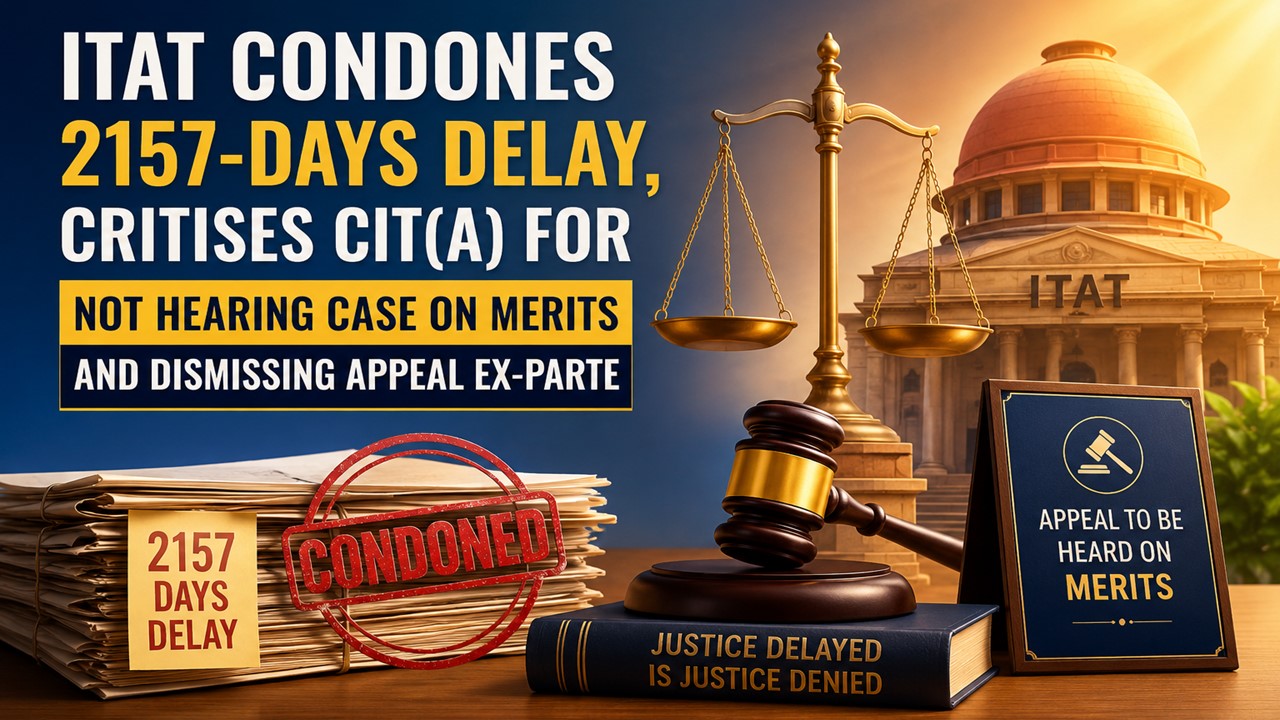
The ITAT condones the delay of 2157 days and remands the case back to the CIT(A), criticising them for dismissing the appeal ex-parte merely for being time-barred.
ITAT Notes Delay Was Due To Email Oversight and Non-Serving of Assessment Order Physically
 Saloni Kumari
 Jun 1, 2026
Premium
ITAT Condones 2157-Days Delay, Criticises CIT(A) For Not Hearing Case on Merits and Dismissing Appeal Ex-parte
The ITAT condones the delay of 2157 days and remands the case back to the CIT(A), criticising them for dismissing the appeal ex-parte merely for being time-barred.
Also Read
ITAT Condones 216-Day Delay in Income Tax Appeal, Remands Case to CIT(A) for Fresh Hearing on MeritsITAT Gives Taxpayer Another Chance, Orders Fresh Assessment After Condoning DelayITAT Sets Aside Rejection of Charitable Trust’s Section 12AB Registration Application, Remands Case to CIT(E) for Fresh ConsiderationITAT Remands Section 80G Approval Application to CIT (Exemptions) for Fresh Consideration in Light of CBDT Circular on Delay Condonation
About Author


Saloni Kumari
Content Writer
Saloni is a Content Writer with 2+ years of experience at studycafe.in. She writes legal, taxation, and finance related content including GST, Income Tax etc. Skilled in translating complex judicial pronouncements and regulatory developments into clear, and reader-friendly articles. Experienced in covering judgements of ITAT, High Court, GSTAT, and news related to Income Tax, GST, and corporate law. She can be reached at [email protected].
Saloni is a Content Writer with 2+ years of experience at studycafe.in. She writes legal, taxation, and finance related content including GST, Income Tax etc. Skilled in translating complex judicial pronouncements and regulatory developments into clear, and reader-friendly articles. Experienced in covering judgements of ITAT, High Court, GSTAT, and news related to Income Tax, GST, and corporate law. She can be reached at [email protected].
 StudyCafe
 Delhi, Delhi, India
 2889
2889My Recent Articles
- ITAT Sets Aside Rejection of Charitable Trust’s Section 12AB Registration Application, Remands Case to CIT(E) for Fresh Consideration
- Can Same-Sex Partners Claim Tax Exemption on Gifts as Spouses? Karnataka High Court to Examine
- ITAT Remits Section 80G Renewal Application to CIT(E) for Fresh Consideration in Light of CBDT Circular
- Dreamfolks Services Faces Rs 1.58 Crore IGST Demand Over ITC Availment on Invoices Issued by GST-Cancelled Supplier
- ITAT Restores Taxpayer's Appeal In Interest of Natural Justice After CIT(A)'s Failure to Decide Appeal on Merits
Up Next
Loading suggestions…


Recent Posts
All Posts

Recent Posts
All Posts