ITAT Delhi Cancels Multiple Reassessments Based on Alleged Unaccounted Sales Alone:
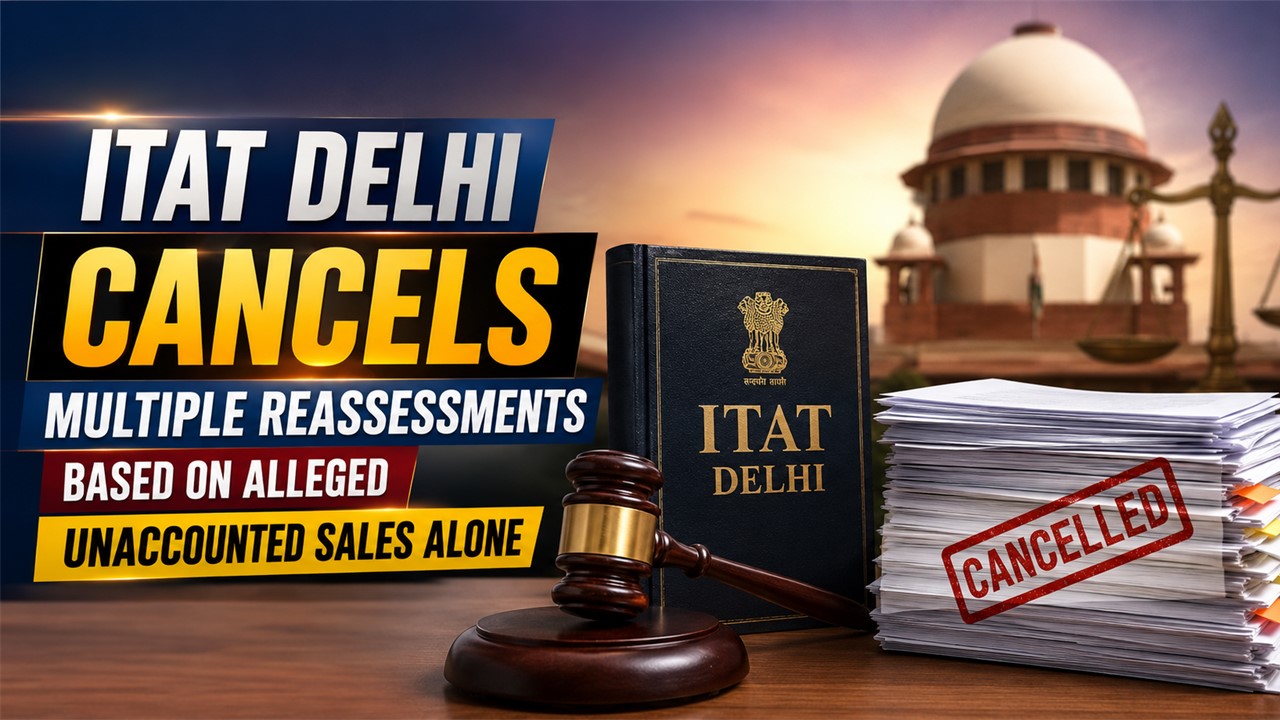
ITAT Delhi quashes reassessment where alleged escaped income lacked connection with undisclosed assets discovered.
ITAT Holds Extended Reassessment Requires Escaped Income Represented In Undisclosed Asset Form
 Meetu Kumari
 May 28, 2026
The Delhi Bench of the Income Tax Appellate Tribunal in the case of Mirha Exports Pvt. Ltd. vs DCIT quashed multiple reassessment proceedings initiated under Sections 147/148 of the Income Tax Act for various assessment years on the ground that the conditions prescribed under Section 149 were not satisfied.
The assessee challenged reassessment proceedings initiated after a search conducted on 21.01.2023. The Revenue had issued notices under Section 148 for Assessment Years 2013-14 to 2020-21, alleging escaped income arising from unaccounted sales and estimated expenses.

For AY 2013-14, the Tribunal observed that the notice issued on 29.03.2023 travelled beyond the permissible ten-year limitation period prescribed under Section 149(1)(b). Relying on the decisions of the Delhi High Court in PCIT v. Ojjus Medicare Pvt. Ltd. and Filatex India Ltd. v. DCIT, the Tribunal held that reassessment proceedings for AY 2013-14 were barred by limitation and therefore invalid.
With respect to AYs 2014-15 to 2017-18, the Tribunal noted that these years fell beyond six years from the date of issuance of notice under Section 148. It held that such years could be reopened only where escaped income was represented in the form of an “asset” as contemplated under Section 153A read with Section 149. Since the additions were based merely on alleged unaccounted sales and estimated expenses, and no cash or assets were found during the search, the statutory condition was not fulfilled. The Tribunal relied upon the judgements in Dinesh Jindal v. ACIT and Smart Chip Pvt. Ltd. v. ACIT to quash the reassessment proceedings.

Similarly, for AYs 2018-19 to 2020-21, the Tribunal held that notices issued after the expiry of three years could survive only if the escaped income was represented in the form of an asset, expenditure, or entries in books amounting to Rs.50 lakh or more under Section 149(1)(b). Since the additions pertained only to unaccounted sales and estimated disallowances, the Tribunal held that the jurisdictional conditions were absent. Accordingly, the notices under Section 148 and consequential reassessment orders were quashed.
For AY 2021-22, the Tribunal partly accepted the assessee’s challenge to the estimation of profit. While the CIT(A) had applied a GP rate of 16.50% on alleged unaccounted sales, the Tribunal observed that evidence of unaccounted purchases and indirect expenses was also found during the search. Considering the facts, the Tribunal reduced the GP estimation to 10%.
In relation to AY 2022-23, the Tribunal held that once search proceedings had been conducted on 21.01.2023, the Assessing Officer ought to have followed the reassessment mechanism prescribed under Sections 148 and 148B. Since the assessment was instead framed under Section 143(3), the Tribunal held the entire assessment to be without jurisdiction and bad in law.
For AY 2023-24, the Tribunal deleted the addition made towards the alleged cessation of liability under Section 41(1). It was observed that the liabilities continued to be reflected in the books of account and had neither been written back nor claimed as a deduction earlier. Therefore, there was no cessation of liability warranting addition under Section 41(1).
Thus, all revenue appeals were dismissed, most assessee appeals were allowed, and one appeal was partly allowed.
To read the full order, download the PDF given below.
About Author


Meetu Kumari
Content Manager
 Studycafe
 Jodhpur, Rajasthan, India
 2264
2264My Recent Articles
- ITAT Condones 302-Day Delay, Restores Salary Assessment for Fresh VerificationPremium
- ITAT Condones Delay After Tax Consultant's Death, Restores Appeals for Fresh HearingPremium
- ITAT Remands Salary Addition, Says Taxability Depends on Salary Becoming Due, Not Mere ReceiptPremium
- ITAT Deletes TP Royalty Adjustment, Orders Fresh Review of Commission BenchmarkingPremium
- ITAT Quashes Reassessment Over Unsigned Section 148 Notice Issued to AssesseePremium
Loading suggestions…


Recent Posts

All Posts

Recent Posts
All Posts