ITAT Grants Concessional 10% Tax Rate on Technical Service Fees:
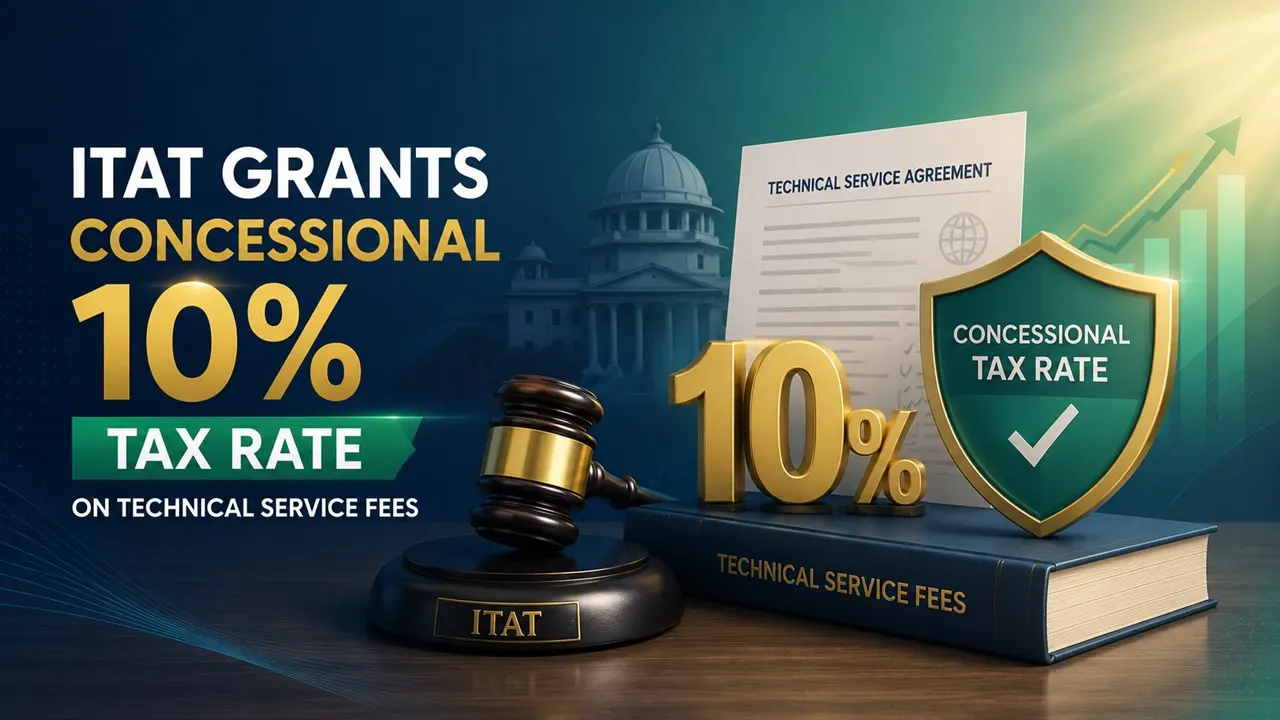
ITAT holds RBI automatic route compliance sufficient for claiming 10% FTS tax rate.
Absence Of Approval Letter Cannot Defeat Statutory Tax Benefit
 Meetu Kumari
 Jun 23, 2026
The Mumbai Bench of the Income Tax Appellate Tribunal (ITAT) has held that Gemological Institute International, Inc. (GIA), a US tax resident, was entitled to the concessional tax rate of 10% under Section 115A of the Income Tax Act on Fees for Technical Services (FTS) received from India, instead of the 15% rate prescribed under the India–USA Double Taxation Avoidance Agreement (DTAA).
The dispute related to Assessment Year 2016-17. GIA had offered its training and technical service fees to tax at 10% under Section 115A, claiming that the domestic law was more beneficial than the 15% rate available under Article 12 of the India–USA DTAA. The Assessing Officer, however, taxed the receipts at 15%, holding that the conditions prescribed under Section 115A were not fulfilled because the agreement with the Indian entity did not have specific approval from the Central Government.

During the proceedings, GIA argued that the payments were made under an agreement with its Indian affiliate and that no separate government approval was required because the remittances were covered under the Reserve Bank of India’s automatic route. It pointed out that the technical fees received during the year amounted to only about USD 62,562, far below the USD 1 million threshold beyond which prior approval would have been necessary under RBI regulations.
The Tribunal noted that in an earlier round of litigation it had already held that the receipts constituted Fees for Technical Services and that the amended 10% rate under Section 115A applied from Assessment Year 2016-17 onwards. The only surviving issue was whether the statutory conditions for availing the concessional rate stood satisfied.

Examining the RBI Master Directions and FEMA framework, the Tribunal observed that prior approval was required only for specified transactions exceeding prescribed limits. Since the assessee’s receipts were substantially below the threshold and the remittance was permissible under the automatic route, the Tribunal held that the assessee could not be expected to obtain an approval that was not contemplated under the governing regulations.
The Bench further observed that where the regulatory framework itself permits a transaction under the automatic route, such permission reflects approval of the transaction mechanism by the competent authorities. Therefore, insisting upon a separate approval letter from the Central Government would amount to reading an additional condition into Section 115A that does not practically exist in such cases.
The Tribunal also noted that the Revenue had not disputed the genuineness of the agreement, the nature of services rendered, or the fact that similar receipts had been taxed at 10% under Section 115A in earlier years. It therefore held that the assessee had substantially complied with the requirements of Section 115A(1)(b).
Relying on Section 90(2) of the Act, which allows a taxpayer to choose the more beneficial provision between domestic law and a tax treaty, the Tribunal concluded that GIA was entitled to the lower tax rate of 10% under Section 115A rather than the 15% treaty rate.
However, the Tribunal rejected the assessee’s challenge against the levy of education cess, holding that the issue was covered against the assessee.
Thus, the appeal was partly allowed and the Assessing Officer was directed to tax the Fees for Technical Services at 10% under Section 115A.
To Read Full Order, Download PDF Given Below
About Author


Meetu Kumari
Content Manager
 Studycafe
 Jodhpur, Rajasthan, India
 2264
2264My Recent Articles
- ITAT Condones 302-Day Delay, Restores Salary Assessment for Fresh VerificationPremium
- ITAT Condones Delay After Tax Consultant's Death, Restores Appeals for Fresh HearingPremium
- ITAT Remands Salary Addition, Says Taxability Depends on Salary Becoming Due, Not Mere ReceiptPremium
- ITAT Deletes TP Royalty Adjustment, Orders Fresh Review of Commission BenchmarkingPremium
- ITAT Quashes Reassessment Over Unsigned Section 148 Notice Issued to AssesseePremium
Loading suggestions…


Recent Posts


All Posts

Recent Posts
All Posts