ITAT Mumbai Deletes Commission Disallowance of Rs 23.69 Lakh After Finding Adequate Evidence of Genuine Payments:
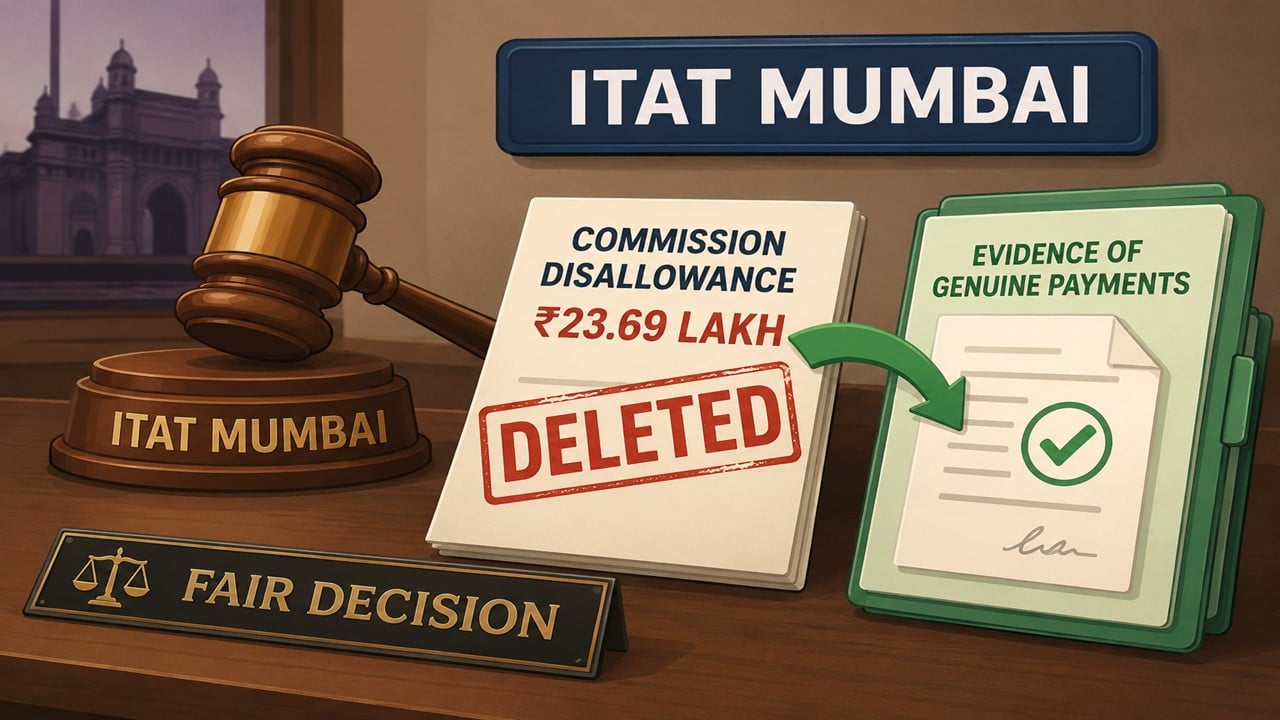
Customer denial alone insufficient to reject commission expenditure backed by documentary records.
Tribunal Accepts Appointment Letters, Confirmations and PAN Details As Evidence
 Meetu Kumari
 May 31, 2026
Premium
ITAT Mumbai Deletes Commission Disallowance of Rs 23.69 Lakh After Finding Adequate Evidence of Genuine Payments
Customer denial alone insufficient to reject commission expenditure backed by documentary records.
Also Read
ITAT Condones 216-Day Delay in Income Tax Appeal, Remands Case to CIT(A) for Fresh Hearing on MeritsITAT Gives Taxpayer Another Chance, Orders Fresh Assessment After Condoning DelayITAT Sets Aside Rejection of Charitable Trust’s Section 12AB Registration Application, Remands Case to CIT(E) for Fresh ConsiderationITAT Remands Section 80G Approval Application to CIT (Exemptions) for Fresh Consideration in Light of CBDT Circular on Delay Condonation
About Author


Meetu Kumari
Content Manager
Meetu Kumari is an Experienced Advocate and Content Writer with 4+ years of demonstrated history of working in the law practice industry. Skilled in Developing Content, Researching, and Drafting. Strong professional with a Bachelor of Science (B.Sc.) focused on Law from Gujarat National Law University.
Meetu Kumari is an Experienced Advocate and Content Writer with 4+ years of demonstrated history of working in the law practice industry. Skilled in Developing Content, Researching, and Drafting. Strong professional with a Bachelor of Science (B.Sc.) focused on Law from Gujarat National Law University.
 Studycafe
 Jodhpur, Rajasthan, India
 2264
2264My Recent Articles
- ITAT Condones 302-Day Delay, Restores Salary Assessment for Fresh VerificationPremium
- ITAT Condones Delay After Tax Consultant's Death, Restores Appeals for Fresh HearingPremium
- ITAT Remands Salary Addition, Says Taxability Depends on Salary Becoming Due, Not Mere ReceiptPremium
- ITAT Deletes TP Royalty Adjustment, Orders Fresh Review of Commission BenchmarkingPremium
- ITAT Quashes Reassessment Over Unsigned Section 148 Notice Issued to AssesseePremium
Up Next
Loading suggestions…


Recent Posts
All Posts

Recent Posts
All Posts