ITAT Upholds CIT(A) Decision Allowing Bad Debt Deduction Under Section 36(1)(vii) for Non-Rural Branches:
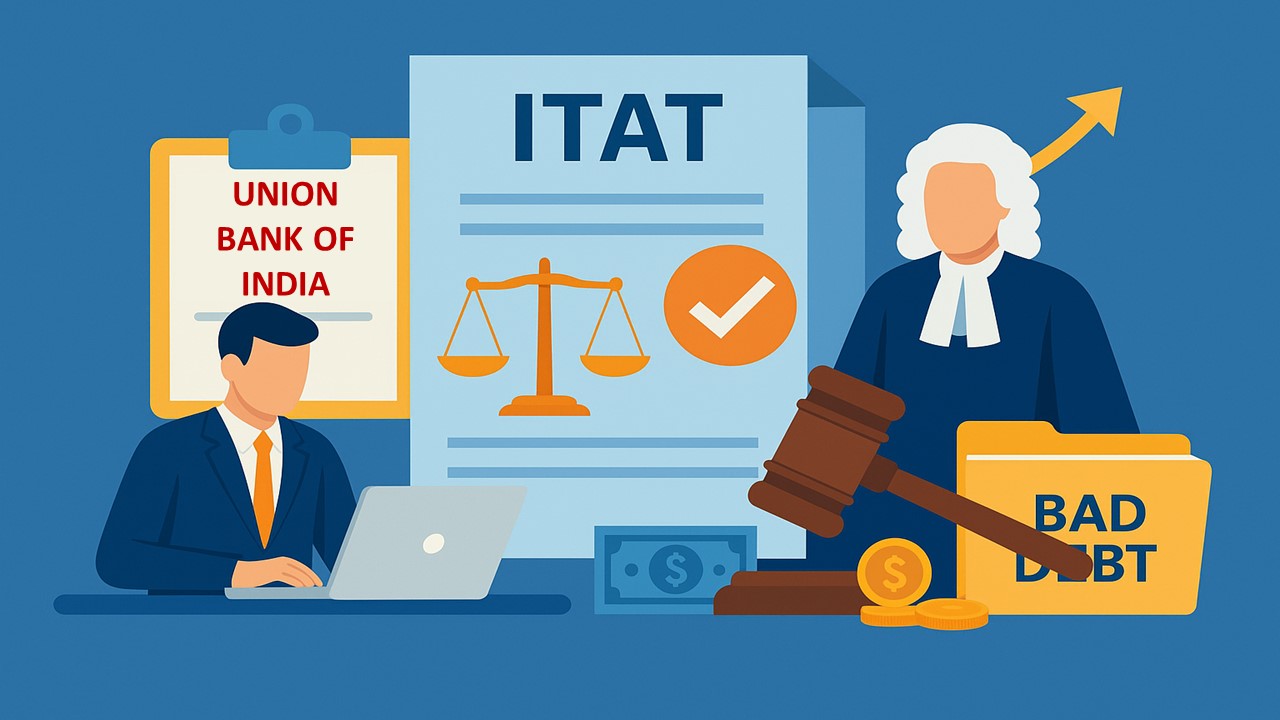
The ITAT agreed with the CIT(A), ruling that the High Court in the case of Karnataka Bank [2009] 316 ITR 345, already stated that the non-rural debts are not required to be adjusted against such provisions.
ITAT Allows Bad Debt Deduction Under Section 36(1)(vii)
 Nidhi
Nidhi Nov 6, 2025
ITAT Upholds CIT(A) Decision Allowing Bad Debt Deduction Under Section 36(1)(vii) for Non-Rural Branches
The assessee, Union Bank of India, filed its income tax return (ITR) on 25.10.2007 and claimed a deduction of Rs 129,35,38,845 under section 36(1)(vii) for bad debts written off by non-rural branches. However, the claim was withdrawn during the assessment because the AO believed that the bad debts written off to non-rural branches should be adjusted against the provisions.
The assessee filed a rectification application under section 154, on 19.03.2012, mentioning a mistake apparent from the record in not allowing the deduction under section 36(1)(vii). This application was dismissed by the AO. Therefore, the assessee filed an appeal before the ld. CIT(A), which allowed the rectification under section 154, saying that the rejection is not valid. Aggrieved by the order of the ld CIT(A), the AO filed an appeal before the Income Tax Appellate Tribunal (ITAT), Bangalore, holding that there is no mistake apparent from the record.
The ITAT agreed with the CIT(A), ruling that the High Court in the case of Karnataka Bank [2009] 316 ITR 345, already stated that the non-rural debts are not required to be adjusted against such provisions. The tribunal said that this non-consideration was a mistake apparent from the record.
The Tribunal also cited Circular No.68 [F.No.245/17/71-A&PC] dated 7.11.1971, which says that a mistake arising from the interpretation of law by the Supreme Court would make a mistake apparent from the record, and the rectification application would be in order. Therefore, the court held that if an assessee submits a rectification application under section 154, highlighting that a later Supreme Court decision clarifies the correct legal position and a mistake has occurred, the application must be accepted if filed on time.
Therefore, the ITAT dismissed the Revenue's appeal and upheld the CIT(A)'s order, allowing the bad debt deduction of Rs 77,56,75,698.
About Author


Nidhi
Content Writer
Nidhi is a skilled content writer specializing in personal finance. She creates clear, engaging articles on mutual funds, investments, insurance, and wealth-building strategies. With a passion for simplifying complex financial topics, Nidhi helps readers make informed money decisions with confidence. She can be reached at [email protected]
Nidhi is a skilled content writer specializing in personal finance. She creates clear, engaging articles on mutual funds, investments, insurance, and wealth-building strategies. With a passion for simplifying complex financial topics, Nidhi helps readers make informed money decisions with confidence. She can be reached at [email protected]
 Studycafe
 New Delhi, Delhi, India
 1832
1832My Recent Articles
- Karnataka High Court Gives Another Chance in GST Matter Due to Lack of Hearing
- Delay Should Be Condoned if Explanation is Unrefuted: ITAT
- Non-Service of Income Tax Notice, Ill health of taxpayer, ITAT condones Appeal filing delay
- Books of Accounts Cannot be Rejected Without Any Specific Defect: ITAT Kolkata
- Karnataka High Court Sends ITC Matter Back to GST Authorities for Reconsideration
Up Next
Loading suggestions…


Recent Posts



All Posts



Tags
Recent Posts
All Posts