Outstanding Sundry Creditors Cannot Be Treated as Cessation of Liability Without Evidence, Holds ITAT:
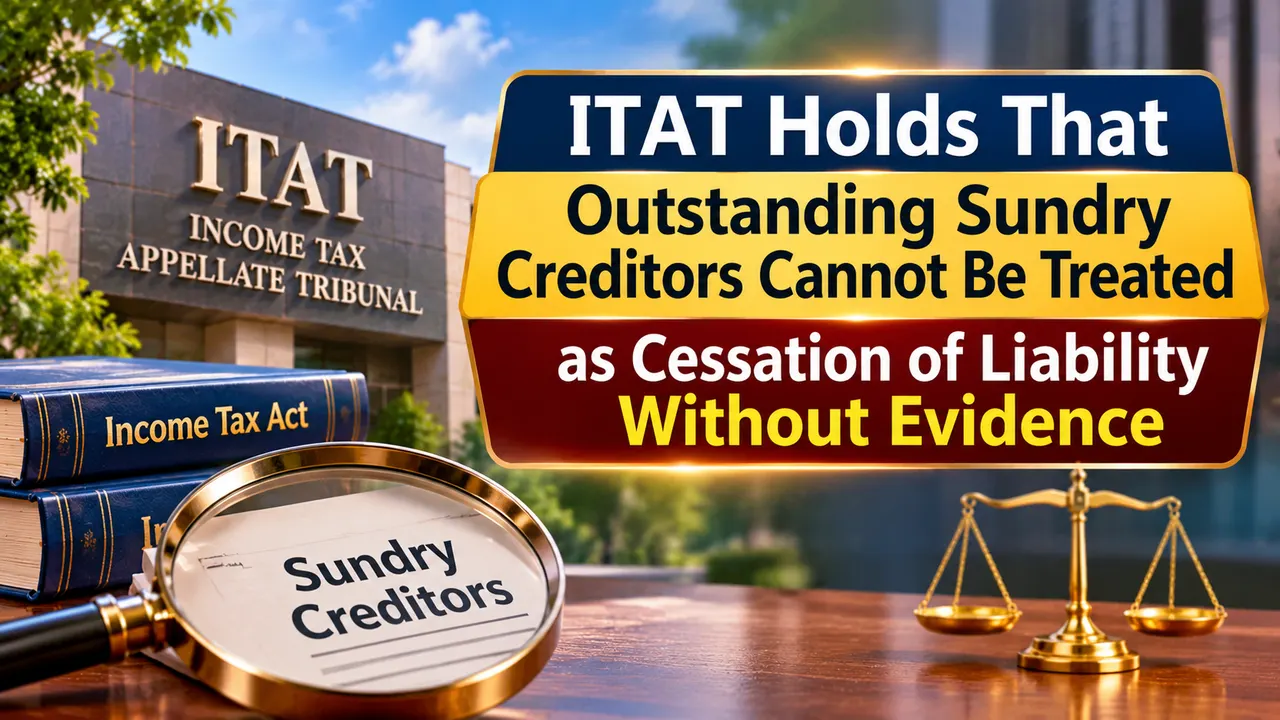
The ITAT has held that Ad Hoc addition under Section 41(1) was prejudicial to the assessee and not Revenue.
ITAT Quashes Section 263 Revision
 Saima
 Nov 27, 2026

The assessee is Sitaram Quarry Works which has filed its return of income for Assessment Year 2022-23 declaring total income of Rs. 4,75,220. The assessment was subsequently completed under Section 143(3) read with Section 144B at an assessed income of Rs. 68,57,728. During scrutiny proceedings, the AO examined various issues, including low income from TCS receipts relating to mining and quarrying activities, high liabilities compared to income, cash deposits, unsecured loans, cash payments exceeding Rs. 10,000 and current liabilities reflected in the books of accounts.
The AO treated 10% of the sundry creditors as cessation of liability on the ground that the outstanding liabilities had remained unpaid for a considerable period and their genuineness was not established. The PCIT subsequently initiated revisionary proceedings under Section 263 of the Act, alleging that the AO had failed to properly examine the sundry creditors.

Aggrieved by the revisionary order, the assessee approached the Tribunal, contending that the PCIT had wrongly assumed jurisdiction under Section 263. The Tribunal observed that the PCIT had correctly recognised that the Income Tax Act does not permit an ad hoc disallowance of a fixed percentage of total sundry creditors. The Tribunal explained that sundry creditors represent liabilities appearing in the balance sheet and not current-year income or expenditure. Such liabilities continue to remain outstanding until they are paid or otherwise come to an end.

Accordingly, the error in the assessment order was prejudicial to the interests of the assessee rather than the Revenue, since the Revenue had actually benefited from the addition made by the AO. Accordingly, the Tribunal quashed the PCIT's revisionary order passed under Section 263 and allowed the assessee's appeal.
About Author


Saima
Content Writer
 StudyCafe
 Delhi, Delhi, India
 692
My Recent Articles
- ITAT Holds Filing of Form 10BB Audit Report Within Due Date As Directory
- ITAT Holds That Assessee Deserves Another Opportunity to Present Its Case
- ITAT Holds That Repayment of Earlier-Year Loan Cannot Be Treated as Unexplained Money Without Evidence
- Jewellery Received During Marriages and Social Functions Cannot Be Treated as Unexplained Without Considering Family Traditions, Holds ITAT
- ITAT Holds Finance Act 2022 Amendment to Section 14A Prospective
Loading suggestions…


Recent Posts
All Posts
Recent Posts
All Posts