Purchaser Not Liable for Seller's Tax Default: Punjab and Haryana High Court:
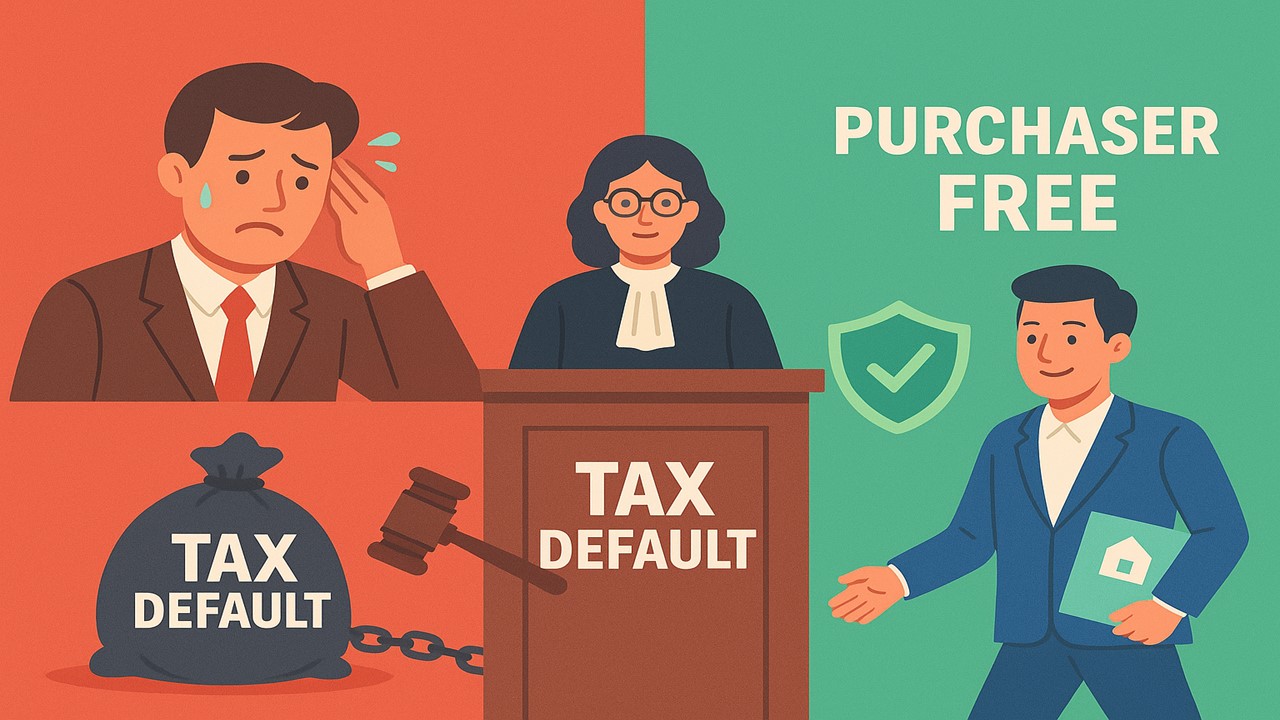
The court observed that the liability for non-deposit of tax cannot shift to the purchasing dealer unless there is a collusion between the purchaser and the defaulting seller.
Punjab and Haryana High Court Ruling on VAT ITC
 Nidhi
Nidhi Sep 30, 2025
Purchaser Not Liable for Seller's Tax Default: Punjab and Haryana High Court
M/s Gheru Lal Bal Chand, a registered VAT dealer in Haryana, claimed input tax credit (ITC) under the Haryana Value Added Tax Act, 2003 (HVAT Act), on the basis of tax invoices and Form VAT C-4 issued by selling dealers, who were also registered. The petitioner also filed returns for different periods reflecting the sales and purchases that they made.
The petitioner's case was selected for scrutiny by the Excise and Taxation Officer-cum-Assessing Authority, Hisar, respondent No. 2, for the year ending on March 31, 2007. The Tax authority issues notices Annexures P3/A and P3/B, claiming that some selling dealers, including M/s Hans Raj Ram Kumar, Fatehabad, M/s Mohan Lal Manish Kumar, Fatehabad, M/s Chandu Lal Mohan Lal, Fatehabad, M/s Sant Lal Harbans Lal, Fatehabad, M/s Suresh Kumar & Co., Fatehabad, M/s Parteek Enterprises, M/s Jagdish Rai Jai Bhagwan, Fatehabad and M/s Mahavir Parshad Rajat Kumar, Fatehabad, from whom the petitioner had purchased goods and paid tax did not deposit the collected tax with the Government.
Therefore, the tax authority disallowed the Input Tax Credit (ITC) and passed an order dated 15.03.2007, demanding additional tax liability of Rs 2,12,720 from the petitioner. Therefore, the petitioner filed writ petitions before the High Court of Punjab and Haryana.
The learned counsel for the petitioner argued that the registered selling dealer collecting tax from the purchaser acts as an agent of the government, and the purchaser is not liable for the seller's default in not depositing the collected tax with the government. He argued that the purchaser does not have control over the registered seller. The state should receive the tax from the real defaulter and not the purchaser for somebody else's lapses.
He also relied on the court's judgement in Corporation Bank versus Saraswati Abharansala and another (1), which held that the sales tax is imposed on the sale of goods and it must be collected by the dealer as an agent of the state. They also put their reliance on other judgements which concluded that the purchaser is not liable for the seller's default if the seller does not pay the collected tax to the government.
The court observed that the liability for non-deposit of tax cannot shift to the purchasing dealer unless they are conducting a fraud or there is a collusion between the purchaser and the defaulting seller. It held that if the Form VAT C-4 is found to be genuine, the purchasing dealer cannot be penalised.
It also observed that putting a heavy burden on the buyer due to the seller's non-compliance is unreasonable and violates Article 14 and Article 19(1)(g). The court further observed that the bona fide purchaser should not be penalised by the department. Instead, the department must recover the tax from the defaulting seller.
Therefore, the writ petitions were partly allowed, and the impugned assessment orders were set aside. The cases were remanded to the Assessing Authority for fresh assessment.
About Author


Nidhi
Content Writer
Nidhi is a skilled content writer specializing in personal finance. She creates clear, engaging articles on mutual funds, investments, insurance, and wealth-building strategies. With a passion for simplifying complex financial topics, Nidhi helps readers make informed money decisions with confidence. She can be reached at [email protected]
Nidhi is a skilled content writer specializing in personal finance. She creates clear, engaging articles on mutual funds, investments, insurance, and wealth-building strategies. With a passion for simplifying complex financial topics, Nidhi helps readers make informed money decisions with confidence. She can be reached at [email protected]
 Studycafe
 New Delhi, Delhi, India
 1832
1832My Recent Articles
- Karnataka High Court Gives Another Chance in GST Matter Due to Lack of Hearing
- Delay Should Be Condoned if Explanation is Unrefuted: ITAT
- Non-Service of Income Tax Notice, Ill health of taxpayer, ITAT condones Appeal filing delay
- Books of Accounts Cannot be Rejected Without Any Specific Defect: ITAT Kolkata
- Karnataka High Court Sends ITC Matter Back to GST Authorities for Reconsideration
Up Next
Loading suggestions…


Recent Posts
All Posts
Recent Posts
All Posts