SC Upholds Natural Justice Requirement in GST Assessment Proceedings:
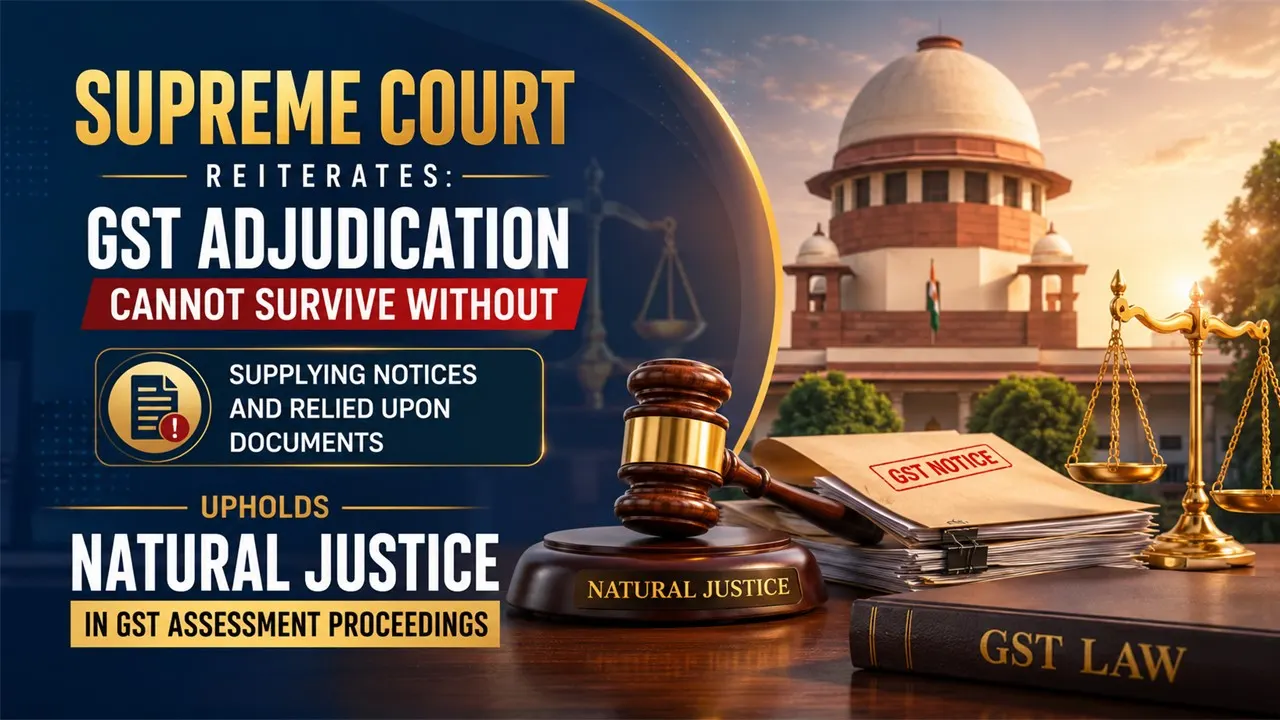
The Supreme Court reiterates GST adjudication cannot survive without supplying notices and relied upon documents.
Supreme Court Reiterates Mandatory Supply of Notices and Relied Upon Documents
 Meetu Kumari
 May 25, 2026
The Supreme Court, while dealing with the dispute involving M/s Surendra Prasad Yarlagadda, reaffirmed that tax adjudication under the GST regime cannot survive if the assessee is denied access to the foundational show cause notice and the Relied Upon Documents (RUDs). The matter arose from an assessment order challenged before the Allahabad High Court on the ground that neither the principal show cause notice nor the supporting documents relied upon by the department had been supplied to the taxpayer before passing the order.
A Division Bench of the Allahabad High Court, comprising Justice Saumitra Dayal Singh and Justice Indrajeet Shukla, found that the adjudication proceedings suffered from a violation of principles of natural justice. The Court observed that an assessee cannot be expected to effectively defend itself without being furnished the complete material relied upon by the department. Accordingly, the High Court set aside the assessment order and remanded the matter back to the Adjudicating Authority for fresh consideration.

“A valid adjudication proceeding necessarily requires supply of the show cause notice and relied upon documents to the assessee before any adverse order is passed.” The remand, however, was made subject to a conditional deposit of Rs 16,000 by the petitioner within one month. The matter thereafter reached the Supreme Court through Special Leave Petitions concerning delayed refiling issues and the procedural framework imposed by the High Court.
Under the remand directions, the department was directed to provide the complete show cause notice, supplementary notices and all RUDs within two weeks of deposit compliance. The assessee was thereafter granted four weeks to file its reply, while the adjudicating authority was directed to conclude the de novo proceedings within six months after granting adequate opportunity of hearing.

The proceedings further clarified that assessment orders passed without supplying foundational notices or supporting evidence cannot be sustained in law. The litigation ultimately reinforces the settled position that procedural fairness remains integral to GST adjudication and that authorities must ensure complete disclosure of the material relied upon before finalising any demand against the taxpayer.
To Read Full Judgment, Download PDF Given Below.
About Author


Meetu Kumari
Content Manager
 Studycafe
 Jodhpur, Rajasthan, India
 2264
2264My Recent Articles
- ITAT Condones 302-Day Delay, Restores Salary Assessment for Fresh VerificationPremium
- ITAT Condones Delay After Tax Consultant's Death, Restores Appeals for Fresh HearingPremium
- ITAT Remands Salary Addition, Says Taxability Depends on Salary Becoming Due, Not Mere ReceiptPremium
- ITAT Deletes TP Royalty Adjustment, Orders Fresh Review of Commission BenchmarkingPremium
- ITAT Quashes Reassessment Over Unsigned Section 148 Notice Issued to AssesseePremium
Loading suggestions…


Recent Posts



All Posts


Tags
Recent Posts
All Posts