12 Years of Modi Government: Key Income Tax Reforms That Reshaped India's Tax System:
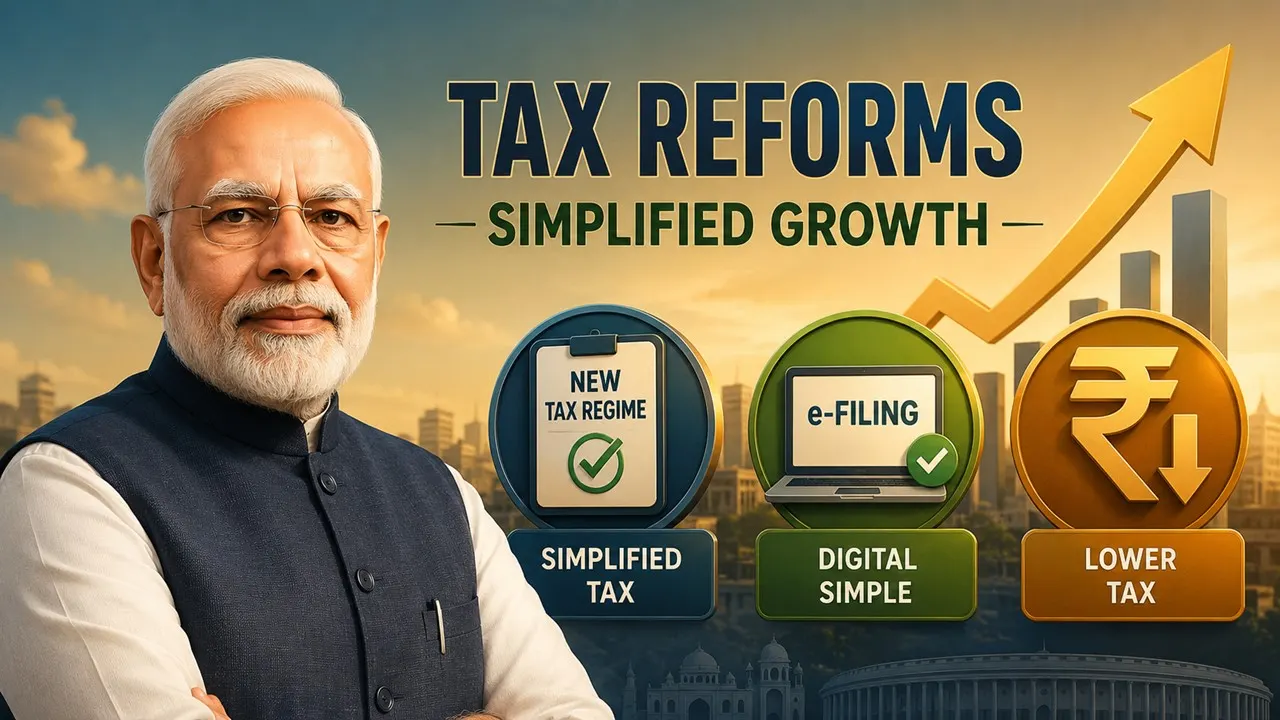
The Modi government has reshaped India's income tax system through simpler rules, digital services and higher tax benefits.
Modi Government's Major Income Tax Reforms Over the Last 12 Years
 Vanshika verma
 Jun 10, 2026
Table of Contents

12 Years of Modi Government: Key Income Tax Reforms That Reshaped India's Tax System
Prime Minister Narendra Modi on June 10 became India's longest-serving elected Prime Minister in uninterrupted office. During the last 12 years, his government introduced several major changes to the income tax system that affected salaried employees, pensioners, investors and businesses.
Shift Towards a Simplified Tax Regime
One of the biggest reforms brought in by Budget 2020 was the new tax regime. The new system cut tax rates but forced taxpayers to surrender most exemptions and deductions. Taxpayers were allowed to select between the old and new tax regimes. The government has sweetened the deal for the new regime over the years by increasing tax rebates and standard deductions.Replacement of the Income-tax Act, 1961
Another milestone was the introduction of a new Income-tax Act, 2025, replacing the Income-tax Act, 1961, which existed for over six decades. The new legislation came into force on April 1, 2026. The objective is to simplify tax rules, reduce legal complexities and ease compliance for taxpayers. It is considered the biggest reform in India’s direct tax laws in over 60 years.Technology-Driven Refund Reforms
The government has also leveraged technology to expedite tax refund processing Many taxpayers get refunds in just days after they file their returns today, far away from past years.Expansion of Tax Rebate Benefits
The government also extended tax relief to individuals by providing higher rebates. In 2019, taxpayers with taxable income up to Rs 5 lakh became eligible for a full tax rebate under Section 87A. In Budget 2025, the government again increased the benefit, making annual income up to Rs 12 lakh tax-free under the new tax regime.Reforms in Tax Assessments and Appeals
The government also launched faceless assessment and appeal systems to improve transparency and reduce disputes. These measures reduced direct interaction between taxpayers and tax officials and made the tax administration process more technology-driven.Introduction of Pre-filled ITR Forms
Income tax return filing also became easier with the introduction of pre-filled ITR forms. Details such as salary income, interest income, dividend income and TDS details are now automatically filled in many cases, reducing errors and saving time for taxpayers.Increase in Standard Deduction
Tax relief for salaried employees and pensioners increased through a higher standard deduction. At present, taxpayers can claim a standard deduction of Rs 75,000 under the new tax regime and Rs 50,000 under the old tax regime. This deduction is automatically applied while calculating taxable income.Introduction of the Updated Return (ITR-U) Scheme
The government also introduced the Updated Return (ITR-U) facility. This allows taxpayers to voluntarily correct mistakes or disclose missed income after filing their original returns. Taxpayers can now update returns for up to four years from the end of the relevant assessment year.Strengthening Tax Compliance Measures
The tax department also strengthened monitoring of high-value financial transactions. Banks, mutual funds and other financial institutions are now required to report specified transactions, helping authorities track tax evasion and improve compliance.Reforms in TDS and TCS Provisions
New provisions of Tax Deducted at Source (TDS) and Tax Collected at Source (TCS) have been introduced in certain areas like e-commerce transactions, foreign remittances and large business payments. These measures were meant to expand the tax base and enhance reporting.
Digital Transformation of Tax Administration
Apart from the above, the Income Tax Department has also expanded its digital infrastructure to streamline notices, assessments, refunds, and taxpayer support. Through tools like the Annual Information Statement (AIS) and Taxpayer Information Summary (TIS), taxpayers can access a consolidated record of their financial activities, making tax filing more convenient and simple.About Author


Vanshika verma
Content Writer
Vanshika Verma is a Content Writer with 1+ year of experience at Studycafe.in. A B.Com graduate from Delhi University, She writes articles on Finance, Tax, ICAI, GST, and the latest financial news, with a focus on making complex topics easy for readers and professionals.
Vanshika Verma is a Content Writer with 1+ year of experience at Studycafe.in. A B.Com graduate from Delhi University, She writes articles on Finance, Tax, ICAI, GST, and the latest financial news, with a focus on making complex topics easy for readers and professionals.
 Studycafe
 Delhi, Delhi, India
 2103
2103My Recent Articles
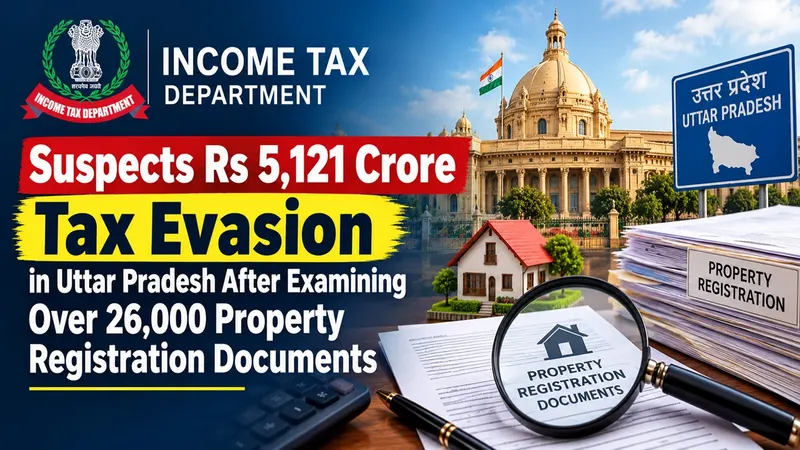
- Income Tax Department Suspects Rs 5,121 Crore Tax Evasion in Uttar Pradesh After Examining Over 26,000 Property Registration Documents
- Kalpataru Properties Gets Rs 73.85 Crore GST Notice, Says No Material Impact Expected
- Amara Raja Energy And Mobility Faces Rs 1.89 Crore GST Demand as Meerut Appellate Authority Upholds Earlier Tax Order
- Taj Hotels Operator IHCL Fined Rs 10 Lakh by BMC for Alleged Failure to Obtain NOC for Building Plan Approval
- Centre Hikes Windfall Tax on Petrol Exports to Rs 2.5 per Litre, Cuts Diesel Export Duty to Rs 8.5
Up Next
Loading suggestions…


Recent Posts


All Posts

Recent Posts
All Posts