8 Common Mistakes to Avoid in UPSC EPFO Prep:
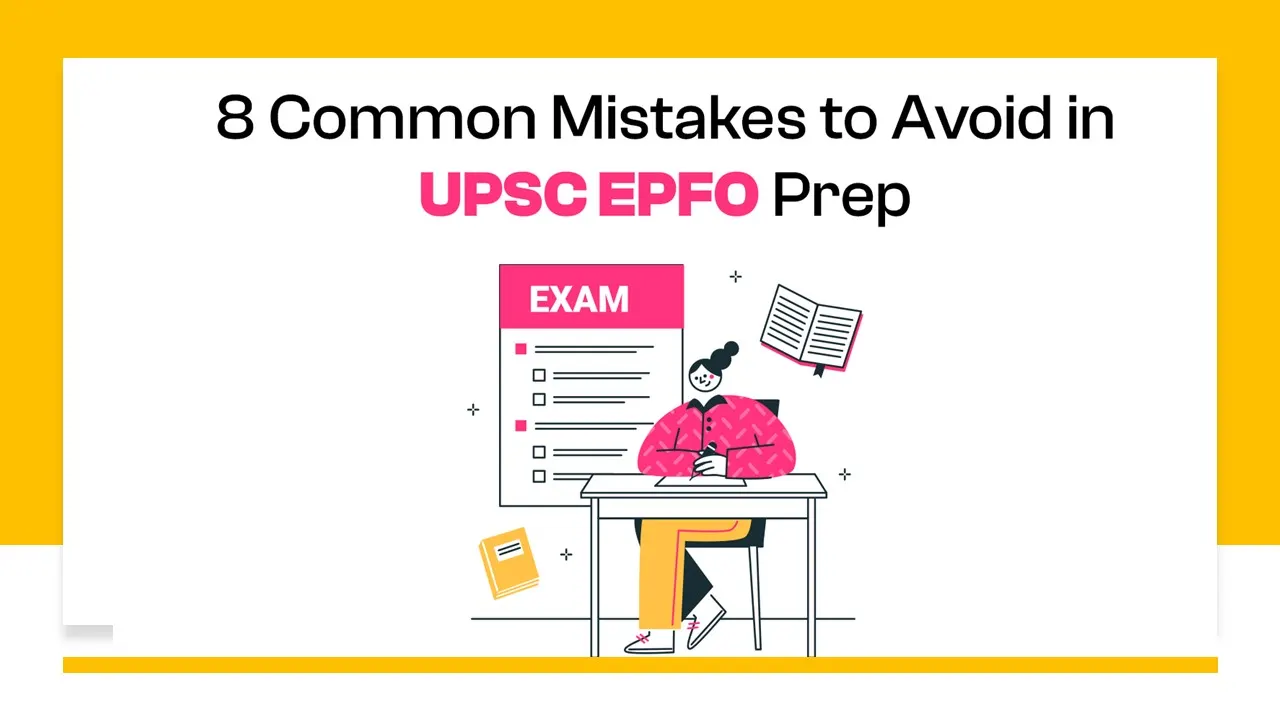
Here is a practical guide highlighting 8 common mistakes to avoid in UPSC EPFO preparation, with smart strategies for success.
Avoid These Mistakes to Boost Your UPSC EPFO Success
 Saloni Kumari
 May 16, 2025
Table of Contents

8 Common Mistakes to Avoid in UPSC EPFO Prep
If you're serious about cracking the UPSC EPFO exam this year, you need to read this carefully. I've seen too many smart candidates lose out not because they lacked knowledge, but because they made avoidable mistakes in their preparation strategy.
The UPSC EPFO exam, conducted by the Union Public Service Commission for the Employees' Provident Fund Organisation, is your gateway to a stable government career with great benefits. While the UPSC EPFO notification 2025 hasn't been released yet, smart aspirants are already preparing. Why? Because when that notification drops, you'll have barely 2-3 months to prepare, and that's simply not enough time to cover everything properly.
I've identified 8 critical mistakes that ruin preparation. Avoid these, and you'll automatically be ahead of 90% of candidates.
Mistake 1: Waiting for the Notification to Start Preparing
This is the biggest trap aspirants fall into. "I'll start when the notification comes out," they say. Here's the harsh truth - by then, it's already too late. The syllabus is vast, covering labor laws, social security, general awareness, and more. If you wait for the official announcement, you'll be cramming information instead of properly understanding concepts. What you should do instead: Start with the permanent syllabus components like Indian labor laws, EPF Act, and general mental ability. These never change. When the notification comes, you'll only need to update yourself on any minor changes rather than starting from zero.Mistake 2: Not Understanding the Syllabus
Many candidates make the error of preparing based on what they "think" is important rather than what actually appears in the exam. The UPSC EPFO syllabus includes specific focus areas like:- Industrial Relations
- Labor Laws
- Social Security in India
- General Mental Ability
- Indian Freedom Struggle
Mistake 3: Following a Disorganized Study Plan
"I'll study when I find time" doesn't work for competitive exams. One successful candidate I know followed this weekly schedule:- Morning (2 hours): Current affairs and labor news
- Afternoon (3 hours): Core subjects (rotating between labor laws, general awareness, etc.)
- Evening (1 hour): PYQs or mock tests
Mistake 4: Rote Memorization Without Understanding
The UPSC EPFO exam isn't about who can memorize the most facts. It tests your ability to:- Apply labor laws to practical situations
- Analyze industrial relations scenarios
- Understand social security concepts
Mistake 5: Ignoring Previous Year Questions (PYQs)
This is like walking into battle without studying your enemy's tactics. PYQs reveal:- Which topics are frequently asked
- The depth of knowledge required
- The question pattern and format
Mistake 6: Irregular Mock Test Practice
Reading and understanding is one thing - applying that knowledge under exam pressure is completely different. I recommend:- Taking at least 2 full-length mocks per week in the final month
- Simulating real exam conditions (timer, no distractions)
- Analyzing each mock to identify weak areas
Mistake 7: Not Having a Proper Revision Plan
You'll forget 70% of what you study within a week if you don't revise. An effective revision strategy includes:- Weekly recap of all studied topics
- Monthly full-syllabus revisions
- Last-minute revision notes for final days
Mistake 8: Neglecting Mental and Physical Health
This isn't just motivational talk - it's a practical exam strategy. Burning out before the exam is real. I've seen toppers who:- Sleep 7-8 hours daily, even during peak preparation
- Exercise regularly to maintain energy levels
- Practice meditation to improve focus
Extra Caution: Underestimating the Interview/Personality Test
Many candidates focus only on the written exam and then panic when the interview comes. The personality test carries 100 marks and can make or break your final ranking. Start early by:- Reading newspapers daily for current affairs
- Practicing mock interviews
- Understanding EPFO's role and functions deeply
Final Advice
The UPSC EPFO exam is completely crackable if you avoid these common traps. Remember:- Start now, don't wait
- Study smart, not just hard
- Take care of your health
- Practice like it's the real exam
About Author


Saloni Kumari
Content Writer
Saloni is a Content Writer with 2+ years of experience at studycafe.in. She writes legal, taxation, and finance related content including GST, Income Tax etc. Skilled in translating complex judicial pronouncements and regulatory developments into clear, and reader-friendly articles. Experienced in covering judgements of ITAT, High Court, GSTAT, and news related to Income Tax, GST, and corporate law. She can be reached at [email protected].
Saloni is a Content Writer with 2+ years of experience at studycafe.in. She writes legal, taxation, and finance related content including GST, Income Tax etc. Skilled in translating complex judicial pronouncements and regulatory developments into clear, and reader-friendly articles. Experienced in covering judgements of ITAT, High Court, GSTAT, and news related to Income Tax, GST, and corporate law. She can be reached at [email protected].
 StudyCafe
 Delhi, Delhi, India
 2961
2961My Recent Articles
- GSTAT Sets Aside Ex Parte GST Appeal Order After First Appellate Authority Ignores Taxpayer’s Arguments
- GSTAT Sets Aside Non-Speaking GST Appellate Order, Remands Case Over Failure to Meet 80% Registered Procurement Requirement
- Sakshi Chandak Secures AIR 1 in CA Intermediate September 2026 Exam with 83.67% After Studying Up to 16 Hours a Day
- MCA Releases List of Companies Struck Off Under Section 248(2) for September 2026 at mca.gov.in
- ITAT Deletes Section 43 Penalty for Non-Disclosure of Foreign Assets in Schedule FA
Up Next
Loading suggestions…


Recent Posts


All Posts

Tags
No tags yet.
Recent Posts
All Posts
Tags
No tags yet.