Budget 2025: Tax-Free Income Up to Rs.8 Lakh, 25% Slab for Middle Class?:
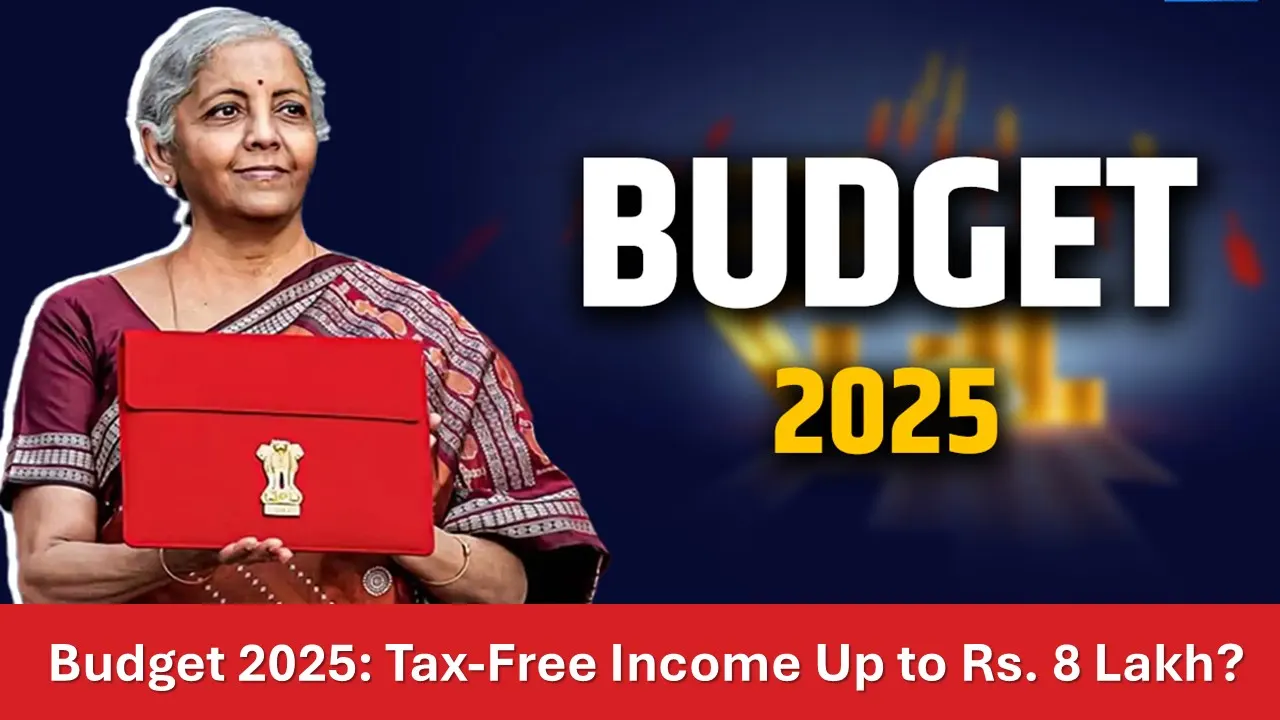
Current reports suggest that the Union Budget 2025-26 may introduce big tax changes. The government might exempt incomes up to Rs. 8-10 lakh from tax and create a new 25% tax slab.
New Tax slab and Tax-Free Income Up to Rs.8 Lakh expected to be proposed
 Shivani Verma
 Jan 31, 2025
Budget 2025: Tax-Free Income Up to Rs.8 Lakh, 25% Slab for Middle Class?
Current reports suggest that the Union Budget 2025-26 may introduce big tax changes. The government might exempt incomes up to Rs.8-10 lakh from tax and create a new 25% tax slab for those earning between Rs.15 lakh and Rs.20 lakh per year.
Finance Minister Nirmala Sitharaman increased the standard deduction to Rs.75000 per year for salaried persons and pensioners. On the other hand, individuals following the old tax regime continued to get a standard deduction of Rs.50,000. As Budget 2025 approaches, many taxpayers are hoping for a higher standard deduction.
Let's discuss what people are hoping for and the options the government can consider:
Changes Expected in the New Personal Tax Regime
The government introduced the new tax regime in 2020 to make taxes simpler by lowering rates and removing some deductions and exemptions. Since then, the focus has been on encouraging people to choose this new tax regime. Recent tax changes have mostly benefited those who have opted for it. In fact, nearly 72% of taxpayers used the new tax system when filing their returns for the 2023-24 financial year.
Current reports say that the upcoming Union Budget 2025-26 can bring major changes, which include making incomes up to Rs.10 lakh tax-free and adding a new 25% tax rate for earnings between Rs.15 lakh and Rs.20 lakh.
New Income Tax Slabs in Budget 2025-26
Individuals who pay taxes can see an increase in the basic exemption limit from 3 lakh to Rs.3.50 lakh. This increase could help people save more money and provide them with extra income to spend, which could also help boost overall spending in the economy.
As per the income tax experts reducing the tax rate for middle-class taxpayers will increase their disposable income, leading to more spending and helping drive economic growth. Currently, under the old tax regime, people earning more than Rs.10 lakh a year were taxed at 30%. In the current tax regime, the 30% tax rate applies to incomes over Rs.15 lakh.
These changes in tax policy could provide important financial relief to families, possibly encouraging them to spend more and help boost the economy.
New Tax Regime: Expected Deductions and Benefits
In the new tax system, there are only a few deductions are available, and the important one is for the employer's contribution to the NPS. Last year, the cap for this deduction was increased from 10% to 14%. However, there is no deduction for an individual’s own contribution to the NPS, which was allowed up to Rs.50,000 in the old tax system. If the government extends this benefit to the new tax regime, it could help non-salaried taxpayers and encourage more people to invest in the NPS.
Tax Relief under Section 87A
In recent, resident taxpayers can get a full tax rebate under Section 87A if their income is up to Rs.7 lakh. There’s a proposal to raise this limit to Rs.8 lakh to help people with lower incomes. Under the old tax system, the rebate is available for incomes up to Rs.5 lakh, while the new tax system allows a rebate for incomes up to Rs.7 lakh. Taxpayers who qualify for this rebate can reduce their tax liability by up to Rs.12,500 or Rs.25,000, making their total tax zero.
Tax Deductions on House Property
Taxpayers can claim a deduction of up to Rs.2 lakh on the interest paid on housing loans if the property is bought within 5 years of taking the loan. For example, if someone took a loan in September 2024, they must buy the property by March 31, 2030, to claim this deduction. However, due to rising property prices and project delays, the government might extend this deadline to 7 years and increase the deduction by Rs.50,000.
Many salaried individuals still select the old tax system over the new one, mainly because of their housing loans. But, the current Rs.2 lakh limit on reducing losses from house property is seen as a problem. There is a suggestion for the government to remove this cap and allow taxpayers to offset losses based on actual amounts, just like it was before the 2017-18 financial year.
About Author


Shivani Verma
Digital Marketing executive
 StudyCafe
 Delhi, Delhi, India
 142
142My Recent Articles
- ROC imposes Penalty of more than Rs. 10 Lakh for Late filing of BEN 4 and BEN 1
- Correct Errors in Your AY 2023-24 Tax Return, Income Tax Portal Now Accepting Requests
- Secure Your Shares and Mutual Fund Documents in DigiLocker: A Step-by-Step Guide
- 3 Equity Mutual Funds Delivered Positive Returns in 6 Months
- Income Tax Changes from April 1: What You Need to Know
Up Next
Loading suggestions…


Recent Posts

All Posts

Tags
No tags yet.
Recent Posts
All Posts
Tags
No tags yet.