Disparities of Taxation: Unwanted Burden on Salaried Professionals but Agriculture, Income of Political Party Exempt Exempt:
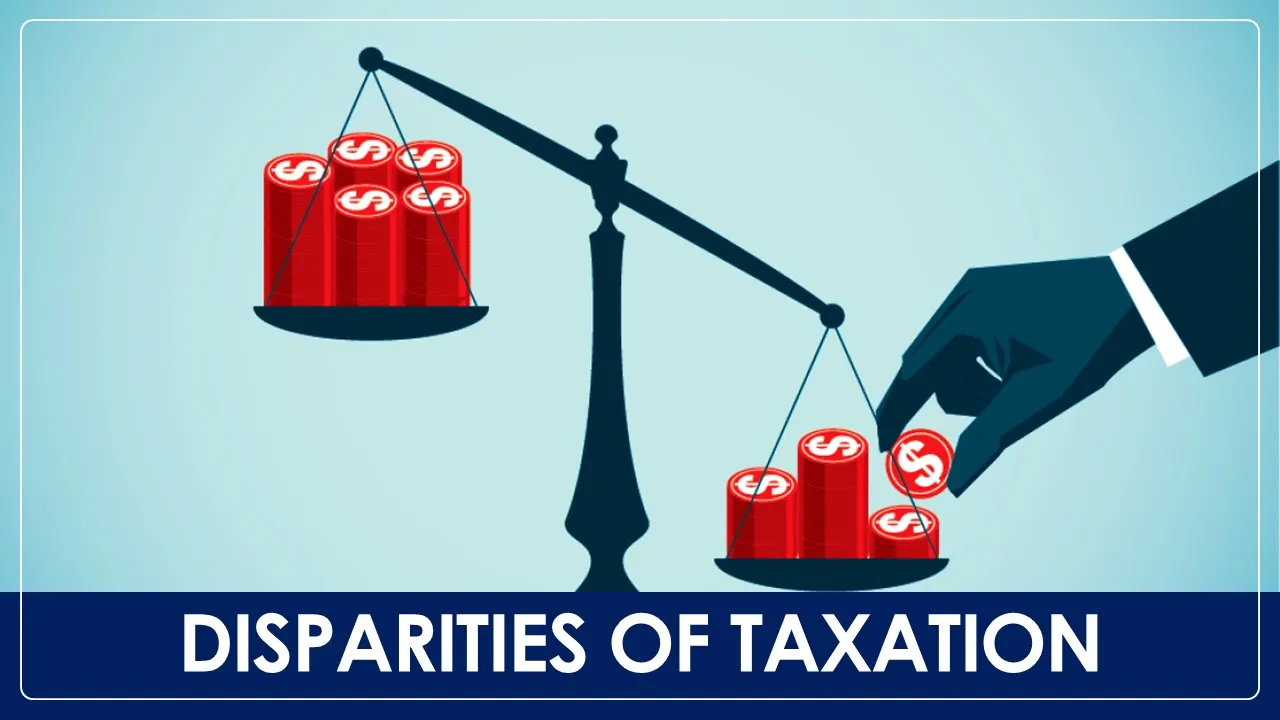
Concerns regarding the process of taxation in India are frequently being raised, among which the stark disparities between salaried professionals and agricultural industry
Taxation Disparities: Unfair Burden on Salaried Individuals
 Anisha Kumari
 Mar 22, 2025
Table of Contents

Disparities of Taxation: Unwanted Burden on Salaried Professionals but Agriculture and Other Industries Exempt
Concerns regarding the process of taxation in India are frequently being raised, among which the stark disparities between salaried professionals and agricultural industry earners and others are striking. While nearly 50% of the Indian population is engaged in agriculture, the industry contributes a mere 17% to the country's GDP. Despite this, farm income is wholly exempt under Section 10(1) of the Income-Tax Act, 1961. The section was originally introduced to benefit small and marginal farmers who were economically distressed, but over time it has helped wealthier farmers avoid taxes while they reap generously from public funds, subsidies, and government infrastructure. Big Taxation Differences
 These imbalances have fuelled fears regarding the fairness of the tax system, particularly where a limited number of taxpayers pay high taxes while other groups are largely exempt.
Tax Burden Imbalance Contentious Issue for Decades
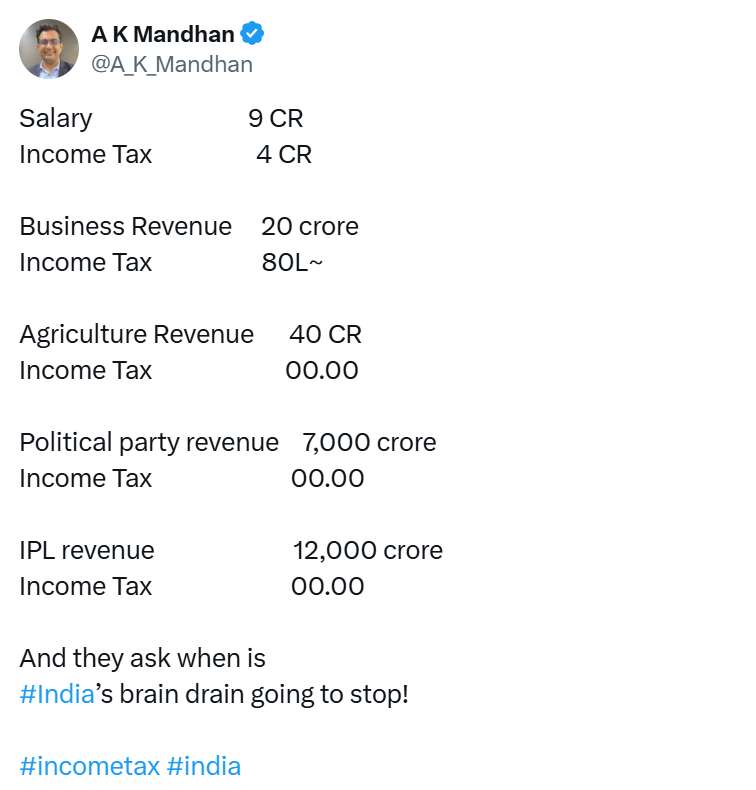
In recent years, a report highlighting major taxation imbalances has recently gained attention, particularly among wage earners who carry most of the tax burden. From the figures given, a salaried individual with an income of Rs. 9 crore pays Rs.4 crore as income tax, whereas a company with an income of Rs. 20 crore pays only Rs. 80 lakh. A comparison is drawn with Rs. 40 crore of agricultural income that remains fully exempt from taxation. And, also, political parties with revenues of Rs. 7,000 crore and large business houses such as the Indian Premier League (IPL), which is reputed to generate Rs. 12,000 crore in revenue, do not pay income tax. The division of these amounts is as follows:- Salary: Rs.9 crore → Income Tax: Rs.4 crore
- Business Income: Rs. 20 crore → Income Tax: Rs. 80 lakh
- Agricultural Income: Rs. 40 crore → Income Tax: Rs. 0
- Political Party Income: Rs. 7,000 crore → Income Tax: Rs. 0
- IPL Income: Rs. 12,000 crore → Income Tax: Rs. 0
These imbalances have fuelled fears regarding the fairness of the tax system, particularly where a limited number of taxpayers pay high taxes while other groups are largely exempt.
Reality of Rich Farmers
A survey by PRICE found that around five million wealthy farmers in India earn more than Rs.25 lakh per year. Interestingly, two-thirds of their earnings are from agriculture and the remaining one-third from non-farm activities. Although they constitute only 8% of the farmers, these affluent farmers control approximately 28% of the total agricultural income. The survey report highlights that almost 45% of farmers in the high-income category are getting benefits under the PM-Kisan Samman Nidhi Scheme, a government scheme designed and implemented to support and provide funds for small and marginal farmers. These high-income farmers mostly belong to the states like Andhra Pradesh, Punjab, Kerala, Haryana, Tamil Nadu, and Karnataka, where commercial agriculture, large landholding, and modern farming methods are prominent. Furthermore, their consumer expenditure habits also indicate their financial position. However, 67% out of them possess two-wheelers and 29% possess cars; just 28% possess tractors, indicating that most of their generated wealth is being spent on things other than essential farm machinery.Heavy Burden on Salaried Taxpayers
Only about 6% of the population of India pays income tax, and even a smaller fraction, less than 3%, pays income tax. They are also among the largest contributors to overall personal income tax collections, constituting about half of such collections. This heavy tax burden may cause a brain drain, as many skilled professionals in technology and finance move abroad for better tax conditions. The frustration that is increased is due to the fact that salaried workers bear the tax burden, and political parties and multinational corporations still enjoy exemptions. This imbalance between the two sectors has widened economic inequalities and challenged the requirement for a more equitable taxation system. As the increasing controversy of taxation equity gains momentum, demands for policy reform to address such disparities are growing. The view of many people is that a reconsideration of tax exemptions, especially for agriculture and wealthy individuals with big businesses, would introduce a balanced and equitable tax system in the nation.About Author


Anisha Kumari
Content Writer
Anisha is a finance content writer at StudyCafe, writing on domains like mutual funds, stock market trends, GST, income tax, and SIPs. With a knack for breaking down complex financial topics, Anisha delivers clear and insightful articles that keep readers informed and empowered. She can be reached at [email protected].
Anisha is a finance content writer at StudyCafe, writing on domains like mutual funds, stock market trends, GST, income tax, and SIPs. With a knack for breaking down complex financial topics, Anisha delivers clear and insightful articles that keep readers informed and empowered. She can be reached at [email protected].
 Studycafe
  Bokaro, Jharkhand, India
 321
321My Recent Articles
- AI Tools Catch Rs. 68 Lakh Capital Gains Tax Fraud in Hyderabad
- Bank of Baroda Chief Manager’s Suicide Raises Concerns Over Work Pressure
- CA in Trouble: ED Seizes Rs. 6.8 Cr Assets in ERDC Trust Fraud Case
- Gujarat Ambuja Exports Receives GST Demand Order of Rs. 33 Lakh
- GST AAR: Exchange of Silverscrap for finished ornaments Supply
Up Next
Loading suggestions…


Recent Posts

All Posts



Tags
No tags yet.
Recent Posts
All Posts
Tags
No tags yet.