GSTAT Upholds GST Demand After Rejecting Manual Invoices Produced Three Months After Inspection:
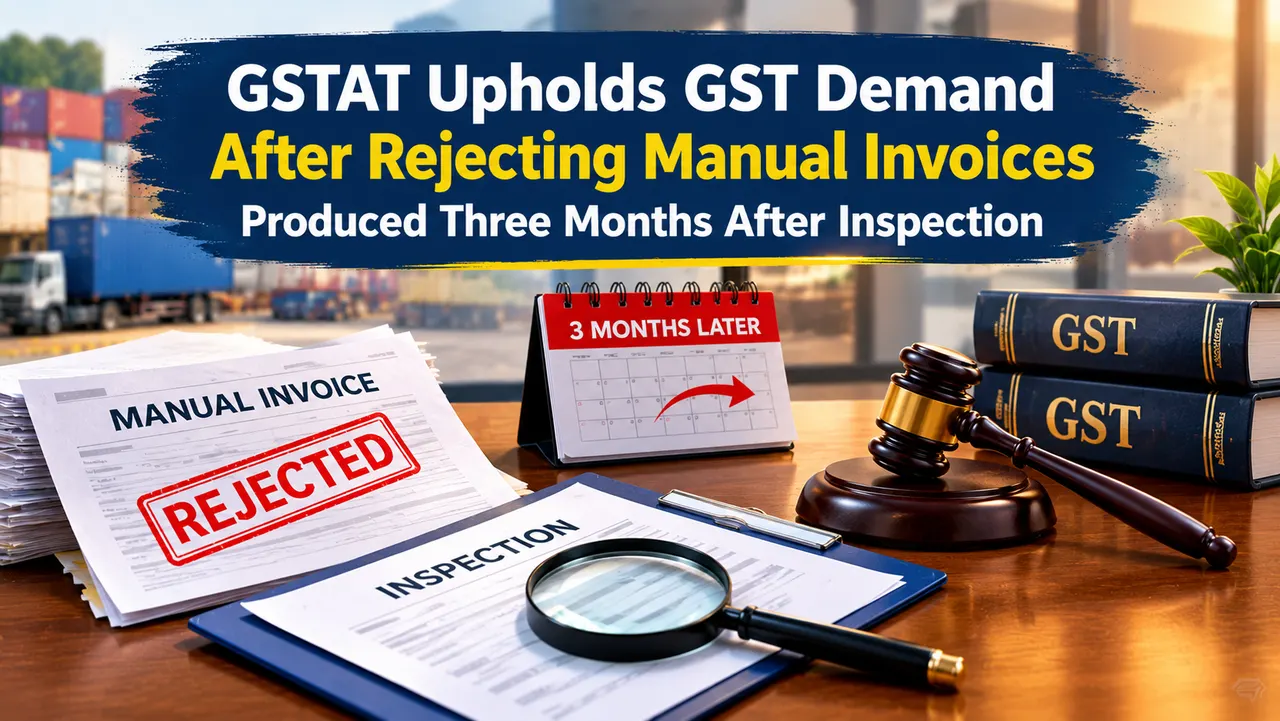
The GSTAT holds that delayed manual invoices cannot cure non-compliance with mandatory E-Way bill requirements.
GSTAT Dismissed Appeal
 Saima
 Oct 26, 2026

M/s Shri Kishan & Co., a firm engaged in trading copper and aluminium wires and electrical equipment, challenged the order passed by the first appellate authority before the GSTAT under Section 112 of the Central Goods and Services Tax Act, 2017, read with the Uttar Pradesh Goods and Services Tax Act, 2017. The dispute arose from a search conducted by the Special Investigation Branch (SIB) on the firm's business premises on November 27, 2017, under Section 67 of the CGST or UPGST Act. During the inspection, copper and aluminium wires were found being unloaded from a tempo bearing registration number UP-80CT-4871. Neither the driver nor the firm's representative produced the relevant tax invoice, e-way bill or transporter's bilty at the time of inspection.
Following the investigation, the proper officer concluded that the firm had evaded tax on a turnover of Rs 14,16,418 and imposed tax of Rs 2,54,956 along with an equal penalty of Rs 2,54,956, aggregating to Rs 5,09,912. The firm challenged the demand before the Additional Commissioner, State Tax. The first appellate authority partly allowed the appeal and reduced the liability to Rs 1,23,740, taking into account amounts already collected in parallel proceedings under Section 129 of the CGST and UPGST Act concerning the same goods.

The Tribunal noted that two manual invoices, bearing numbers 323 and 778 and dated November 25, 2017, and November 23, 2017, respectively, were produced before the adjudicating authority only on March 6, 2018, more than three months after the inspection. The invoices were rejected by the lower authorities as an after thought. The Tribunal held that Section 68 of the CGST Act, read with Rules 138 and 138A of the CGST Rules, requires the person in charge of a vehicle transporting goods worth more than Rs 50,000 to carry the prescribed documents, including the tax invoice and a valid e-way bill. The e-way bill must be generated before the commencement of the movement of goods, as required under Rule 138.
However, the Tribunal upheld the first appellate authority's decision to reduce the original demand by adjusting the amounts already collected in proceedings under Section 129. Since the Revenue had not challenged that finding through an appeal or memorandum of cross-objection, the Tribunal held that parallel proceedings under the same GST legislation could not be initiated against the taxpayer for the same cause of action.

Accordingly, the Tribunal found no reason to interfere with the concurrent findings of the lower authorities, dismissed the second appeal and upheld the first appellate order. No order as to costs was passed.
About Author


Saima
Content Writer
 StudyCafe
 Delhi, Delhi, India
 581
My Recent Articles
- GSTAT Holds GST Portal Glitches Cannot Defeat Statutory Remedy
- GSTAT Allows ITC of Previous Financial Year to Be Claimed in April 2019
- GSTAT Quashes Rs 1.77 Lakh Penalty on Saraswati Motors for Missing E-Way Bill
- High Court Holds No Further Assessment Proceedings Warranted After Earlier Appeal Dismissal
- GSTAT Allows Inverted Duty Refund Despite Same HSN for Inputs and Outputs
Loading suggestions…


Recent Posts


All Posts

Recent Posts
All Posts