Defective Section 129 Penalty Order Cannot Sustain Penalty Without Effective Hearing Opportunity, Holds GSTAT:
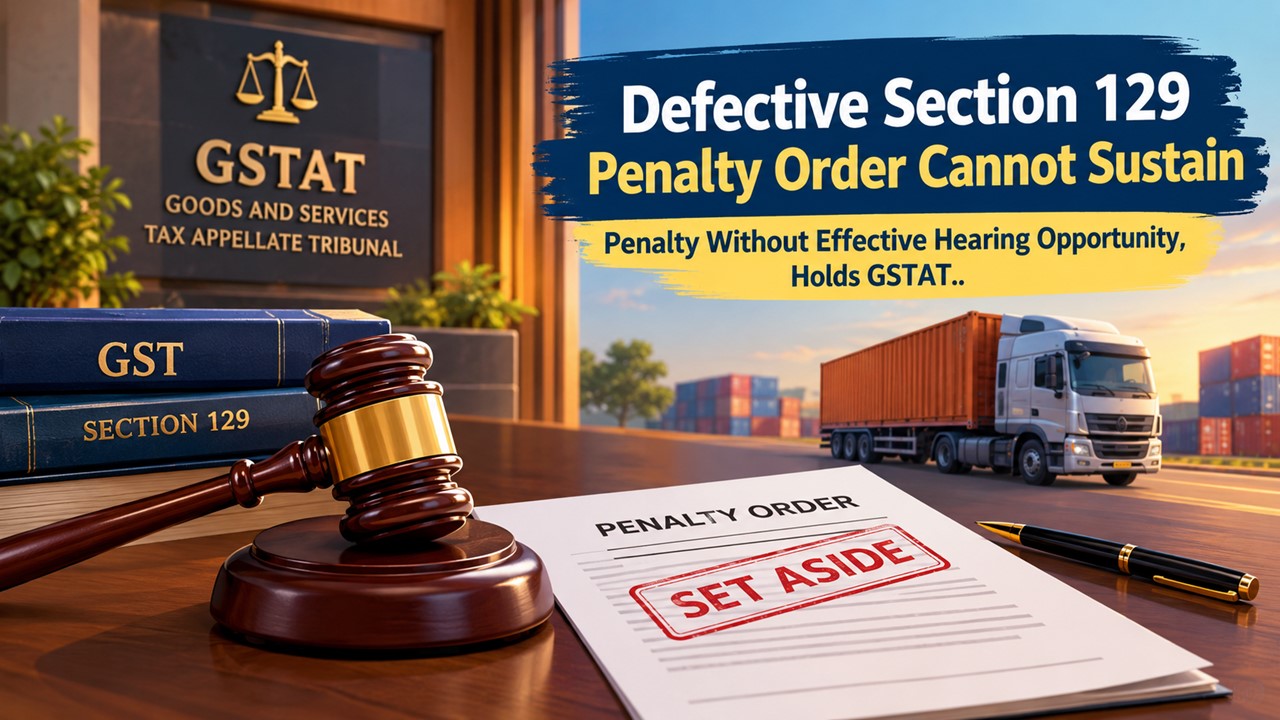
The GSTAT set aside the Rs 1.09 lakh penalty imposed for transporting goods without an e-way bill and directed fresh adjudication after an effective personal hearing.
Penalty Paid to Release Goods Does Not Waive Right to Challenge GST Order
 Saloni Kumari
 Oct 17, 2026
The GSTAT State Bench Raipur held that the penalty order passed under Section 129 of the CGST/CGGST Acts, 2017, for transporting goods without an e-way bill, cannot be upheld, as the adjudicating authority had failed to provide an adequate opportunity of hearing to the appellant, which is an explicit contravention of the principles of natural justice. Accordingly, the final decision was announced in favour of the appellant.
Narmada Drinks Pvt. Ltd. (appellant), on April 4, 2024, transported carbonated soft drinks and packaged beverages from Raipur to Fingeshwar, Chhattisgarh, without the availability of an e-way bill. The consignment had a taxable value of approximately Rs 2.18 lakh and was accompanied by a tax invoice and transport document. Consequently, the concerned tax authorities imposed a penalty of Rs 1.09 lakh under Section 129 of the CGST/CGGST Acts, 2017.

The appellant contended that it had several times tried to generate the e-way bill; however, it failed at the same because of a technical issue with the portal. It also claimed that the goods were dispatched due to urgent business requirements and repeated requests from the recipient. The company claimed that it paid the penalty through Form GST DRC-03 only to secure the release of the goods and vehicle. The department maintained that an e-way bill was mandatory and that the company had not provided sufficient evidence to support its explanation.
The Goods and Services Tax Appellate Tribunal (GSTAT) noted that the applicable Chhattisgarh notification required e-way bills for specified beverages transported between districts when the consignment value exceeded Rs 50,000. Therefore, the movement was prima facie covered by the e-way bill requirement. It also noted that the company had not produced concurrent evidence establishing the alleged portal failure or urgency of dispatch.

However, the Tribunal found serious defects in the adjudication process. Although the notice allowed seven days to respond, the penalty order was passed the very next day. Further, Form GST MOV-09 contained incomplete drafting and did not clearly explain how the company’s submissions and supporting documents had been considered. The Tribunal held that payment of the penalty to secure the release of goods did not waive the company’s right to challenge the order.
"The penalty cannot be sustained on the basis of the adjudication actually undertaken under Section 129: MOV-09 does not disclose a completed, reasoned determination after an effective opportunity of hearing, and payment through DRC-03 does not cure that defect or waive the challenge," the Tribunal held.
Accordingly, GSTAT set aside the appellate order dated May 16, 2025, and the original penalty order dated April 5, 2024, while retaining the original notice in Form GST MOV-07. It directed the adjudicating authority to reconsider the matter, provide an effective personal hearing, examine the relevant documents and evidence, and pass a fresh speaking order, preferably within six weeks, subject to the applicable statutory limitation. The amount of Rs 1.09 lakh already paid will remain subject to the outcome of the fresh adjudication.
About Author


Saloni Kumari
Content Writer
 StudyCafe
 Delhi, Delhi, India
 2926
2926My Recent Articles
- Intent to Evade Tax Not Necessary for Penalty Under Section 129 for Expired E-Way Bills, Holds GSTAT
- Major Relief in Arbitration Case: MCIA Denies Rs 908 Crore Statement Claim Made by Allied Silica Against Tata Chemicals
- MCA and ICSI to Hold User Awareness Session on Form AOC-4 Filing Amid Glitches on MCA-21 Version-3 Portal
- GSTN Introduces New E-Invoicing Facility for Self-Invoices Under Reverse Charge Mechanism
- Flexi Cap vs Multi Cap Funds: What's the Real Difference?
Loading suggestions…


Recent Posts
All Posts

Recent Posts
All Posts