Guidelines Issued by Goa Finance Department for issuance of Tax Invoices Under GVAT Act 2005:
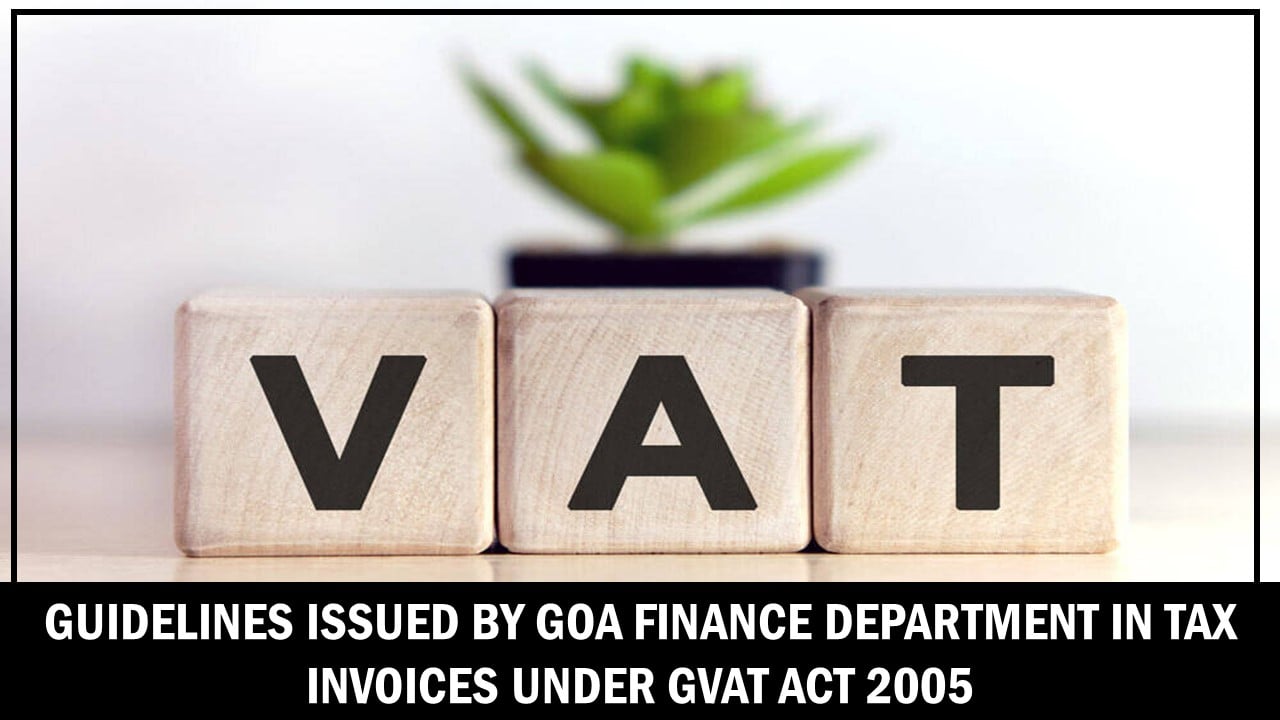
The Goa Finance Department has issued a Circular providing clarification on how discounts should be treated and recorded in tax invoices under the GVAT Act, 2005.
Goa Finance Department Provides Clarification On Treatment of Tax Invoices Issued Under GVAT Act 2005
 Nidhi
Nidhi Apr 30, 2025
The Goa Finance Department has issued a Circular providing clarification on how discounts should be treated and recorded in tax invoices under the Goa Value Added Tax (GVAT) Act, 2005.
The Finance Department has noticed that some sellers are not correctly showing discounts on their tax invoices under the Goa Value Added Tax Act, 2005. This has confused the buyers while claiming input tax credit (ITC). Therefore, to make things consistent for all businesses, the department released this circular to explain how discounts should be properly recorded in tax invoices.
As per Section 2 (ad) of the Goa Value Added Tax Act, 2005, 'Sale Price' refers to the amount of the goods received or receivable by the seller for selling any goods, excluding any standard cash discounts typically offered in that type of business. However, the sale price must include any extra charges for things the seller does related to the goods before or at the time of delivery.
In case of transfer of property in goods or in some other form involved in the execution of a works contract, the sale price of the goods involved will be determined in a specific way, by deducting the amount from the total consideration value. The amount left after these deductions will be treated as the sale price under this rule.
Similarly, the circular has clarified the meaning of sale. 'Sale Price ' means the actual amount a buyer has paid or has to pay to the seller. Therefore, the VAT is imposed on the sale price of goods or commodities and during the issuance of any tax invoice, the dealers must first subtract any discount (rebate, incentive, or trade discount) from the item’s value. The remaining amount is the net sale price, and VAT is imposed on that at the applicable rate. It is not correct to first apply VAT on the total sale amount and then subtract the discount from the final invoice total, as this does not follow the rules of the GVAT Act, 2005, and the GVAT Rules, 2005.
Refer to the official circular for more information.
About Author


Nidhi
Content Writer
Nidhi is a skilled content writer specializing in personal finance. She creates clear, engaging articles on mutual funds, investments, insurance, and wealth-building strategies. With a passion for simplifying complex financial topics, Nidhi helps readers make informed money decisions with confidence. She can be reached at [email protected]
Nidhi is a skilled content writer specializing in personal finance. She creates clear, engaging articles on mutual funds, investments, insurance, and wealth-building strategies. With a passion for simplifying complex financial topics, Nidhi helps readers make informed money decisions with confidence. She can be reached at [email protected]
 Studycafe
 New Delhi, Delhi, India
 1832
1832My Recent Articles
- Karnataka High Court Gives Another Chance in GST Matter Due to Lack of Hearing
- Delay Should Be Condoned if Explanation is Unrefuted: ITAT
- Non-Service of Income Tax Notice, Ill health of taxpayer, ITAT condones Appeal filing delay
- Books of Accounts Cannot be Rejected Without Any Specific Defect: ITAT Kolkata
- Karnataka High Court Sends ITC Matter Back to GST Authorities for Reconsideration
Up Next
Loading suggestions…


Recent Posts
All Posts


Tags
No tags yet.
Recent Posts
All Posts
Tags
No tags yet.