HC Grants Bail In Rs.32.59 Crore Fake GST Invoice Case After 5 Years 9 Months Custody:
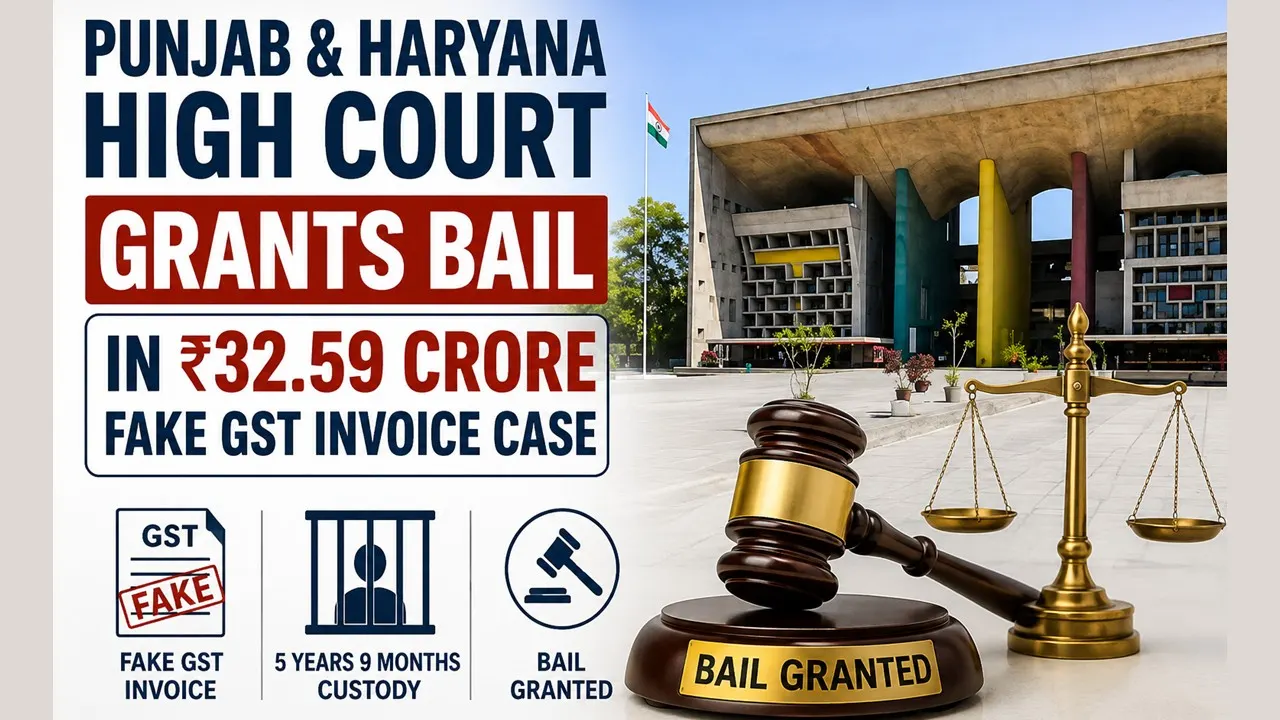
Punjab & Haryana High Court grants bail citing prolonged incarceration and slow progress of GST trial.
FIR alleged creation of fake firms for fraudulent GST invoicing
 Meetu Kumari
 May 19, 2026
The Punjab and Haryana High Court has granted regular bail to accused Anupam Singla in a fake GST invoice case involving alleged wrongful availment of input tax credit amounting to over Rs. 32.59 crore. Justice Sanjay Vashisth observed that prolonged incarceration and slow progress of trial justified grant of bail despite the seriousness of allegations. The Court pointed out that
“It is well settled that, until the charges are proved in accordance with law, an accused cannot be detained in custody for an indefinite period.”

The petitioner was booked under Sections 420, 467, 468 and 471 of the IPC along with Sections 132(1)(b) and 132(1)(c) of the GST Act, 2017 in FIR No. 08 dated 05.01.2019 registered at Police Station Sadar Kanina, District Mahendergarh, Haryana.
As per the prosecution case, M/s Poonam Industries was allegedly created as a fake firm for generating bogus GST invoices and availing fraudulent input tax credit. The authorities alleged that the firm initially filed NIL GST returns from April to September 2018, but later disclosed massive turnover figures in October and November 2018 through paper transactions without actual movement of goods. The prosecution claimed that fake billing activities caused a loss of approximately Rs. 32.59 crore to the government exchequer.
The State alleged that the petitioner was the main accused who facilitated creation of fake firms and earned money through forged GST billing transactions. During investigation, several beneficiary firms were allegedly found to be non-existent entities engaged only in paper transactions.

Before the High Court, the petitioner argued that he had already undergone more than five years and nine months of custody in the present case. It was further submitted that out of 51 prosecution witnesses, only 27 had been examined till date, showing that the trial was proceeding at a slow pace.
The State opposed the bail plea on the ground that the petitioner was involved in several other criminal cases and had already been convicted in nine matters. However, it was also acknowledged that the petitioner had been acquitted in seven cases and continued to remain in custody in certain matters.
“Consequently, petitioner has already undergone a considerable period of incarceration.”
The High Court observed that although the allegations were serious in nature, the prolonged custody period and pendency of substantial prosecution evidence entitled the petitioner to consideration for bail. The Court clarified that the petitioner shall not influence witnesses or tamper with evidence and warned that any future involvement in similar activities would result in automatic cancellation of bail.
Therefore, the High Court allowed the petition and directed release of the petitioner on regular bail subject to furnishing appropriate bail bonds.
To Read Full Judgment, Download PDF Given Below.
About Author


Meetu Kumari
Content Manager
 Studycafe
 Jodhpur, Rajasthan, India
 2264
2264My Recent Articles
- ITAT Condones 302-Day Delay, Restores Salary Assessment for Fresh VerificationPremium
- ITAT Condones Delay After Tax Consultant's Death, Restores Appeals for Fresh HearingPremium
- ITAT Remands Salary Addition, Says Taxability Depends on Salary Becoming Due, Not Mere ReceiptPremium
- ITAT Deletes TP Royalty Adjustment, Orders Fresh Review of Commission BenchmarkingPremium
- ITAT Quashes Reassessment Over Unsigned Section 148 Notice Issued to AssesseePremium
Loading suggestions…


Recent Posts

All Posts

Recent Posts
All Posts