Important Changes in GSTR Filing Starting from October 1:
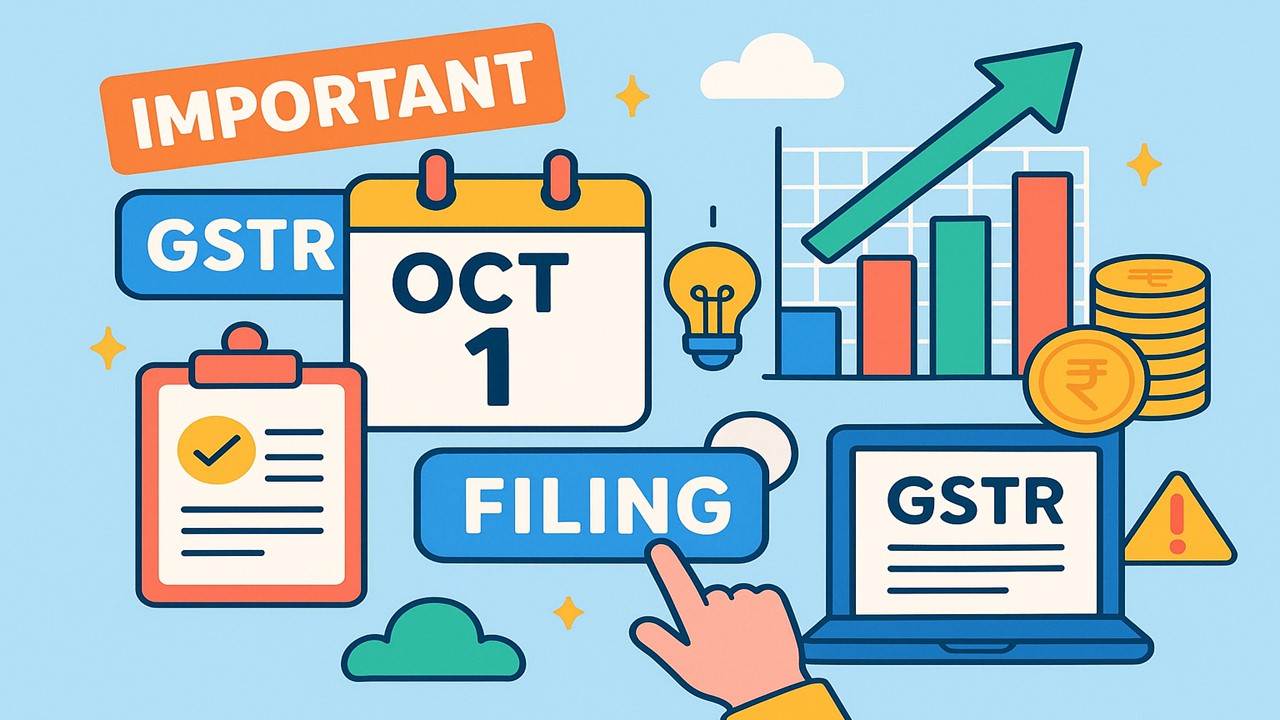
Know the changes introduced by GSTN to the GST return filing process that are applicable from October 1, 2025.
GST return Filing Changes from October 2025
 Nidhi
Nidhi Oct 2, 2025
Important Changes in GSTR Filing Starting from October 1
As the month of october starts, there are some changes in return filing that every taxpayer and business must know. The Goods and Services Tax Network (GSTN) has recently introduced some important changes to the GST return filing process that are applicable from October 1, 2025. Let us know about them one by one.
GSTR-2B Manual Generation
Earlier, GSTR-2B was created automatically. But now, you will have to do it manually by logging into the Invoice Management System (IMS), accepting or rejecting each invoice from your suppliers, and then generating your GSTR-2B.
Accepted Invoices for ITC Claim
Now, taxpayers can claim the Input Tax Credit (ITC) only for the invoices that they have accepted in IMS. Any rejected invoices will not be included, and the pending invoices will not be shown in your GSTR-3B until you accept them.
Changes in Credit Note Taxability
If the recipient rejects a credit note in IMS, the supplier's tax liability will not be reduced unless the recipient reverses the ITC that you claimed earlier on that credit note. So both the supplier and the recipient must update their records. The change is only for credit notes issued on or after 1st October 2025, and past credit notes will follow the old rules except for post-sale discounts, where the ITC reversal declaration is still mandatory.
GSTR-3B Filing Now Depends on GSTR-2B
Now, you cannot file GSTR-3B until your GSTR-2B is generated. For this, you must first accept or reject the invoices in IMS to avoid any delay.
No Edit in GSTR-3B Tax Liability
From now on, the tax liability shown in GSTR-3B will be autofilled and locked. So, if you want to make any changes, you must do it in GSTR-1 or GSTR-1A.
What Should Taxpayers Do?
Here is how you can stay updated and avoid penalties:
- Check GSTR-2B regularly and match it with your purchase records.
- Train your team to understand the new process and use IMS.
- Use automation tools to save time and avoid manual errors.
- Stay updated to avoid issues with ITC claims or late filing.
About Author


Nidhi
Content Writer
Nidhi is a skilled content writer specializing in personal finance. She creates clear, engaging articles on mutual funds, investments, insurance, and wealth-building strategies. With a passion for simplifying complex financial topics, Nidhi helps readers make informed money decisions with confidence. She can be reached at [email protected]
Nidhi is a skilled content writer specializing in personal finance. She creates clear, engaging articles on mutual funds, investments, insurance, and wealth-building strategies. With a passion for simplifying complex financial topics, Nidhi helps readers make informed money decisions with confidence. She can be reached at [email protected]
 Studycafe
 New Delhi, Delhi, India
 1832
1832My Recent Articles
- Karnataka High Court Gives Another Chance in GST Matter Due to Lack of Hearing
- Delay Should Be Condoned if Explanation is Unrefuted: ITAT
- Non-Service of Income Tax Notice, Ill health of taxpayer, ITAT condones Appeal filing delay
- Books of Accounts Cannot be Rejected Without Any Specific Defect: ITAT Kolkata
- Karnataka High Court Sends ITC Matter Back to GST Authorities for Reconsideration
Up Next
Loading suggestions…


Recent Posts


All Posts


Tags
Recent Posts
All Posts