ITAT Cancels Audit Default Penalty Over Jurisdictional Defect:
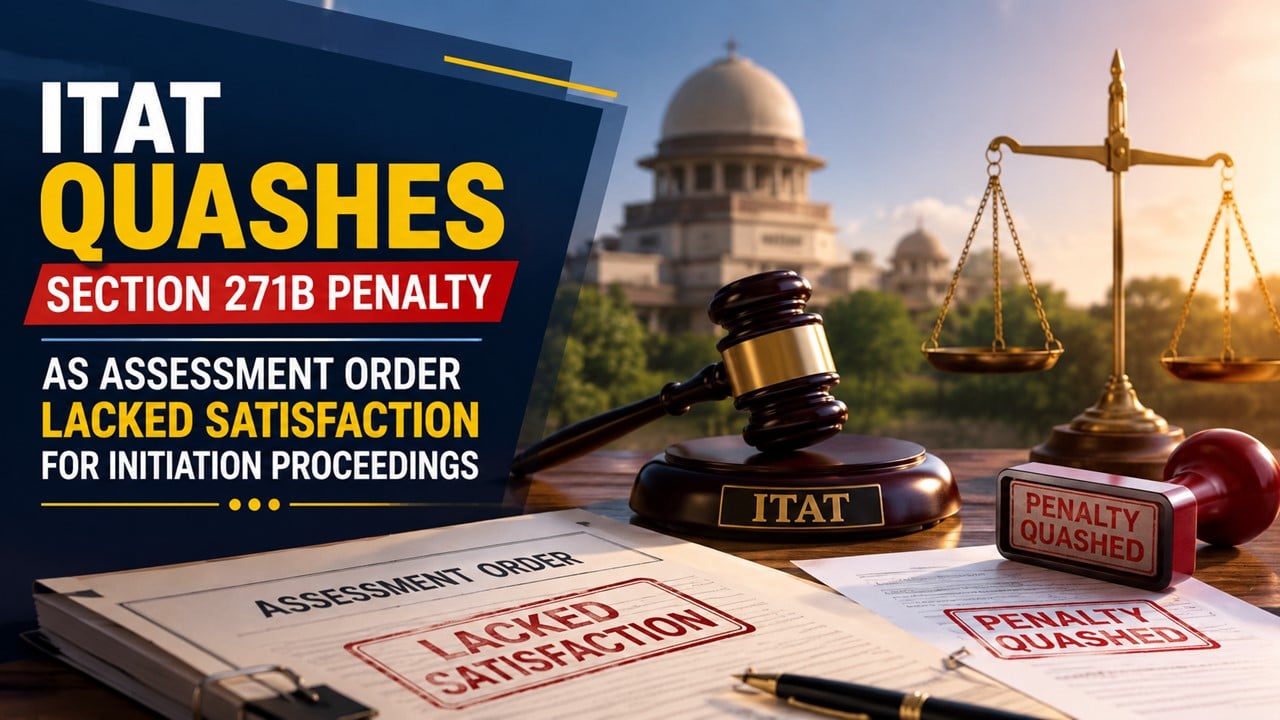
ITAT quashes Section 271B penalty as assessment order lacked satisfaction for initiation proceedings.
Absence Of Satisfaction In Assessment Order Vitiates Penalty Jurisdiction
 Meetu Kumari
 Jun 22, 2026
The Nagpur Bench of the Income Tax Appellate Tribunal (ITAT) has quashed a penalty imposed under Section 271B of the Income Tax Act, holding that the Assessing Officer (AO) failed to record any satisfaction in the assessment order regarding the alleged default, thereby invalidating the very initiation of penalty proceedings.
The assessee, MSE Employees Co-operative Credit Society Ltd., challenged the penalty levied under Section 271B for Assessment Year 2017-18. It was argued that although the assessment order was passed on 27.11.2019 and the tax audit report had been filed on 19.09.2018, the penalty proceedings were initiated only through a notice dated 13.02.2024, resulting in an inordinate delay. The assessee further contended that there was substantial compliance with Section 44AB since the statutory audit under the Maharashtra Co-operative Societies Act, 1960 had been completed by 30.06.2017 and Form 3CA-3CD was furnished during assessment proceedings.

During the hearing, the assessee also raised a jurisdictional challenge, submitting that the AO had not recorded any satisfaction in the assessment order for initiating penalty proceedings under Section 271B.
The Tribunal examined the assessment order and noted that the AO had considered the statutory audit report during assessment proceedings while examining the assessee’s claim under Section 80P. However, nowhere in the assessment order was there any observation that the assessee had failed to comply with Section 44AB or that penalty proceedings under Section 271B were required to be initiated. The assessment order also did not contain any separate direction or satisfaction for commencement of penalty proceedings.

Rejecting the Revenue’s contention that such satisfaction was not necessary, the Tribunal held that penalty under Section 271B cannot be sustained when the Assessing Officer has failed to record satisfaction in the assessment order. Relying on the decision of the Allahabad High Court in CIT v. ECC Projects Pvt. Ltd., the Tribunal observed that the assumption of jurisdiction itself stood vitiated.
Thus, the ITAT allowed the assessee’s appeal and quashed the penalty order, holding that the defect went to the root of jurisdiction and rendered the remaining grounds academic.
To Read Full Order, Download PDF Given Below.
About Author


Meetu Kumari
Content Manager
 Studycafe
 Jodhpur, Rajasthan, India
 2264
2264My Recent Articles
- ITAT Condones 302-Day Delay, Restores Salary Assessment for Fresh VerificationPremium
- ITAT Condones Delay After Tax Consultant's Death, Restores Appeals for Fresh HearingPremium
- ITAT Remands Salary Addition, Says Taxability Depends on Salary Becoming Due, Not Mere ReceiptPremium
- ITAT Deletes TP Royalty Adjustment, Orders Fresh Review of Commission BenchmarkingPremium
- ITAT Quashes Reassessment Over Unsigned Section 148 Notice Issued to AssesseePremium
Loading suggestions…


Recent Posts


All Posts


Recent Posts
All Posts