ITAT Condones Nearly 3-Year Delay Caused by President’s Illness, Demise and COVID Disruptions:
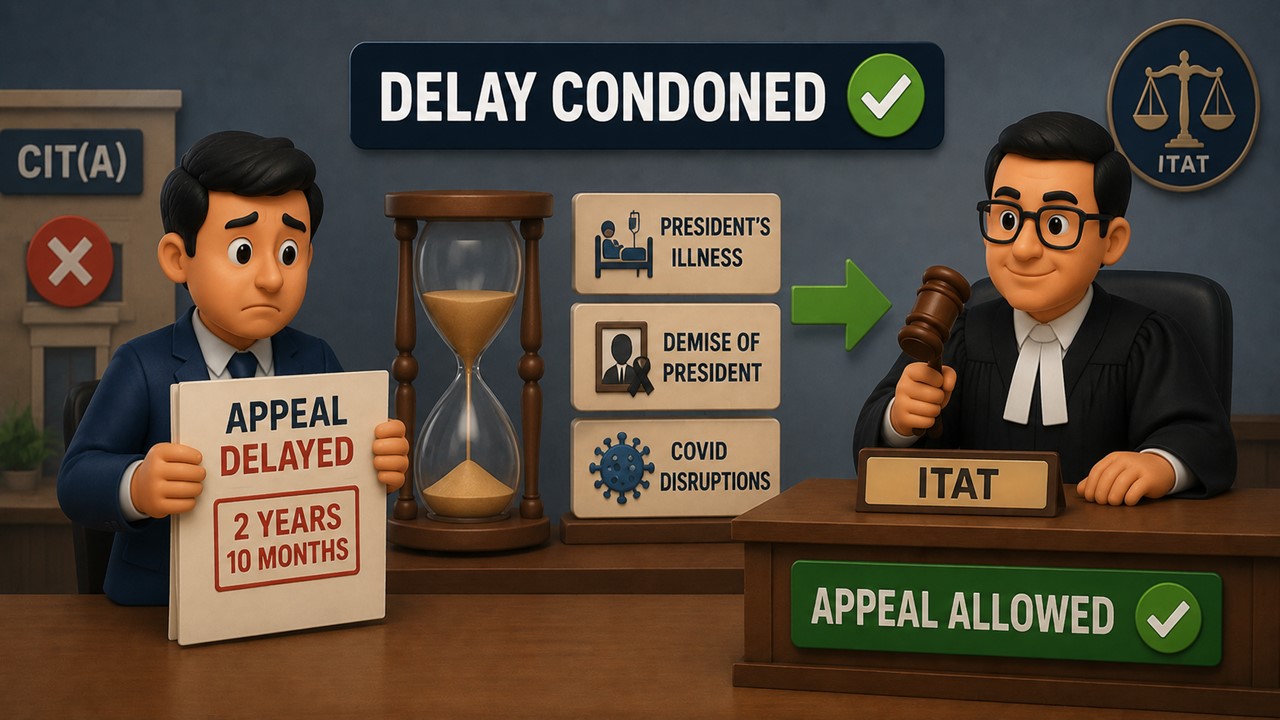
ITAT condoned a 2.10-Year appeal delay caused by the President’s illness, demise, and COVID-19 disruptions, directing a fresh hearing on merits.
ITAT Grants Relief for 2.10-Year Appeal Delay
 Vanshika verma
 Jun 19, 2026
ITAT Condones Nearly 3-Year Delay Caused by President’s Illness, Demise and COVID Disruptions
The Kolkata Bench of Income Tax Appellate Tribunal (ITAT) has come to the rescue of M/s Duars Rural Development Project for the delay of almost 2 years and 10 months in filing its appeal before the CIT(A).
The dispute involved is an intimation dated 26.09.2019 issued by the Central Processing Centre (CPC), Bengaluru under Section 143(1) of the Income Tax Act, making certain additions to the income of the assessee. The assessee was aggrieved by these additions and preferred an appeal before the CIT(A). However, CIT(A) dismissed the appeal by an order dated August 13, 2025 only on the ground that it had been filed after long delay.
The assessee before the ITAT stated that the delay was caused on account of the serious illness and subsequent demise of its former President Mr. Nicholas Narjinary in the year 2022. The organisation also underwent struggles during the time of COVID-19 pandemic. The assessee submits that the matter was later taken up by the son of the deceased President, Mr. Joshua Narjinary who filed the appeal after taking charge and coming to know about the outstanding tax demand.
On the other hand, Revenue opposed the request, arguing that the assessee had failed to show sufficient cause for such a long delay and that the CIT(A)'s decision was justified.
After considering all the facts of the case, the Tribunal noted that the delays can be condoned only in cases where there are genuine and unavoidable circumstances beyond the control of the taxpayer. The Bench referred to the landmark decision of the Supreme Court in Collector, Land Acquisition v. Mst. Katiji & Others (1987) wherein the Supreme Court has laid down that the courts should adopt a liberal approach when sufficient cause is shown and substantial justice is involved.
The Tribunal noted the illness and death of the President and disruption due to the COVID 19 pandemic and held that the assessee had shown reasonable cause for the delay. The ITAT, accordingly, condoned the delay of 2 years and 10 months and set aside the order of the CIT(A).
The matter has now been sent back to the CIT(A) with directions to hear the appeal afresh and decide it on merits after providing the assessee a proper opportunity of being heard.
As a result, the appeal of the assessee was partly allowed for statistical purposes.

About Author


Vanshika verma
Content Writer
Vanshika Verma is a Content Writer with 1+ year of experience at Studycafe.in. A B.Com graduate from Delhi University, She writes articles on Finance, Tax, ICAI, GST, and the latest financial news, with a focus on making complex topics easy for readers and professionals.
Vanshika Verma is a Content Writer with 1+ year of experience at Studycafe.in. A B.Com graduate from Delhi University, She writes articles on Finance, Tax, ICAI, GST, and the latest financial news, with a focus on making complex topics easy for readers and professionals.
 Studycafe
 Delhi, Delhi, India
 2064
2064My Recent Articles
- ITAT Gives Taxpayer Another Chance, Orders Fresh Assessment After Condoning Delay
- ITAT Remands Section 80G Approval Application to CIT (Exemptions) for Fresh Consideration in Light of CBDT Circular on Delay Condonation
- ITAT Sets Aside Ex-Parte CIT(A) Order Over Alleged Wrong Email Notice, Directs Fresh Hearing After Service at Registered Email Address
- Bihar Vigilance Bureau Arrests Two PHC Employees in Rs 8,600 Bribery Case
- Nirmala Sitharaman Announces Faceless GST Administration System for 2 Lakh Taxpayers Operating Across Multiple States
Up Next
Loading suggestions…


Recent Posts

All Posts

Tags
Recent Posts
All Posts