ITAT Grants Major Relief to Viraj Group, Rules Seized Cash Transactions Cannot Be Taxed Separately:
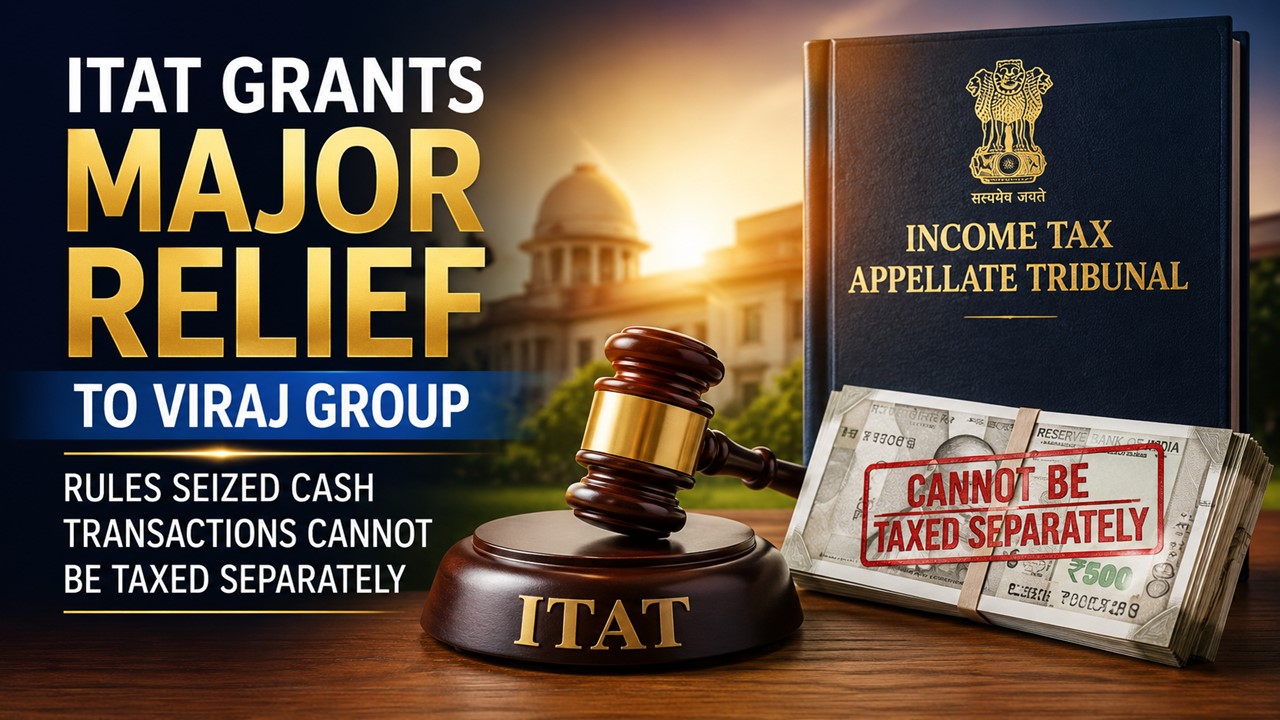
The ITAT Pune ruled that alleged unaccounted cash transactions recorded in seized cash books of the Viraj Group cannot be taxed separately in the hands of individual directors and entities.
ITAT Holds Alleged Unaccounted Cash Belonged to Common Viraj Group Fund
 Saloni Kumari
 Jun 1, 2026
Premium
ITAT Grants Major Relief to Viraj Group, Rules Seized Cash Transactions Cannot Be Taxed Separately
The ITAT Pune ruled that alleged unaccounted cash transactions recorded in seized cash books of the Viraj Group cannot be taxed separately in the hands of individual directors and entities.
Also Read
Can Same-Sex Partners Claim Tax Exemption on Gifts as Spouses? Karnataka High Court to ExamineITAT Remits Section 80G Renewal Application to CIT(E) for Fresh Consideration in Light of CBDT CircularITAT Remands Reassessment Case for Fresh Adjudication ITAT Remands Ex-Parte Appeal for Fresh Adjudication
About Author


Saloni Kumari
Content Writer
Saloni is a Content Writer with 2+ years of experience at studycafe.in. She writes legal, taxation, and finance related content including GST, Income Tax etc. Skilled in translating complex judicial pronouncements and regulatory developments into clear, and reader-friendly articles. Experienced in covering judgements of ITAT, High Court, GSTAT, and news related to Income Tax, GST, and corporate law. She can be reached at [email protected].
Saloni is a Content Writer with 2+ years of experience at studycafe.in. She writes legal, taxation, and finance related content including GST, Income Tax etc. Skilled in translating complex judicial pronouncements and regulatory developments into clear, and reader-friendly articles. Experienced in covering judgements of ITAT, High Court, GSTAT, and news related to Income Tax, GST, and corporate law. She can be reached at [email protected].
 StudyCafe
 Delhi, Delhi, India
 2888
2888My Recent Articles
- Can Same-Sex Partners Claim Tax Exemption on Gifts as Spouses? Karnataka High Court to Examine
- ITAT Remits Section 80G Renewal Application to CIT(E) for Fresh Consideration in Light of CBDT Circular
- Dreamfolks Services Faces Rs 1.58 Crore IGST Demand Over ITC Availment on Invoices Issued by GST-Cancelled Supplier
- ITAT Restores Taxpayer's Appeal In Interest of Natural Justice After CIT(A)'s Failure to Decide Appeal on Merits
- ITAT Restores Income Tax Appeal to CIT(A) After Condoning 115-Day Delay Due to COVID-19 Genuine Hardship
Up Next
Loading suggestions…


Recent Posts


All Posts
Recent Posts
All Posts