ITAT Grants Section 54F Relief; Accepts Stamp Value for Cost:
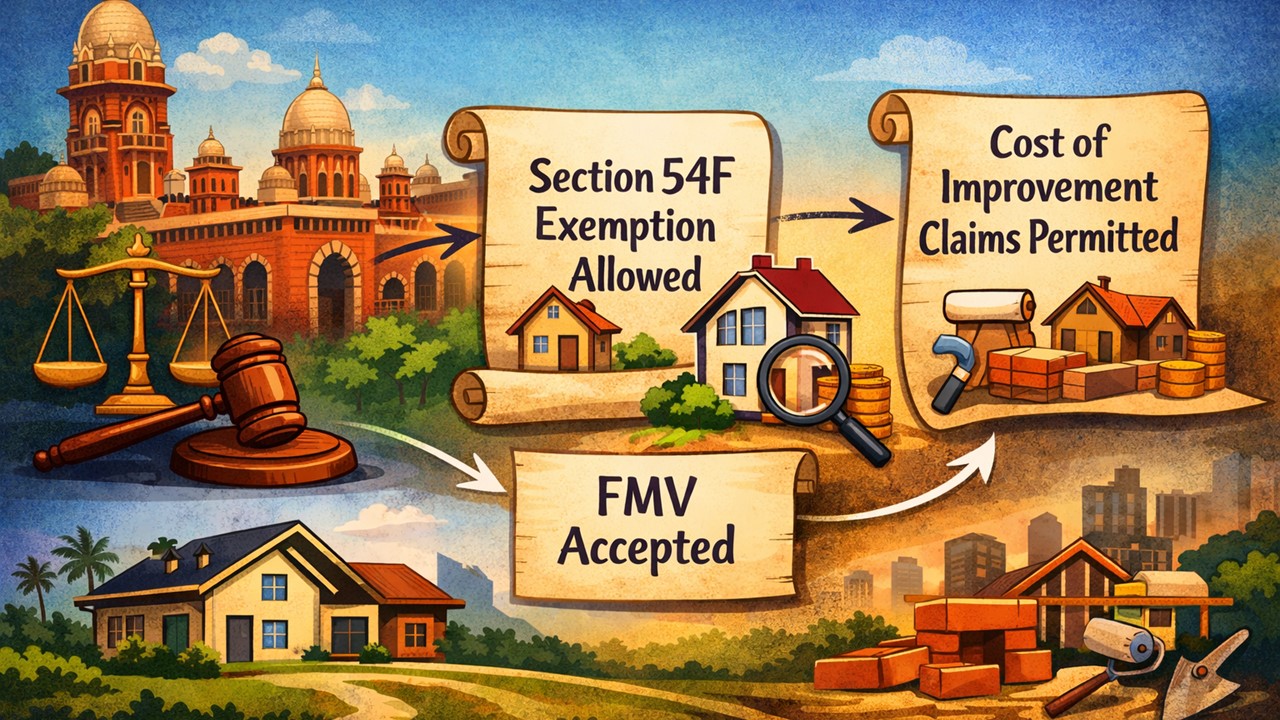
ITAT allows the Section 54F exemption, accepts FMV and permits cost of improvement claims.
FMV Accepted; Section 54F Exemption Allowed On CGAS Compliance
 Meetu Kumari
 Apr 16, 2026
ITAT Grants Section 54F Relief; Accepts Stamp Value for Cost
The assessee, an individual, filed his return for AY 2023–24 declaring income of Rs. 54.83 crore. The case was picked up for scrutiny mainly due to a large deduction claimed under Section 54F. During assessment under Section 143(3), the Assessing Officer made several additions to long-term capital gains, including disallowing the cost of acquisition, cost of improvement, LTCG on land, and the Section 54F exemption.
During the year, the assessee had sold multiple land parcels. He computed capital gains by adopting the fair market value (FMV) as of 01.04.2001, claimed indexed cost, added improvement expenses, and sought exemption under Section 54F by depositing the amount in the Capital Gains Account Scheme (CGAS). The CIT(A) gave partial relief but upheld major additions, leading to an appeal before the Tribunal.
Issue Before Court: Whether FMV as on 01.04.2001 based on stamp duty value can be adopted as cost of acquisition, whether reimbursed expenses qualify as cost of improvement, and whether Section 54F exemption can be denied despite timely CGAS deposit and subsequent investment.
Tribunal Decided: The Tribunal allowed the appeal in favour of the assessee. It held that the assessee was entitled to adopt FMV as of 01.04.2001. Relying only on the sale deed value was not correct, especially when the stamp duty records showed a higher value. The indexed cost was therefore accepted. On the cost of improvement, the Tribunal found the expenses genuine. Even though some payments were initially made by others, they were reimbursed through proper banking channels and supported by documents. These were allowed as legitimate expenses. For Section 54F, the Tribunal noted that the assessee had deposited the full amount in CGAS within the due date. It clarified that actual utilisation is to be checked later, not in the same year. Since the assessee ultimately invested within time, the exemption could not be denied.
To Read Full Order, Download PDF Given Below
About Author


Meetu Kumari
Content Manager
Meetu Kumari is an Experienced Advocate and Content Writer with 4+ years of demonstrated history of working in the law practice industry. Skilled in Developing Content, Researching, and Drafting. Strong professional with a Bachelor of Science (B.Sc.) focused on Law from Gujarat National Law University.
Meetu Kumari is an Experienced Advocate and Content Writer with 4+ years of demonstrated history of working in the law practice industry. Skilled in Developing Content, Researching, and Drafting. Strong professional with a Bachelor of Science (B.Sc.) focused on Law from Gujarat National Law University.
 Studycafe
 Jodhpur, Rajasthan, India
 2264
2264My Recent Articles
- ITAT Condones 302-Day Delay, Restores Salary Assessment for Fresh VerificationPremium
- ITAT Condones Delay After Tax Consultant's Death, Restores Appeals for Fresh HearingPremium
- ITAT Remands Salary Addition, Says Taxability Depends on Salary Becoming Due, Not Mere ReceiptPremium
- ITAT Deletes TP Royalty Adjustment, Orders Fresh Review of Commission BenchmarkingPremium
- ITAT Quashes Reassessment Over Unsigned Section 148 Notice Issued to AssesseePremium
Up Next
Loading suggestions…


Recent Posts

All Posts

Recent Posts
All Posts