ITR Filing 2025: How Tax Loss Harvesting Can Assist Investors in Saving Income Tax During Market Decline?:
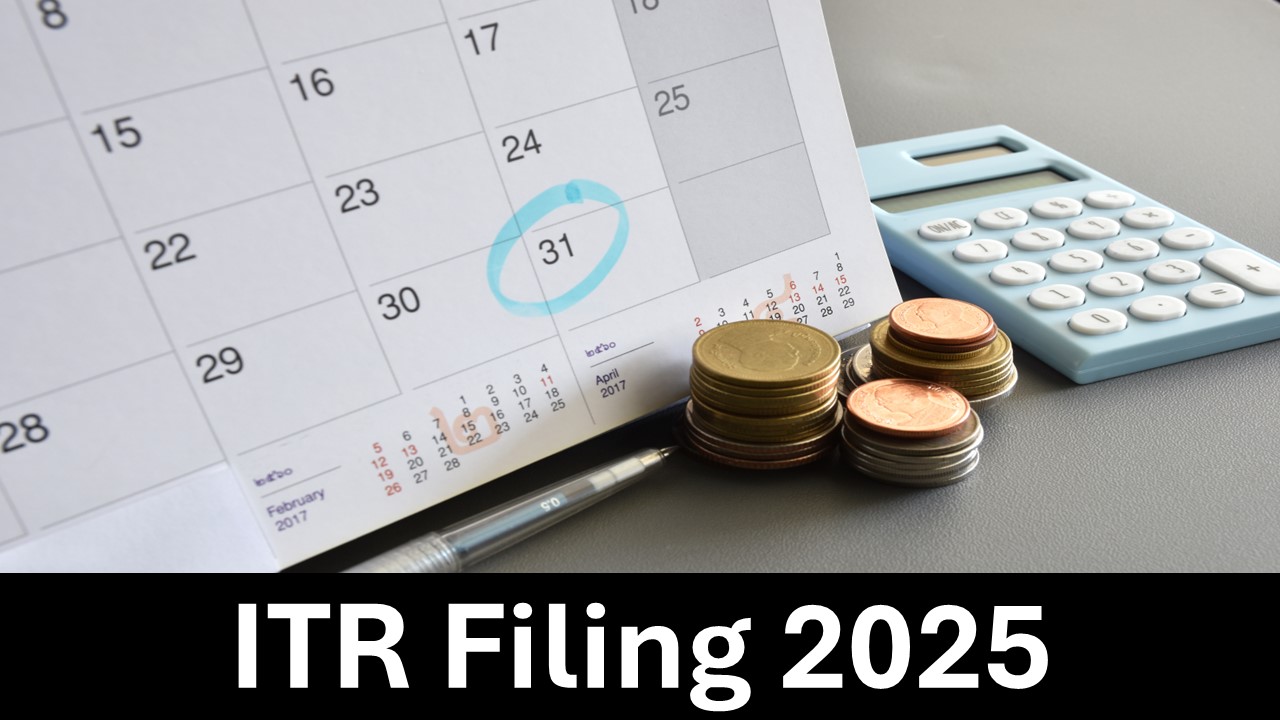
Since the stock market has seen considerable volatility this year, most investors have made losses in different segments
ITR Filing 2025
 Anisha Kumari
 Mar 18, 2025
Table of Contents

ITR Filing 2025: How Tax Loss Harvesting Can Help Investors Save Income Tax in a Falling Market?
As the stock market has witnessed a lot of volatility this year, the majority of the investors have incurred losses across various segments. Several stocks, including IndusInd Bank, Hero MotoCorp, Bajaj Auto, Asian Paints, and Tata Motors, have witnessed sharp declines in the past six months due to persistent market corrections. However, such losses can be utilized strategically to counterbalance tax liabilities for the fiscal year 2024-25 (FY25), which concludes on March 31, by utilizing a method known as tax loss harvesting. What is Tax Loss Harvesting?
Tax loss harvesting is a method by which investors can match capital losses against capital gains, and therefore reduce overall tax liability. When losses are more than gains in a given financial year, the excess losses can be carried forward for a period of eight years and set off against subsequent capital gains.
It is important to note that long-term capital losses (LTCL) can be offset only against long-term capital gains (LTCG). Short-term capital losses (STCL) can be offset against short-term capital gains (STCG) as well as LTCG.
How Does Tax Loss Harvesting Work?
While the overall market has corrected, there are some stocks that have given positive returns. Bajaj Finance, Kotak Mahindra Bank, JSW Steel, Eicher Motors, and HDFC Bank have appreciated by as much as 17% over the last six months. However, stocks like IndusInd Bank, Hero MotoCorp, Bajaj Auto, Asian Paints, and Tata Motors have suffered substantial losses. From June 2024 to September 2024, the market was broadly positive and the Sensex breached the 85,000 level. Suppose an investor made a short-term capital gain of Rs. 80,000 during the financial year by selling well-performing shares. While that was happening, because of the correction in the market, the investor had unrealised losses of Rs. 60,000. By disposing of the loss-making shares, the investor can minimize the total taxable short-term capital gains to Rs. 20,000 (Rs. 80,000 gains - Rs. 60,000 losses). If the investor had paid tax on the entire short-term capital gain of Rs. 80,000, the tax payable would have been Rs. 16,000, with a tax rate of 20% for short-term capital gains. But after offsetting the losses, tax will now only be payable on Rs. 20,000, with a tax outgo of Rs. 4,000. This process saves Rs. 12,000 in capital gains tax. If the aggregate losses are more than gains in a year, the surplus losses can be brought forward for a maximum period of eight years and utilized to offset taxable gains in subsequent years.Tax Treatment of Various Types of Transactions
- Futures & Options (F&O): Both intraday and delivery-based F&O transactions are treated as business income.
- Stock Delivery Trades: Treated as capital gains or losses depending on the period of holding.
- Intraday Stock Trading: Treated as speculative income.
- Speculative Losses: Not allowable to be offset against business income gains.
Carry Forward of Capital Losses
In case capital losses cannot be completely offset in the same financial year due to a lack of sufficient gains, they can be carried forward for adjustment in the future. For instance, if an investor suffers a short-term capital loss of Rs. 50,000 on equity shares and realizes a short-term capital gain of Rs. 30,000 during the same year, the balance of the Rs.20,000 loss can be carried forward. This loss can be utilized for the offset of taxable capital gains for eight years to come.Rules for Carrying Forward Losses
- The capital losses can be brought forward to eight years for assessment.
- Losses can be offset only against the identical category of revenue in subsequent years (LTCL against LTCG and STCL against STCG/LTCG).
- The ITR is required to be submitted within the due date under Section 139(1) if the carry-forward advantage is to be availed. Delayed filing leads to forfeiture of this advantage.
- Losses on the property of the house can be carried forward against income under any head to the extent of Rs.2 lakh every year.
Example of Carry Forward of Losses
Let us assume that an investor has a short-term capital loss of Rs. 1,00,000 in FY 2023-24 but gets only Rs. 40,000 of short-term capital gains. The loss of the remaining Rs. 60,000 can be carried forward and set off against future capital gains for eight years. Yet it is important to submit the ITR within the initial deadline in order to use the carry-forward benefit. Not doing so means losing this tax-saving advantage. Tax loss harvesting is a useful strategy for investors aiming to maximize their tax burden while offsetting portfolio losses. Investors can lower their capital gains tax liability by selling loss-generating stocks at the right time, with the option to carry forward leftover losses for future tax benefits. Careful planning and timely filing of ITR can maximize the tax benefit of tax loss harvesting, aiding in efficient tax management during a turbulent market.About Author


Anisha Kumari
Content Writer
Anisha is a finance content writer at StudyCafe, writing on domains like mutual funds, stock market trends, GST, income tax, and SIPs. With a knack for breaking down complex financial topics, Anisha delivers clear and insightful articles that keep readers informed and empowered. She can be reached at [email protected].
Anisha is a finance content writer at StudyCafe, writing on domains like mutual funds, stock market trends, GST, income tax, and SIPs. With a knack for breaking down complex financial topics, Anisha delivers clear and insightful articles that keep readers informed and empowered. She can be reached at [email protected].
 Studycafe
  Bokaro, Jharkhand, India
 321
321My Recent Articles
- AI Tools Catch Rs. 68 Lakh Capital Gains Tax Fraud in Hyderabad
- Bank of Baroda Chief Manager’s Suicide Raises Concerns Over Work Pressure
- CA in Trouble: ED Seizes Rs. 6.8 Cr Assets in ERDC Trust Fraud Case
- Gujarat Ambuja Exports Receives GST Demand Order of Rs. 33 Lakh
- GST AAR: Exchange of Silverscrap for finished ornaments Supply
Up Next
Loading suggestions…


Recent Posts


All Posts


Tags
No tags yet.
Recent Posts
All Posts
Tags
No tags yet.