New Income Tax Bill 2025: Defining Virtual Digital Space for Searches and Seizures:
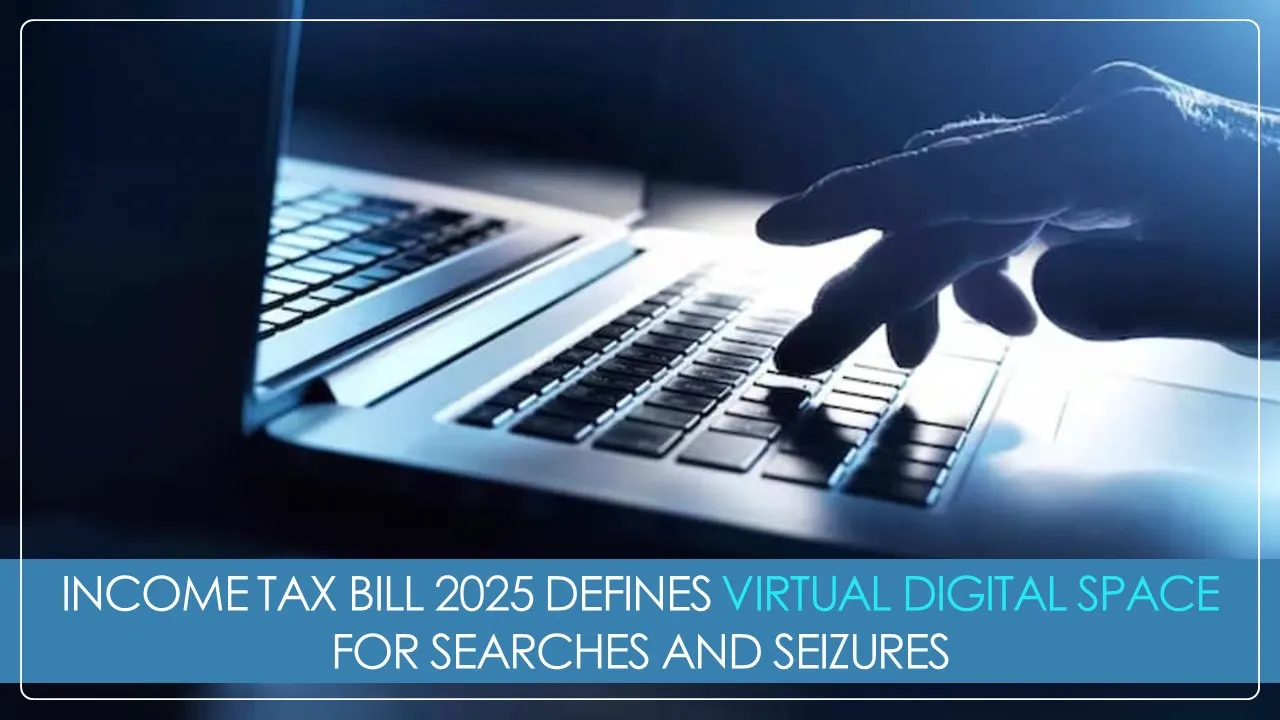
The recently tabled Income-tax Bill seeks to provide tax officials more access to virtual spaces, including social media websites, trading and investment online accounts, banking sites, and email servers.
Income Tax Bill 2025 defines virtual digital space for searches and seizures
 Anisha Kumari
 Mar 10, 2025
New Income Tax Bill 2025: Defining Virtual Digital Space for Searches and Seizures
The recently tabled Income-tax Bill seeks to provide tax officials more access to virtual spaces, including social media websites, trading and investment online accounts, banking sites, and email servers. The bill introduces the phrase "virtual digital space" in the realm of tax surveys, searches, and seizures, which it equates as "any digital space in which users may interact, communicate and transact" using computer technology.
A provision within Section 247 of the bill allows overriding access codes to virtual digital areas in investigations. This has been presented as a simplified version of an already existing provision and not as an expansion of powers. The current Income-tax Act, 1961, already vests similar powers under Section 132, under which tax officials can inspect and confiscate books of accounts and electronic records. But the new bill is very specific in that it includes virtual digital spaces, bringing them under tax scrutiny. Under Section 132 of the existing law, tax officials are empowered to search any premises, whether buildings, vehicles, or aircraft, where money records, cash, bullion, jewellery, or other suspected property relating to tax evasion may be stored.
These provisions entitle authorities to access locked safes and storage compartments to seize such assets. The revised bill extends the powers from the cyberworld, empowering officials to override access controls on computer networks and other virtual systems where credentials are not presented. In addition, the bill states that during search or seizure operations, a properly authorized officer may question any individual who is in control or possession of computer systems, books of accounts, or other digital or physical records of interest. Electronic equipment such as desktops and hard drives and communication data from platforms such as emails, WhatsApp, and Telegram have been utilized by authorities as part of their evidence gathering.
These electronic records are quite crucial in proving tax evasion and determining the extent of unreported income. Sections 132(1)(iib) of the Finance Act, 2002, already require individuals possessing electronic records to provide the access credentials. This is so that tax authorities can access relevant documents and information at the time of investigation. Section 132 also grants powers to legitimate officials to execute search and seizure operations on the basis of convincing information regarding evasion of tax. The Income-tax Bill, 2025, was introduced last month in the Lok Sabha for the purpose of simplifying India's direct tax law, which has been functional for over half a century. The new law seeks to make provisions more streamlined, do away with outdated references, and provide a better legal framework. The bill is awaiting consideration by the Select Committee of Parliament and, upon approval, is set to take effect from April 1, 2026.
About Author


Anisha Kumari
Content Writer
Anisha is a finance content writer at StudyCafe, writing on domains like mutual funds, stock market trends, GST, income tax, and SIPs. With a knack for breaking down complex financial topics, Anisha delivers clear and insightful articles that keep readers informed and empowered. She can be reached at [email protected].
Anisha is a finance content writer at StudyCafe, writing on domains like mutual funds, stock market trends, GST, income tax, and SIPs. With a knack for breaking down complex financial topics, Anisha delivers clear and insightful articles that keep readers informed and empowered. She can be reached at [email protected].
 Studycafe
  Bokaro, Jharkhand, India
 321
321My Recent Articles
- AI Tools Catch Rs. 68 Lakh Capital Gains Tax Fraud in Hyderabad
- Bank of Baroda Chief Manager’s Suicide Raises Concerns Over Work Pressure
- CA in Trouble: ED Seizes Rs. 6.8 Cr Assets in ERDC Trust Fraud Case
- Gujarat Ambuja Exports Receives GST Demand Order of Rs. 33 Lakh
- GST AAR: Exchange of Silverscrap for finished ornaments Supply
Up Next
Loading suggestions…


Recent Posts


All Posts


Tags
No tags yet.
Recent Posts
All Posts
Tags
No tags yet.