Petrol, Diesel and CNG Prices Increased Nationwide Amid Global Crude Surge:
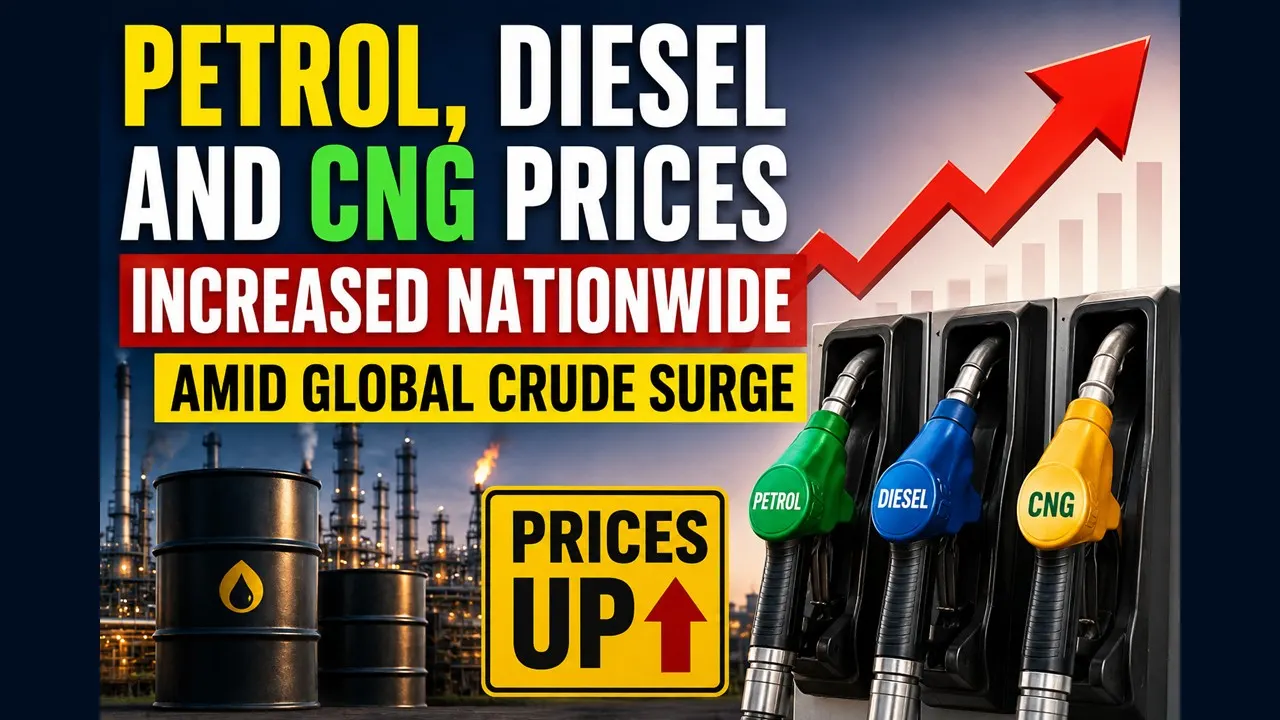
Petrol, diesel and CNG prices increased nationwide amid rising crude oil prices and global tensions.
Petrol and diesel prices increased by Rs.3 per litre nationwide
 Meetu Kumari
 May 16, 2026
Retail prices of petrol, diesel and CNG were increased across the country on Friday, marking the first major fuel price hike for consumers in nearly four years amid rising global crude oil prices triggered by the ongoing Iran war.
The Centre approved an increase of Rs.3 per litre in petrol and diesel prices, while CNG prices were raised by Rs.2 per kg in major cities including Delhi and Mumbai. The revised rates came into effect from May 15.
In Delhi, petrol prices increased from Rs.94.77 per litre to Rs.97.77 per litre, while diesel prices rose from Rs.87.67 per litre to Rs.90.67 per litre. In Mumbai, petrol now costs Rs.106.68 per litre and diesel Rs.93.14 per litre. Kolkata and Chennai also witnessed similar increases due to local tax variations.

CNG prices in Delhi were revised from Rs.77.09 per kg to Rs.79.09 per kg, while in the Mumbai Metropolitan Region, CNG will now retail at Rs.84 per kg after a Rs.2 increase.
The hike comes after months of pressure on state-run oil marketing companies, including Indian Oil Corporation, Bharat Petroleum Corporation Limited and Hindustan Petroleum Corporation Limited, which were reportedly absorbing rising crude oil costs without passing the burden to consumers.

Global crude oil prices surged sharply following the escalation of the Iran conflict, with India’s crude import basket reportedly rising from an average of nearly $69 per barrel in February to over $113 per barrel in subsequent months. According to reports, oil companies were collectively incurring daily losses of nearly Rs.1,600 crore before the latest revision.
Economists, including Finance Commission Chairman Arvind Panagariya, had earlier indicated that domestic fuel prices would eventually need to reflect global market conditions.
The latest increase follows recent appeals by Prime Minister Narendra Modi urging citizens to conserve fuel and reduce unnecessary travel amid global energy uncertainty. Several states, including Delhi, have also announced austerity and fuel-saving measures such as work-from-home arrangements and increased public transport usage.
The fuel price rise is expected to have a broader inflationary impact as higher transportation and logistics costs generally push up prices of essential commodities and services. Analysts have warned that rising fuel costs may affect household consumption and overall economic growth in the coming months.
Despite the ongoing volatility in global energy markets, the Centre has repeatedly stated that India maintains adequate fuel and LPG reserves and there is no shortage of petroleum products in the country.
About Author


Meetu Kumari
Content Manager
 Studycafe
 Jodhpur, Rajasthan, India
 2264
2264My Recent Articles
- ITAT Condones 302-Day Delay, Restores Salary Assessment for Fresh VerificationPremium
- ITAT Condones Delay After Tax Consultant's Death, Restores Appeals for Fresh HearingPremium
- ITAT Remands Salary Addition, Says Taxability Depends on Salary Becoming Due, Not Mere ReceiptPremium
- ITAT Deletes TP Royalty Adjustment, Orders Fresh Review of Commission BenchmarkingPremium
- ITAT Quashes Reassessment Over Unsigned Section 148 Notice Issued to AssesseePremium
Loading suggestions…


Recent Posts



All Posts



Tags
Recent Posts
All Posts