RBI Notifies Revised Cash Reserve Ratio (CRR) Requirements:
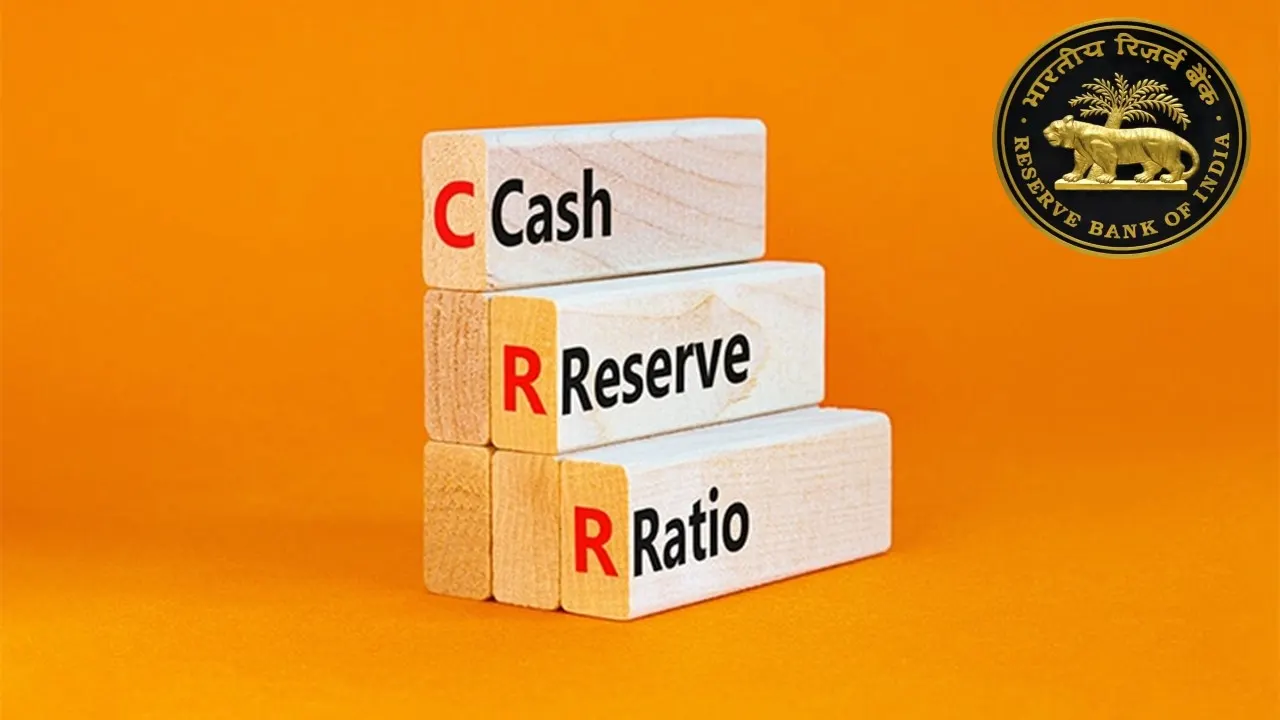
RBI issues a notification revising the Cash Reserve Ratio (CRR) for banks in phases from 3.75% to 3.0%, effective from September to November 2025.
RBI Announces Gradual CRR Reduction Starting September 2025
 Saloni Kumari
 Jul 7, 2025
RBI Notifies Revised Cash Reserve Ratio (CRR) Requirements
The Reserve Bank of India (RBI) has released an official notification dated June 06, 2025, published in the Gazette of India. The notification is to inform all the banks that the Central Bank has introduced few partial modifications in the previous notification (DoR.RET.REC.53/12.01.001/2024-25) dated December 06, 2024, in exercise of its powers granted under the sub-section (1) of Section 42 of the Reserve Bank of India Act, 1934 and sub-section (1) of Section 18 of the Banking Regulation Act, 1949 (10 of 1949), read with Section 56 thereof.
The Reserve Bank of India (RBI) has issued a new rule. The new rule is regarding the average Cash Reserve Ratio (CRR) that every bank is required to keep with the central bank (3.75 per cent, 3.5 per cent, 3.25 per cent and 3.0 per cent), over four different time periods starting from September 2025. Here is how the new CRR percentages will be applied:
This decision is taken using the powers granted to the RBI under:
| Effective Date (Fortnight) | New CRR Rate |
| From September 6, 2025 | 3.75% |
| From October 4, 2025 | 3.50% |
| From November 1, 2025 | 3.25% |
| From November 29, 2025 | 3.00% |
- Section 42(1) of the Reserve Bank of India Act, 1934: This allows the RBI to ask banks to keep a certain percentage of their deposits with it as reserves.
- Section 18(1) of the Banking Regulation Act, 1949, along with Section 56: These sections extend similar rules to co-operative banks too.
About Author


Saloni Kumari
Content Writer
Saloni is a Content Writer with 2+ years of experience at studycafe.in. She writes legal, taxation, and finance related content including GST, Income Tax etc. Skilled in translating complex judicial pronouncements and regulatory developments into clear, and reader-friendly articles. Experienced in covering judgements of ITAT, High Court, GSTAT, and news related to Income Tax, GST, and corporate law. She can be reached at [email protected].
Saloni is a Content Writer with 2+ years of experience at studycafe.in. She writes legal, taxation, and finance related content including GST, Income Tax etc. Skilled in translating complex judicial pronouncements and regulatory developments into clear, and reader-friendly articles. Experienced in covering judgements of ITAT, High Court, GSTAT, and news related to Income Tax, GST, and corporate law. She can be reached at [email protected].
 StudyCafe
 Delhi, Delhi, India
 2937
2937My Recent Articles
- ITAT Upholds Rs 2.76 Lakh Addition, Holds Stock Exchange and Banking Records Alone Cannot Prove Genuine LTCG
- ITAT Deletes Rs 1.80 Crore Addition, Holds Asset Revaluation Does Not Mean Fresh Investment
- ITAT Denies Rs 1.90 Lakh Section 80GGC Deduction Over Donation to Apna Desh Party, Relies on Supreme Court Judgement
- ITAT Deletes Rs 10.76 Lakh Expense Disallowance, Remands Rs 17.66 Lakh Cash Payment Issue
- ITAT Quashes Bogus LTCG Assessment for Non-Service of Mandatory Section 143(2) Notice
Up Next
Loading suggestions…


Recent Posts
All Posts

Tags
Recent Posts
All Posts