Supreme Court: Failed Film Investment Not Cheating Without Fraudulent Intent:
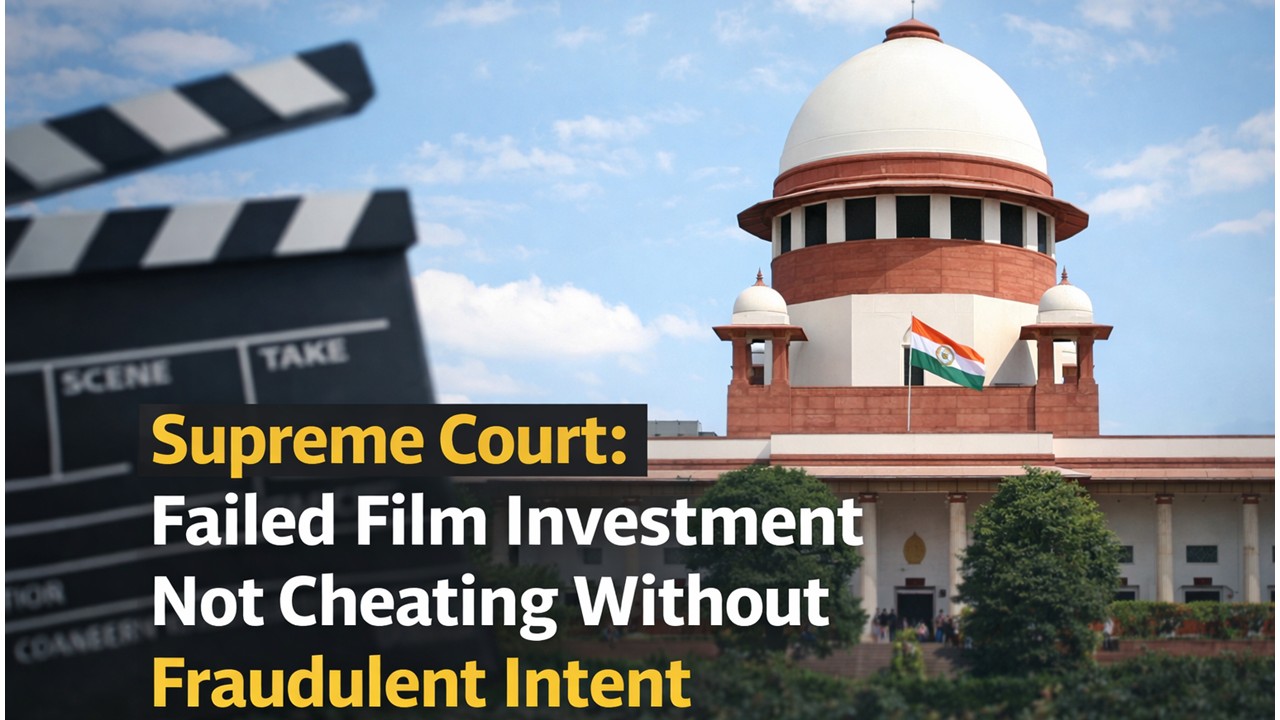
SC rules breach of profit-sharing in film project is civil dispute, not cheating under IPC
Mere breach of profit-sharing promise in risky venture is not cheating
 Meetu Kumari
 Mar 20, 2026
Supreme Court: Failed Film Investment Not Cheating Without Fraudulent Intent
The case stemmed from a financial arrangement between the parties involving investment in a film project. The complainant had invested money with the understanding that he would receive a share in the film’s profits, which was later increased after further contributions. Although the film was eventually completed and released, it did not perform as expected and failed to generate profits.
Tensions arose when the complainant objected to the film’s release, following which the appellant issued post-dated cheques to return the invested amount. These cheques were dishonoured due to insufficient funds, leading to criminal proceedings for breach of trust and cheating. While the High Court dropped the charge of criminal breach of trust, it allowed the cheating charge to continue, prompting the appellant to approach the Supreme Court.
Main Issue: Whether failure to honour profit-sharing promise amounts to cheating under Section 420 IPC.
SC's Ruling: The Supreme Court set aside the continuation of criminal proceedings, holding that the offence of cheating was not made out in the facts of the case. It clarified that for cheating to be established, there must be dishonest intent right from the beginning of the transaction, which was clearly absent here.
The Court noted that investing in a film is inherently uncertain, and losses are part of such ventures. Since the film was actually produced and released as promised, the failure to generate profits could not be treated as evidence of fraud. It further observed that issuing post-dated cheques to repay the amount did not indicate any original intention to deceive.
The Court held that mere breach of a promise or inability to repay does not automatically attract criminal liability. As the dispute was essentially commercial in nature, the Court quashed the proceedings and left the complainant free to seek remedies through civil law.
To Read Full Judgment, Download PDF Given Below
About Author


Meetu Kumari
Content Manager
Meetu Kumari is an Experienced Advocate and Content Writer with 4+ years of demonstrated history of working in the law practice industry. Skilled in Developing Content, Researching, and Drafting. Strong professional with a Bachelor of Science (B.Sc.) focused on Law from Gujarat National Law University.
Meetu Kumari is an Experienced Advocate and Content Writer with 4+ years of demonstrated history of working in the law practice industry. Skilled in Developing Content, Researching, and Drafting. Strong professional with a Bachelor of Science (B.Sc.) focused on Law from Gujarat National Law University.
 Studycafe
 Jodhpur, Rajasthan, India
 2264
2264My Recent Articles
- ITAT Condones 302-Day Delay, Restores Salary Assessment for Fresh VerificationPremium
- ITAT Condones Delay After Tax Consultant's Death, Restores Appeals for Fresh HearingPremium
- ITAT Remands Salary Addition, Says Taxability Depends on Salary Becoming Due, Not Mere ReceiptPremium
- ITAT Deletes TP Royalty Adjustment, Orders Fresh Review of Commission BenchmarkingPremium
- ITAT Quashes Reassessment Over Unsigned Section 148 Notice Issued to AssesseePremium
Up Next
Loading suggestions…


Recent Posts

All Posts



Recent Posts
All Posts