State Govt Issues GST Guidelines on Hotels Leasing Space to Event Organisers

The renting or leasing of an immovable property for business or commercial purposes is classified as the supply of a service.

How GST Applies When Hotels Rent Out Space for Exhibitions

Nidhi | Jun 25, 2025 |
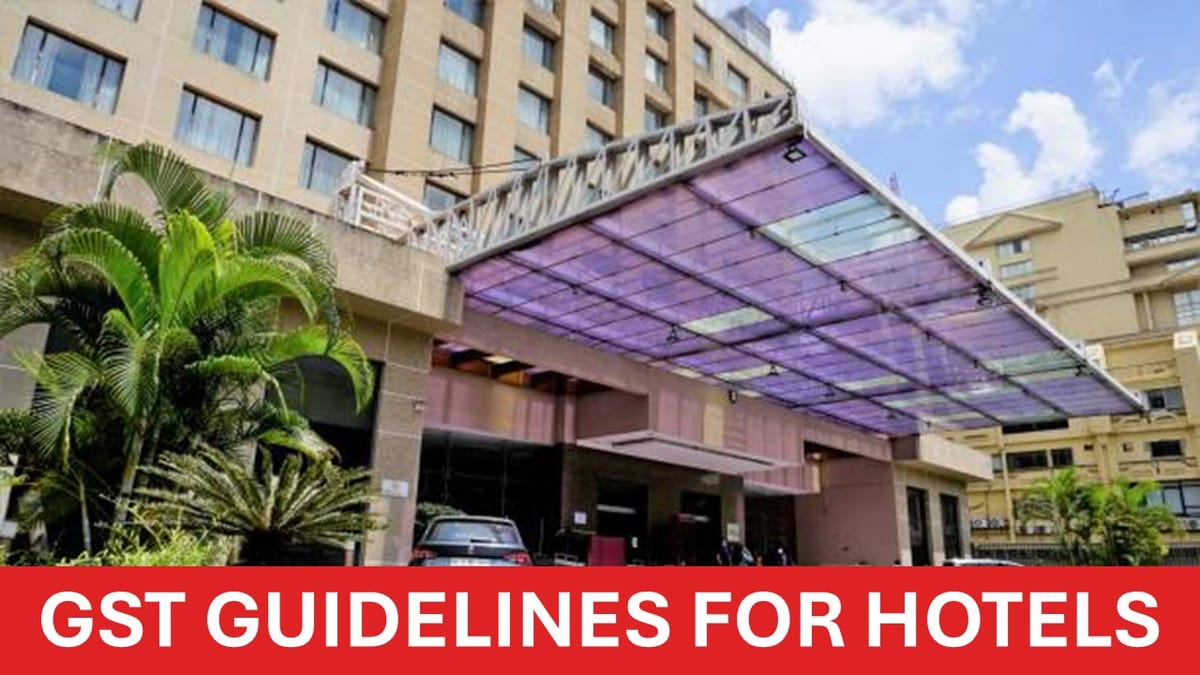

State Govt Issues GST Guidelines on Hotels Leasing Space to Event Organisers

State Govt Issues GST Guidelines on Hotels Leasing Space to Event Organisers

The Telangana Commercial Taxes Department has issued a circular to clarify the GST rules for hotels and convention centres that lease out space for exhibitions, trade fairs, and sales events.

Table of Content
  1. Classification and Applicable GST Rate of Hotels Leasing Space to Organisers
  2. Who Can Claim ITC?
  3. Important Applicable GST Rules
  4. GST Rules for Casual Taxable Person
  5. What if CTP Does Not Follow GST Rules?
  6. Important Guidelines for GST Officers Regarding Hotels and CTPs

Classification and Applicable GST Rate of Hotels Leasing Space to Organisers

Classification and Applicable GST Rate of Hotels Leasing Space to Organisers

The renting or leasing of an immovable property for business or commercial purposes is classified as the supply of a service. Such service is taxed at a GST rate of 18% (9% CGST + 9% SGST) on the rental amount. The GST type (CGST + SGST/UTGST or IGST) will be applicable based on the place of supply. The place of supply (POS) of such immovable property in such a case will be the location of the property.

Who Can Claim ITC?

The organiser renting the space can claim input tax credit (ITC) on the GST they have paid, as long as they meet certain conditions under the GST law. The hotel or convention center must issue a proper GST invoice for the lessee.

Important Applicable GST Rules

  • Even if the rental is short-term, it still needs to be properly documented.
  • The rental income must be reported correctly in the hotel’s GST returns (GSTR-1) with the correct HSN/SAC Code.
  • The officers must make sure that the activity on the premises is not misclassified
  • The exemption that applies to religious premises does not apply to commercial exhibitions or trade events.

GST Rules for Casual Taxable Person

A Casual Taxable Person (CTP) is a person who supplies taxable goods or services occasionally in a taxable territory where he does not have a fixed place of business. For example, if an organiser is coming from outside Telangana and conducting an event here, they are treated as a casual taxable person under the GST law.

The CTPs are compulsorily required to get GST Registration under Section 24(i) of the CGST Act, no matter how much their turnover limit is. CTPs are required to file GST REG-01 for new registration, and the registration must be obtained at least five days before the event. This registration is valid for 90 days and can be extended after this 90-day period using the GST REG-11 form. Additionally, they must pay an advance GST amount based on what they estimate to earn for the period of registration at the time of registration. This advance tax will be adjusted later against their actual tax liability, and they can claim the excess of the tax as a refund.

CTPs must issue GST invoices for all sales made at the event and charge the GST rate applicable to the goods or services. They must file monthly returns (GSTR-1 for sales details, GSTR-3B for tax payment) and a final return (GSTR-10) after the event ends.

They can also claim input tax credit for expenses like rent paid to the hotel or the convention center and other goods or services used at the event, but only if they follow all GST conditions to avail ITC such as having a valid tax invoice, the supply of goods must have taken place in actual, etc.

What if CTP Does Not Follow GST Rules?

  • If the casual taxable person does not comply with the law, they will face the penalties for non-compliance.
  • As mentioned earlier, it is mandatory for Casual Taxable Persons to get a GST Registration Number.
  • They may be penalised with Rs 10,000 or the tax evaded, whichever is higher. The department may even take strict action like blocking the venue.

Important Guidelines for GST Officers Regarding Hotels and CTPs

The GST tax officers are instructed for the following:

  • They must regularly investigate the GST return (GSTR-1 and GSTR-3B) of the hotels.
  • The officers must make sure that the activity of the premises is not misclassified and the applicable tax rate is correct.
  • Make sure that the invoices are properly issued to the organisers.
  • When they suspect tax evasion or misclassification of the supply, the tax officers must issue tax notices.
  • They must keep an eye on the hotels and convention halls to see which ones are hosting events.
  • They must check if event organisers (CTPs) have taken proper GST registration.
  • They must verify that the organisers have paid advance tax, issued proper invoices, and filed returns.
  • Take enforcement action if organisers repeatedly violate the rules.

StudyCafe Membership

Join StudyCafe Membership. For More details about Membership Click Join Membership Button
Join Membership

In case of any Doubt regarding Membership you can mail us at [email protected]

Join Studycafe's WhatsApp Group or Telegram Channel for Latest Updates on Government Job, Sarkari Naukri, Private Jobs, Income Tax, GST, Companies Act, Judgements and CA, CS, ICWA, and MUCH MORE!"



Tags: GST


Author Bio
My Recent Articles
Consumer Protection Authority Restricts Hotels From Adding LPG Charges in Food Bill Income Tax Department Flags High-Risk Transactions on Insight Portal ICICI Prudential Faces Rs 391 Crore Income Tax Demand Over Several Issues Nectar Lifesciences Faces New Litigation from CGST Authority CBIC Notifies New Customs (Electronic Cash Ledger) (Amendment) Regulations, 2026View All Posts