Five-Judge Constitution Bench rejects “heartburn”-based claims and mandates a nationwide 4-point annual roster for District Judge seniority
Meetu Kumari | Nov 19, 2025 |
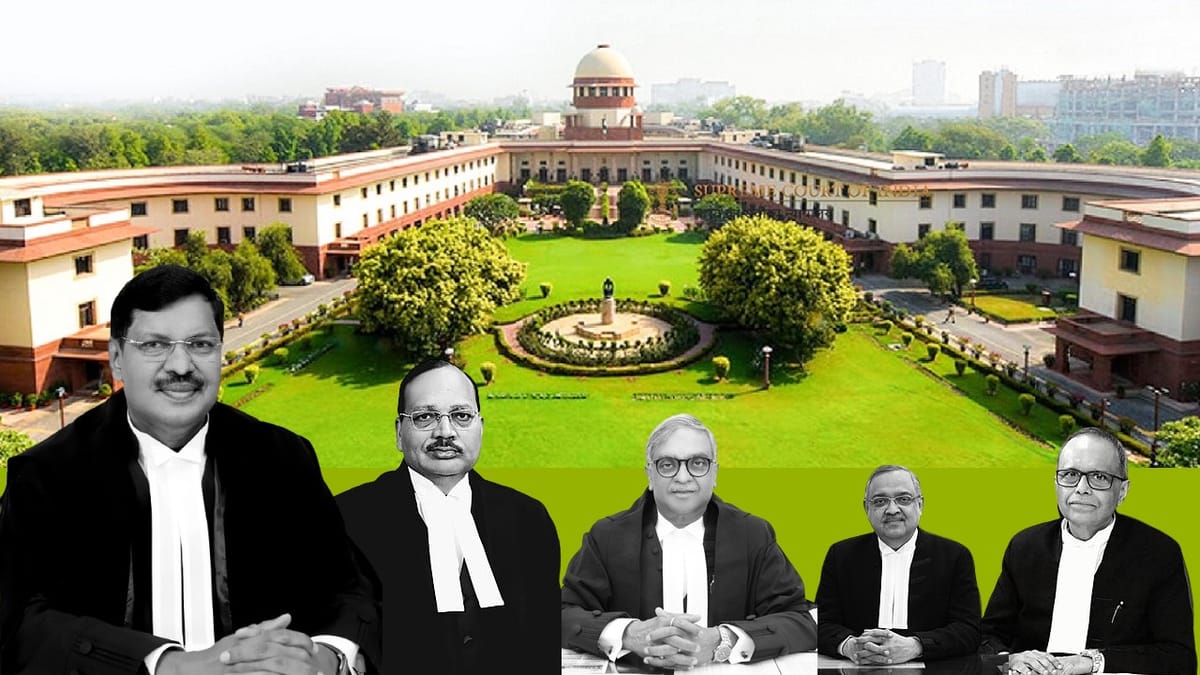

Supreme Court Lays Down Uniform Seniority Framework for Higher Judicial Services Across India
This interlocutory application was filed in the long-standing All India Judges Association litigation to re-examine how seniority is determined among officers entering the Higher Judicial Service (HJS) through three streams. The Amicus Curiae pointed out an “anomalous situation” where many civil judges, despite decades of service, struggled to reach senior HJS posts, causing discontent among promotees as younger DRs progressed faster.
Thereafter, the matter was referred by the Chief Justice to a five-judge Constitution Bench. Written responses from States and high courts revealed divergent roster structures and seniority rules across India. The Court evaluated the history of the AIJA decisions, constitutional limits on judicial control under Articles 233-235, varying service rules among States, and precedents on “birthmark” retention and seniority across recruitment sources. Statistical data showed no consistent nationwide disadvantage to RPs or disproportionate dominance by DRs.

Main Issue: What should be the uniform nationwide criteria for determining inter se seniority among Regular Promotees, LDCE Promotees, and Direct Recruits in the Higher Judicial Services?
SC Held: The Supreme Court declined to grant any special weightage for prior service of RPs or LDCEs and rejected proposals for quotas or accelerated seniority within HJS. It held that once officers enter the HJS, they shed their “birthmark” of recruitment source and must be treated uniformly. Seniority will henceforth be determined by a mandatory 4-point annual roster: 2 RPs, 1 LDCE, 1 DR, repeated in sequence.
All appointees in a recruitment year will be placed in that year’s roster, irrespective of their actual date of appointment, with limited exception. If recruitment is delayed but appointments still occur before the next year’s recruits join, they retain their roster slot. Unfilled DR or LDCE seats in a given year may be filled by RPs, but only in RP positions, not in the diverted categories. The Court clarified that career advancement, Selection Grade, Super Time Scale, and administrative posts must remain merit-cum-seniority within HJS and cannot depend on earlier service in lower cadres.

The judgment directs all States/UTs to amend their service rules within three months to align with these binding national guidelines.
To Read Full Judgment, Download PDF Given Below

In case of any Doubt regarding Membership you can mail us at [email protected]
Join Studycafe's WhatsApp Group or Telegram Channel for Latest Updates on Government Job, Sarkari Naukri, Private Jobs, Income Tax, GST, Companies Act, Judgements and CA, CS, ICWA, and MUCH MORE!"