Cheque Bounce Rules 2025: Tougher Penalties, Speedy Complaints and Major Updates You Should Know:
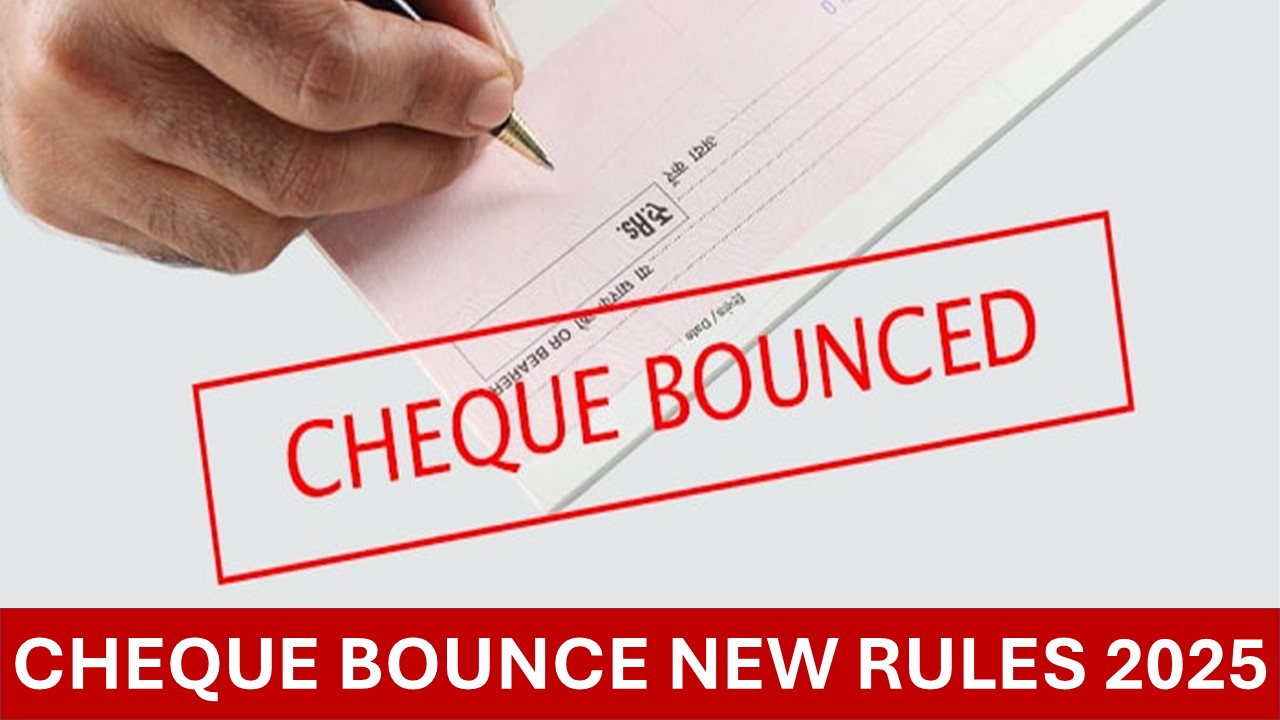
Beginning on April 1 , 2025, the Government of India has brought some important changes to the Negotiable Instrument Act, restricting rules related to the check bounce cases
Cheque Bounce New Rules 2025
 Janvi Koli
 May 8, 2025
Table of Contents

Cheque Bounce Rules 2025: Tougher Penalties, Speedy Complaints and Major Updates You Should Know
Beginning on April 1 , 2025, the Government of India has brought some important changes to the Negotiable Instrument Act, restricting rules related to the check bounce cases. These changes were made in order to prevent financial fraud, improve transparency, and secure genuine payees. Below are the complete information of the new rules regarding the cheque bounce
Cheque Bounce New Rules 2025: Simplified
Tougher Punishment for Check Bounce- If you bounce a cheque on purpose, you can now go to jail for up to 2 years (previously only 1 year)
- You may also have to pay a fine of up to twice the cheque amount
- No punishment if the cheque bounced due to bank errors or technical problems
Easier Way to File Complaints
- You can now file complaints online
- Get the cheque return memo from your bank within 30 days
- You have 3 months to file a complaint (increased from 1 month before)
What Banks Must Do Now
- Send text messages and emails within 24 hours to both parties
- Clearly explain why the cheque bounced
How to Avoid Bouncing Cheques
- Write the correct date
- Don't use torn or damaged cheques
- Make sure you have enough money in your account
- Use crossed cheques for safety (draw two parallel lines)
- Write the amount clearly in both words and numbers
Better Payment Options
- Consider using digital payments: UPI, NEFT, or RTGS
- Always check your bank balance before writing a cheque
If Your Cheque Bounces
- Contact the person you gave the cheque to right away
- Try to pay the money within 15 days to avoid legal trouble
- Talk to a lawyer if you think someone filed a complaint unfairly
About Author


Janvi Koli
Digital Marketing Executive
Janvi is an expert content writer focused on taxation and compliance. She writes insightful articles on income tax, GST, company law, and government policies. Known for her practical approach, she simplifies complex regulations to help readers stay informed and compliant. She can be reached at [email protected]
Janvi is an expert content writer focused on taxation and compliance. She writes insightful articles on income tax, GST, company law, and government policies. Known for her practical approach, she simplifies complex regulations to help readers stay informed and compliant. She can be reached at [email protected]
 Studycafe
 Delhi, Delhi, India
 325
325My Recent Articles
- Ethereum Fundamentals for Finance Students through Understanding Blockchain Beyond Bitcoin
- Major Financial Changes Effective from November 1, Every Indian Should Aware Of
- Top 20 CA Firms in Mumbai for Articleship
- Know How to Setup EV Charging Stations: Step by Step Guide
- Unlock business growth this Independence Day with Bajaj Finserv Business Loan
Up Next
Loading suggestions…


Recent Posts
All Posts

Tags
No tags yet.
Recent Posts
All Posts
Tags
No tags yet.