Compensation to States Act is not beyond the legislative competence of the Parliament
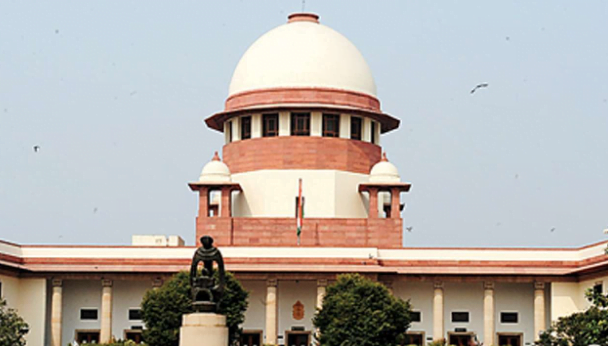
The Compensation to States Act is not beyond the legislative competence of the Parliament : Supreme Court Below is the Order of Supreme Cour
 CA Deepak Gupta
 Oct 4, 2018
Table of Contents

The Compensation to States Act is not beyond the legislative competence of the Parliament : Supreme Court
Below is the Order of Supreme Court in case ofMOHIT MINERAL PVT. LTD. V/S UNION OF INDIA & ANR.
Compensation to States Act is not beyond the legislative competence of the Parliament
Answer to Issue No.1 is,thus, as follows: The Compensation to States Act, 2017 is not beyond the legislative competence of the Parliament. Issue No.2 and Issue No.3 48. We now come to Issue No.2 and Issue No.3, which, being interconnected, are taken up together. 49. The next attack on Compensation to States Act, 2017 is on the ground that the Act transgresses the mandate of Constitution (One Hundred and First Amendment) Act, 2016. It is submitted that Constitution (One Hundred and First Amendment) Act, 2016 does not permit levy of cess on supply of goods or services on which Goods and Services Tax has been levied. Elaborating the submission, it is contended that the clear objective of Constitution (One Hundred and First Amendment) Act, 2016 was to subsume various Central and States Taxes, Central and States surcharges and cesses, so far as, they relate to supply of goods and services. When all taxes, surcharges and cesses were subsumed in by Goods and Services Tax, imposition of compensation to States cess clearly falls foul to the Constitution (One Hundred and First Amendment) Act, 2016. The Statements of Objects and Reasons of Constitution (One Hundred and Twenty Second Amendment) Bill, 2014, as noticed above, was to subsume various Central Indirect Taxes and levy of Service Tax, Additional Customs Duty, Special Additional Duty of Customs, Central Surcharges and Cesses so far as they relate to the supply of goods and services. 50. One of the objectives as noticed in Statements of Objects and Reasons was conferring concurrent taxing powers upon Parliament and the State Legislature to make laws for levying goods and services tax. Article 246A subarticle(1) empowers the Parliament to make laws with respect to goods and services tax. The word with respect to is word of expansion. Similar expressions namely, pertaining to, in relation to came to be considered before this Court in M/s. Doypack Systems Pvt. Ltd. Vs. Union of India & Others, (1988) 2 SCC 299, where this Court held that the above expressions are used in the expansive sense. Following has been laid down in paragraphs 48 and 49: 48.The expressions pertaining to, in relation to and arising out of, used in the deeming provision, are used in the expansive sense, as per decisions of courts, meanings found in standard dictionaries, and the principles of broad and liberal interpretation in consonance with Article 39(b) and (c) of the Constitution. 49. The words arising out of have been used in the sense that it comprises purchase of shares and lands from income arising out of the Kanpur undertaking. We are of the opinion that the words pertaining to and in relation to have the same wide meaning and have been used interchangeably for among other reasons, which may include avoidance of repetition of the same phrase in the same clause or sentence, a method followed in good drafting. The word pertain is synonymous with the word relate, see Corpus Juris Secundum, Volume 17, page 693. 51. Learned counsel for the petitioner has placed reliance on judgment of this Court in Dewan Chand Builders and Contractors Vs. Union of India and Others, (2012) 1 SCC 101. The Parliament had enacted Building and Other Construction Workers (Regulation of Employment and Conditions of Service) Act, 1996 and Building and Other Construction Workers Welfare Cess Act, 1996. The constitutional validity and competence of Parliament was challenged before the Delhi High Court. Delhi High Court upheld the validity of Building and Other Construction Workers (Regulation of Employment and Conditions of Service) Central Rules, 1998 holding the levy under the impugned enactment as a fee referable to Entry 97 of List I of Seventh Schedule of the Constitution. Before this Court, it was contended that cess in question was a tax and not a cess since no element of quid pro quo exists and if it is a tax, then it is a tax on lands and buildings falling within the ambit of Schedule VII List II Entry 49. Argument was noticed in paragraph 23 to the following effect: 23. It is evident from the contentions raised on behalf of the appellant that there is a twopronged attack on the legislative competence of Parliament to enact the Cess Act: (i) it is a tax and not a cess because no element of quid pro quo exists between the payer of the cess and the beneficiary, and (ii) if it is a tax then it is a tax on lands and buildings falling within the ambit of Schedule VII List II Entry 49 (the State List), ousting the legislative competence of Parliament. 52. This Court noticed the distinction between fee and tax and referred to earlier judgments including judgment of this Court in Commissioner, Hindu Religious Endowments, Madras Vs. Sri Lakshmindra Thirtha Swamiar of Sri Shirur Mutt, AIR 1954 SC 282. This Court upheld the cess as fee and not tax. In paragraph 31, reasons for upholding levy as fee has been given by this Court, which is to the following effect: 31. There is no doubt in our mind that the Statement of Objects and Reasons of the Cess Act, clearly spells out the essential purpose the enact ment seeks to achieve i.e. to augment the Welfare Fund under the BOCW Act. The levy of cess on the cost of construction incurred by the employers on the building and other construction works is for ensuring sufficient funds for the Welfare Boards to undertake social security schemes and welfare mea sures for building and other construction workers. The fund, so collected, is directed to specific ends spelt out in the BOCW Act. Therefore, applying the principle laid down in the aforesaid decisions of this Court, it is clear that the said levy is a fee and not tax. The said fund is set apart and appropriated specifically for the performance of specified purpose; it is not merged in the public revenues for the benefit of the general public and as such the nexus between the cess and the purpose for which it is levied gets established, satisfying the element of quid pro quo in the scheme. With these features of the Cess Act in view, the subject levy has to be construed as fee and not a tax. Thus, we uphold and affirm the finding of the High Court on the issue. 53. The above judgment has no application in the facts of the case. The case of the Union is not that cess is a fee. Rather contention is that it is increment to the goods and services tax. We having already held that State compensation cess is with respect to goods and services tax, it is a tax. 54. Learned counsel for the petitioner has further relied on certain decisions on distinction between tax and fee. But the levy of cess, in the present case, not even claimed as fee, it is not necessary to refer to above cases which reiterate the well established principles emanating from Commissioner, Hindu Religious Endowments, Madras Vs. Sri Lakshmindra Thirtha Swamiar of Sri Shirur Mutt (supra). 55. The expression used in Article 246A is power to make laws with respect to goods and services tax. The power to make law, thus, is not general power related to a general entry rather it specifically relates to goods and services tax. When express power is there to make law regarding goods and services tax, we fail to comprehend that how such power shall not include power to levy cess on goods and services tax. True, that Constitution (One Hundred and First Amendment) Act, 2016 was passed to subsume various taxes, surcharges and cesses into one tax but the constitutional provision does not indicate that henceforth no surcharge or cess shall be levied. 56. Learned counsel for the petitioner has referred to Section 18 of the Constitution (One Hundred and TwentySecond Amendment) Bill, 2014, where an additional tax on supply of goods not exceeding one per cent was contemplated, which did not find place in Constitution (One Hundred and First Amendment) Act, 2016. He submits that the additional tax, which was proposed by the Constitution (One Hundred and Twenty Second Amendment) Bill, 2014 was not allowed to find place in Constitution (One Hundred and First Amendment) Act, 2016, it is to be accepted that Constitution Amendment did not contemplate levy of additional tax on services and goods tax. The above submission in so far as not continuing an additional tax on supply of goods in the Constitution (One Hundred and First Amendment) Act is concerned, the submission of the learned counsel for the petitioner is correct that additional tax, which was contemplated by Clause 18 of the Bill did not find place in Constitution Amendment Act. Further, Clause 19 of the Bill find place as Section 18 of the Constitution (One Hundred and First Amendment) Act, 2016. Thus, power of Parliament to make law providing for compensation to the States for loss of revenue was expressly included by constitutional provision. 57. Further, the Preamble of Compensation to States Act, 2017 expressly mentions the Act to provide for compensation to the States for the loss of revenue arising on account of implementation of the goods and services Tax in pursuance of the provisions of the Constitution (One Hundred and First Amendment) Act, 2016. Thus, the Compensation to States Act, 2017 has been enacted under the express Constitution (One Hundred and First Amendment) Act, 2016. We, thus, also do not find any force in the submission of the learned counsel for the petitioner that Compensation to States Act, 2017 transgresses the Constitution (One Hundred and First Amendment) Act, 2016. 58. Due to above reasons, we do not find any substance in the submission of the petitioner that Compensation to States Act, 2017 is a colourable legislation. We having held that Parliament has full legislative competence to enact the Act and the Act having been enacted to implement the Constitution (One Hundred and First Amendment) Act and the object being clearly to fulfill the Constitution (One Hundred and First Amendment) Acts objective, we reject the submission of the petitioner that Compensation to States Act, 2017 is a colourable legislation. We, thus, answer Issue No.2 and Issue No. 3 in following manner: Ans. 2 The Compensation to States Act, 2017 does not violate Constitution (One Hundred and First Amendment) Act, 2016 nor is against the objective of Constitution (One Hundred and First Amendment) Act, 2016. Ans.3 The Compensation to States Act is not a colourable legislation. Whether levy of Compensation to States Cess and GST on the same taxing event is permissible in law (Issue No.4) 59. The petitioner elaborating his contention submits that as per Section 8 of impugned legislation there shall be levied a cess on intraState supply of goods and services as provided in Section 9 of the CGST Act whereas CGST Act has been enacted to levy tax as provided under Article 246A of the Constitution. This is also true in respect of the cesses imposed on interState supplies of goods and services covered by Section 5 of IGST Act, 2017. Therefore, on the same very transaction there cannot be two levies, one under CGST Act and another under impugned legislation as it would amount to double taxation as levy is on the same taxable event and same subject. Thus, there is an overlapping on law which is not permissible. The petitioner contends that goods and services tax being already imposed by three enactments of 2017 as noticed above imposition of States Compensation Cess is levied on the same taxing event and has overlapping effect. 60. The principle is well settled that two taxes/imposts which are separate and distinct imposts and on two different aspects of a transaction are permissible as in law there is no overlapping. 61. A Constitution Bench of this Court in Federation of Hotel & Restaurant Associate of India, Etc. Vs. Union of India and others, (1989) 3 SCC 634, held that a law with respect to a subject might incidentally affect another subject in some way, but that is not the same thing. There might be overlapping but the overlapping must be in law. The fact that there is an overlapping does not detract from the distinctiveness of the aspects. Therefore, if the taxes are separate and distinct imposts and levied on the different aspects, then there is no overlapping in law. Following was laid down in paragraph 31: 31. Indeed, the law 'with respect to' a subject might incidentally 'affect' another subject in some way; but that is not the same thing as the law being on the latter subject. There might be overlapping; but the overlapping must be in law. The same transaction may involve two or more taxable events in its different aspects. But the fact that there is an overlapping does not detract from the distinctiveness of the aspects, Lord Simonds in Governor General in Council v. Province of Madras [1945] FCR 179 P.C. at 193, in the context of concepts of Duties of Excise and Tax on Sale of Goods said: ...The two taxes, the one levied on a manufacturer in respect of his goods, the other on a vendor in respect of his sales, may, as is there pointed out, in one sense overlap. But in law there is no overlapping. The taxes are separate and distinct imposts. If in fact they overlap, that may be because the taxing authority, imposing a duty of excise, finds it convenient to impose that duty at the moment when the excisable article leaves the factory or workshop for the first time on the occasion of its sale.... 62. Justice Krishna Iyer in Avinder Singh and others Vs. State of Pubjab and others, (1979) 1 SCC 137, laid down that if on the same subjectmatter the legislature chooses to levy tax twice over there is no inherent invalidity in the fiscal adventure unless there are some other prohibitions. In the above case Government of Punjab had issued a notification under Section 90(4) of the Punjab Municipal Corporation Act, 1976 imposing tax at the rate of Rupee 1 per bottle on Indian made Foreign Liquor within the Municipal Corporation of Ludhiana. One of the contentions raised was that tax imposed is on sale, hence, beyond Government power. In paragraph 4 following was laid down: "4.......A feeble plea that the tax is bad because of the vice of double taxation and is unreasonable because there are heavy prior levies was also voiced. Some of these contentions hardly merit consideration, but have been mentioned out of courtesy to counsel. The last one, for instance, deserve the least attention. There is nothing in Article 265 of the Constitution from which one can spin out the constitutional vice called double taxation. (Bad economics may be good law and vice versa). Dealing with a somewhat similar argument, the Bombay High Court gave short shrift to it in Wester India Theatres (AIR 1954 Bom 261). Some undeserving contentions die hard, rather survive after death. The only epitaph we may inscribe is : Rest in peace and don't be reborn ! If on the same subjectmatter the legislature chooses to levy tax twice over there is no inherent invalidity in the fiscal adventure save where other prohibitions exist. 63. Goods and Services Tax imposed under the 2017 Acts as noticed above and levy of cess on such intraState supply of goods and services or both as provided under Section 9 of the CGST Act and such supply of goods and services or both as part of Section 5 of IGST Act is, thus, two separate imposts in law and are not prohibited by any law so as to declare it invalid. 64. We, thus, do not find any substance in the submission that levy of Compensation to States Cess on same taxable event is not permissible. We, thus, answer Issue No.4 in the following manner: Levy of Compensation to States Cess is an increment to goods and services tax which is permissible in law. Issue No.5 65. The last submission of the petitioner is that he having paid Clean Energy Cess till 30.06.2017 on the stocks of coal, he is at least entitled to set off in payment of Compensation to States Cess. As noticed above Clean Energy Cess was imposed under the Finance Act, 2010. The Clean Energy Cess and the States Compensation Cess are collected for wholly different purposes. As per subsection (3) of Section 83 of the Finance Act, 2010, the Clean Energy Cess was levied and collected for the purposes of financing and promoting clean energy initiatives, funding research in the area of clean energy or for any other purpose relating thereto whereas States Compensation Cess is collected to provide for compensation to the States for the loss of revenue arising on account of implementation of the goods and services tax. 66. The distribution between the Union and States of the Clean Energy Cess and GST Compensation Cess so collected are also different. Under Section 83(6) of the Finance Act, 2010 the Clean Energy Cess was to be used for the purposes of the Union and not to be distributed to the States whereas States Compensation Cess has to be wholly distributed amongst the States to compensate the States. 67. The petitioner's submission that the petitioner should be given the credit to the extent of payment of Clean Energy Cess upto 30.06.2017 also cannot be accepted. The Clean Energy Cess and States Compensation Cess are entirely different from each other, payment of Clean Energy Cess was for different purpose and has no bearing or connection with States Compensation Cess. Giving credit or set off in the payment is legislative policy which had to be reflected in the legislative scheme. Compensation to States Act, 2017 or Rules framed thereunder does not indicate giving of any credit or set off of the Clean Energy Cess already paid till 30.06.2017. Thus, claim of the petitioner that he is entitled for set off in payment of Compensation to States Cess to the extent he had already paid Clean Energy Cess cannot be accepted. We, thus, answer Issue No.5 in the following manner: The petitioner is not entitled for any set off of payments made towards Clean Energy Cess in payment of Compensations to States Cess. 68. In view of the foregoing discussions, we do not find any merit in the writ petition. The writ petition is dismissed. The transferred case is accordingly dismissed. Both the civil appeals are allowed. Parties shall bear their own costs.About Author


CA Deepak Gupta
Co Founder
CA Deepak Gupta,is Co-founder of Studycafe. He is Microsoft Office Specialist and Corporate Trainer of AI Tools, Microsoft Excel.
He is Finance Influencer having more than 250K followers on Social Media. CA Deepak Gupta, is Having more than 14 plus years of experience, and he has Worked with best brands Like, Hero, Wipro, Ericsson before Starting Studycafe. He has Trained more than 20000 Persons in Microsoft Excel, PowerPoint, Power BI, Google Sheet, Google Forms and Other Tools.
CA Deepak Gupta,is Co-founder of Studycafe. He is Microsoft Office Specialist and Corporate Trainer of AI Tools, Microsoft Excel.
He is Finance Influencer having more than 250K followers on Social Media. CA Deepak Gupta, is Having more than 14 plus years of experience, and he has Worked with best brands Like, Hero, Wipro, Ericsson before Starting Studycafe. He has Trained more than 20000 Persons in Microsoft Excel, PowerPoint, Power BI, Google Sheet, Google Forms and Other Tools.
 StudyCafe
 Delhi, Delhi, India
 3423
3423My Recent Articles
- UltraTech Cement slapped with Rs. 808.78 Cr Income Tax Demand
- GST: High Court upheld constitutional validity of Section 16(2)(c), asks government to address ITC issues of genuine purchasers
- Old vs New Tax Regime for Tax Year 2026-27
- High court criticizes Income Tax Department for not releasing ITR Utilities despite 11 years of directions
- Fino Payments Bank CEO Rishi Gupta Gets Bail in GST Case, Bank Clarifies No Direct Link
Up Next
Loading suggestions…


Recent Posts
All Posts

Tags
No tags yet.
Recent Posts
All Posts
Tags
No tags yet.