Contractor Faced Rs. 15.11 Lakh Service Tax Demand Based Solely on Form 26AS; High Court Quashes Demand, Interest and Penalties:
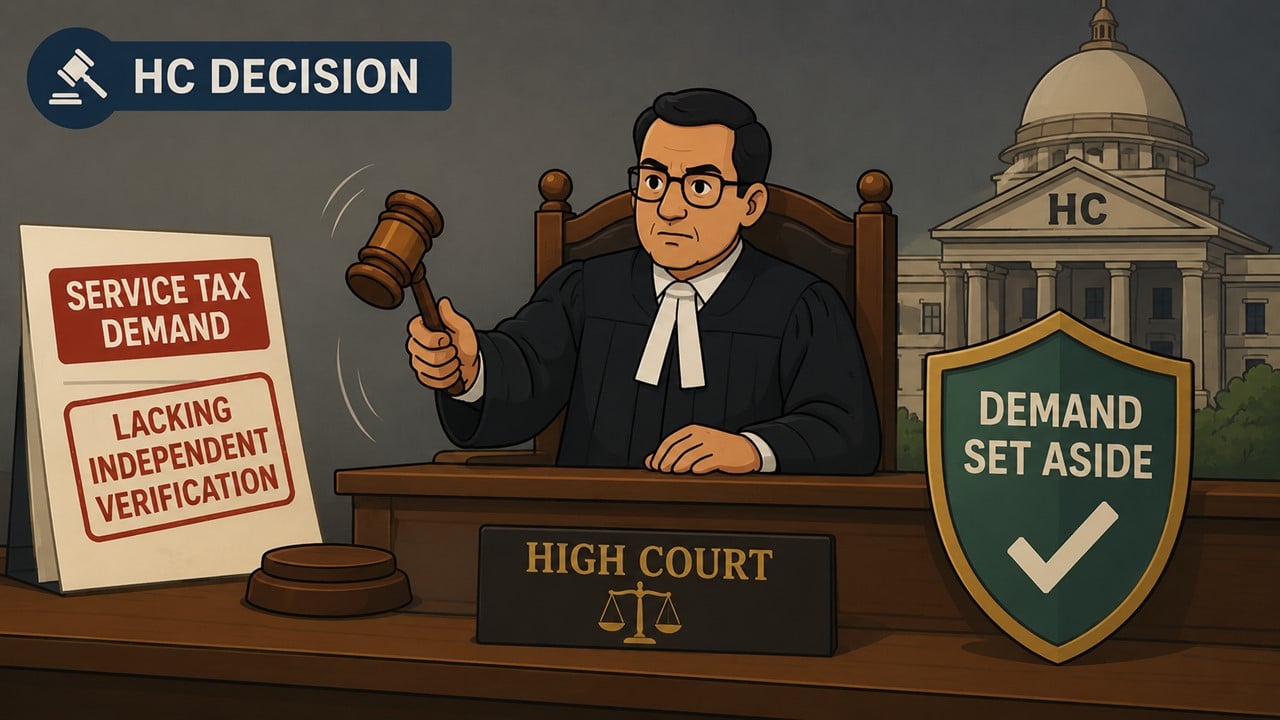
High Court quashes service tax demand based solely on Form 26AS entries and assumptions.
Form 26AS Cannot Independently Determine Service Tax Liability
 Meetu Kumari
 Jun 19, 2026
The Gauhati High Court has quashed a service tax demand of Rs.15.11 lakh raised against a road and bridge works sub-contractor, holding that liability cannot be determined solely on the basis of Form 26AS entries without independently examining the nature and taxability of the services rendered. Justice Kardak Ete set aside the adjudication order, along with the consequential interest, penalties and bank account attachment notices issued against the assessee.
The dispute arose after the Service Tax Department initiated proceedings against M/s Md Alal Uddin for the period from FY 2014-15 to June 2017 based on information obtained from Form 26AS. The department alleged non-payment of service tax and confirmed a demand of Rs.15.11 lakh along with equivalent penalty under Section 78 of the Finance Act, 1994, interest under Section 75 and an additional penalty under Section 77.

The petitioner contended that it was engaged as a sub-contractor under M/s Gammon India Ltd. in the execution of road, bridge and infrastructure projects, including works connected with the Bogibeel Rail-cum-Road Bridge Project. It argued that the services rendered formed part of exempt infrastructure projects and therefore did not attract service tax. The petitioner further submitted that Form 26AS merely reflected contractual receipts and could not, by itself, establish service tax liability.
Before the High Court, the petitioner relied on the Court’s earlier decision in Technocom v. Union of India, where similar proceedings based solely on Form 26AS had been struck down. The Revenue fairly conceded that the controversy was covered by the said judgment.
“A service tax demand founded solely on Form 26AS, without any independent examination of the nature of services rendered and without recording the statutory preconditions necessary for invocation of the extended period of limitation under Section 73 of the Finance Act, 1994, is unsustainable in law.”

The Court noted that the adjudicating authority had relied primarily on Form 26AS information without properly examining whether the services provided by the petitioner were exempt from service tax. It also observed that the extended limitation period under the proviso to Section 73(1) had been invoked without any finding of fraud, collusion, wilful misstatement, suppression of facts or intent to evade tax.
Referring extensively to the findings in Technocom, the Court reiterated that assumption of jurisdiction under the extended limitation provisions requires a clear and conclusive finding that the assessee had engaged in conduct specified under the proviso to Section 73(1).
“For invocation of the powers under the proviso to Section 73(1), there must be a conclusive finding arrived at by the Revenue authorities that the assessee had resorted to fraud, collusion, wilful misstatement, suppression of facts or contravention of law with intent to evade payment of service tax.”
Holding that the issue was squarely covered by the earlier precedent, the High Court set aside the Order-in-Original dated 08 March 2022. The Court also quashed the recovery notices issued for attachment of the petitioner’s bank accounts with State Bank of India and ICICI Bank and directed that the attachments be lifted forthwith.
Thus, the writ petition was allowed and the entire service tax demand, interest and penalties were annulled.
About Author


Meetu Kumari
Content Manager
 Studycafe
 Jodhpur, Rajasthan, India
 2264
2264My Recent Articles
- ITAT Condones 302-Day Delay, Restores Salary Assessment for Fresh VerificationPremium
- ITAT Condones Delay After Tax Consultant's Death, Restores Appeals for Fresh HearingPremium
- ITAT Remands Salary Addition, Says Taxability Depends on Salary Becoming Due, Not Mere ReceiptPremium
- ITAT Deletes TP Royalty Adjustment, Orders Fresh Review of Commission BenchmarkingPremium
- ITAT Quashes Reassessment Over Unsigned Section 148 Notice Issued to AssesseePremium
Loading suggestions…


Recent Posts
All Posts

Recent Posts
All Posts