Daughters have an equal birthright to inherit property - Apex Court
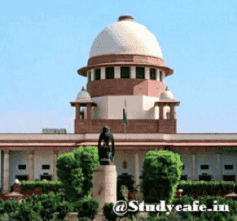
Daughters have an equal birthright to inherit property - Apex Court IN THE SUPREME COURT OF INDIA The Relevant Text of the Order as follows
 Reetu
Reetu Aug 12, 2020
IN THE SUPREME COURT OF INDIA
The Relevant Text of the Order as follows : 129. Resultantly, we answer the reference as under:(i) The provisions contained in substituted Section 6 of the Hindu Succession Act, 1956 confer the status of coparcener on the daughter born before or after amendment in the same manner as a son with the same rights and liabilities.
(ii) The rights can be claimed by the daughter born earlier with effect from 9.9.2005 with savings as provided in Section 6(1) as to the disposition or alienation, partition or testamentary disposition which had taken place before 20th day of December 2004.

(iii) Since the right in coparcenary is by birth, it is not necessary that father coparcener should be living as on 9.9.2005.
(iv) The statutory fiction of partition created by proviso to Section 6 of the Hindu Succession Act, 1956 as originally enacted did not bring about the actual partition or disruption of the coparcenary. The fiction was only for the purpose of ascertaining the share of deceased coparcener when he was survived by a female heir, of Class I as specified in the Schedule to the Act of 1956 or male relative of such female. The provisions of the substituted Section 6 are required to be given full effect. Notwithstanding that a preliminary decree has been passed the daughters are to be given a share in coparcenary equal to that of a son in pending proceedings for final decree or in an appeal.
(v) In view of the rigor of provisions of Explanation to Section 6(5) of the Act of 1956, a plea of oral partition cannot be accepted as the statutorily recognized mode of partition effected by a deed of partition duly registered under the provisions of the Registration Act, 1908 or effected by a decree of a court. However, in exceptional cases where a plea of oral partition is supported by public documents and partition is finally evinced in the same manner as if it had been affected by a decree of a court, it may be accepted. A plea of partition based on oral evidence alone cannot be accepted and to be rejected outrightly.
130. We understand that on this question, suits/appeals are pending before different High Courts and subordinate courts. The matters have already been delayed due to legal imbroglio caused by conflicting decisions. The daughters cannot be deprived of their right of equality conferred upon them by Section 6. Hence, we request that the pending matters be decided, as far as possible, within six months.About Author


Reetu
Content Manager
 Studycafe
 Delhi, Delhi, India
 8071
8071My Recent Articles
- Income Tax Guide for Indian Defence Personnel for Tax Filing, Taxable Allowances and Other Benefits
- Income Tax Return Breaking: ITR Forms released for AY 25-26
- Ex-DRT Officials Sentenced to 5 Years Rigorous Imprisonment by Madras High Court along with Rs.27 Lakh Fine
- GSTN issued Advisory on Case Sensitivity in IRN Generation
- RBI to issue Notes of Rs.10 and Rs.500 bearing Signature of Guv Malhotra
Loading suggestions…


Recent Posts


All Posts

Tags
No tags yet.
Recent Posts
All Posts
Tags
No tags yet.