Expired E-Way Bill Due to Auto-Populated Distance Is a Technical Lapse, Not Tax Evasion:
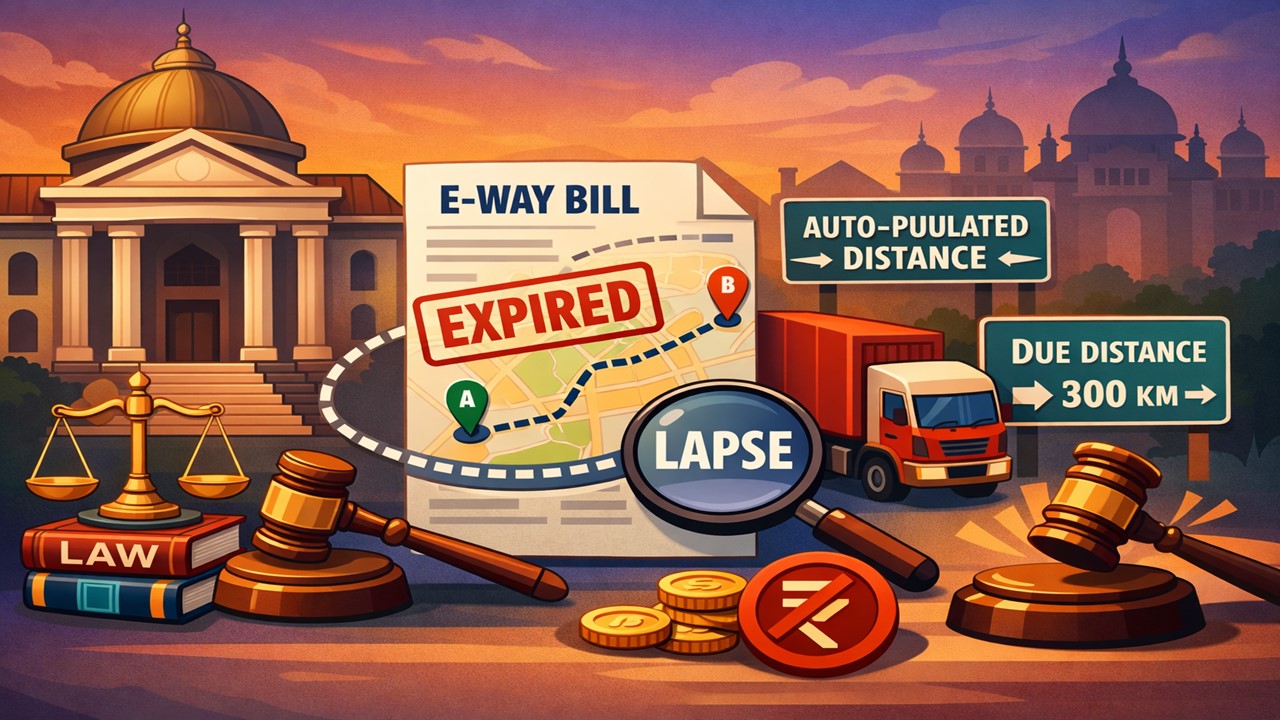
HC: Expiry of e-way bill caused by auto-populated distance error is a technical lapse and cannot justify GST penalty or seizure under Section 129.
HC Quashes GST Penalty Where Goods Were Properly Documented and Delay Arose From System-Generated E-Way Bill Error
 Meetu Kumari
 Dec 24, 2025
Expired E-Way Bill Due to Auto-Populated Distance Is a Technical Lapse, Not Tax Evasion
The petitioner, a GST-registered logistics company, was engaged to transport a motor vehicle chassis from Udham Singh Nagar (Uttarakhand) to Ghazipur (Uttar Pradesh). The movement was duly supported by a tax invoice, e-way bill, trade certificate, and temporary registration under Rule 43 of the Central Motor Vehicle Rules, 1989.
While generating the e-way bill, the system auto-populated the distance in Part-B as 170 kilometres instead of the actual distance of approximately 800 kilometres, resulting in a shorter validity period. During transit, the vehicle was intercepted after expiry of the e-way bill, though no other discrepancy was found. Goods were seized and penalty was imposed under Section 129(3) of the U.P. GST Act. The statutory appeal was dismissed, leading to the present writ petition.
Central Issue: Whether seizure of goods and imposition of penalty under Section 129(3) of the U.P. GST Act is justified when the only lapse is expiry of an e-way bill caused by an auto-populated distance error, with no intent to evade tax.
HC'S Decision: The Hon'ble High Court held that mere expiry of an e-way bill due to a technical or system-generated error cannot be equated with tax evasion. The Court observed that the goods were fully traceable, accompanied by all statutory documents, and were motor vehicle chassis that could not be clandestinely traded without registration.
The authorities were aware of the origin and destination of the goods, and the petitioner had even generated a fresh e-way bill before the penalty order was passed. In the absence of any discrepancy other than the expired e-way bill, no intention to evade tax could be attributed to the petitioner. Therefore, the seizure order and penalty were quashed, and the writ petition was allowed.
To Read Full Judgment, Download PDF Given Below
About Author


Meetu Kumari
Content Manager
Meetu Kumari is an Experienced Advocate and Content Writer with 4+ years of demonstrated history of working in the law practice industry. Skilled in Developing Content, Researching, and Drafting. Strong professional with a Bachelor of Science (B.Sc.) focused on Law from Gujarat National Law University.
Meetu Kumari is an Experienced Advocate and Content Writer with 4+ years of demonstrated history of working in the law practice industry. Skilled in Developing Content, Researching, and Drafting. Strong professional with a Bachelor of Science (B.Sc.) focused on Law from Gujarat National Law University.
 Studycafe
 Jodhpur, Rajasthan, India
 2264
2264My Recent Articles
- ITAT Condones 302-Day Delay, Restores Salary Assessment for Fresh VerificationPremium
- ITAT Condones Delay After Tax Consultant's Death, Restores Appeals for Fresh HearingPremium
- ITAT Remands Salary Addition, Says Taxability Depends on Salary Becoming Due, Not Mere ReceiptPremium
- ITAT Deletes TP Royalty Adjustment, Orders Fresh Review of Commission BenchmarkingPremium
- ITAT Quashes Reassessment Over Unsigned Section 148 Notice Issued to AssesseePremium
Up Next
Loading suggestions…


Recent Posts

All Posts

Recent Posts
All Posts