Gauhati High Court Quashes Service Tax Demand Based on Form 26AS, Healthcare Services Exempt:
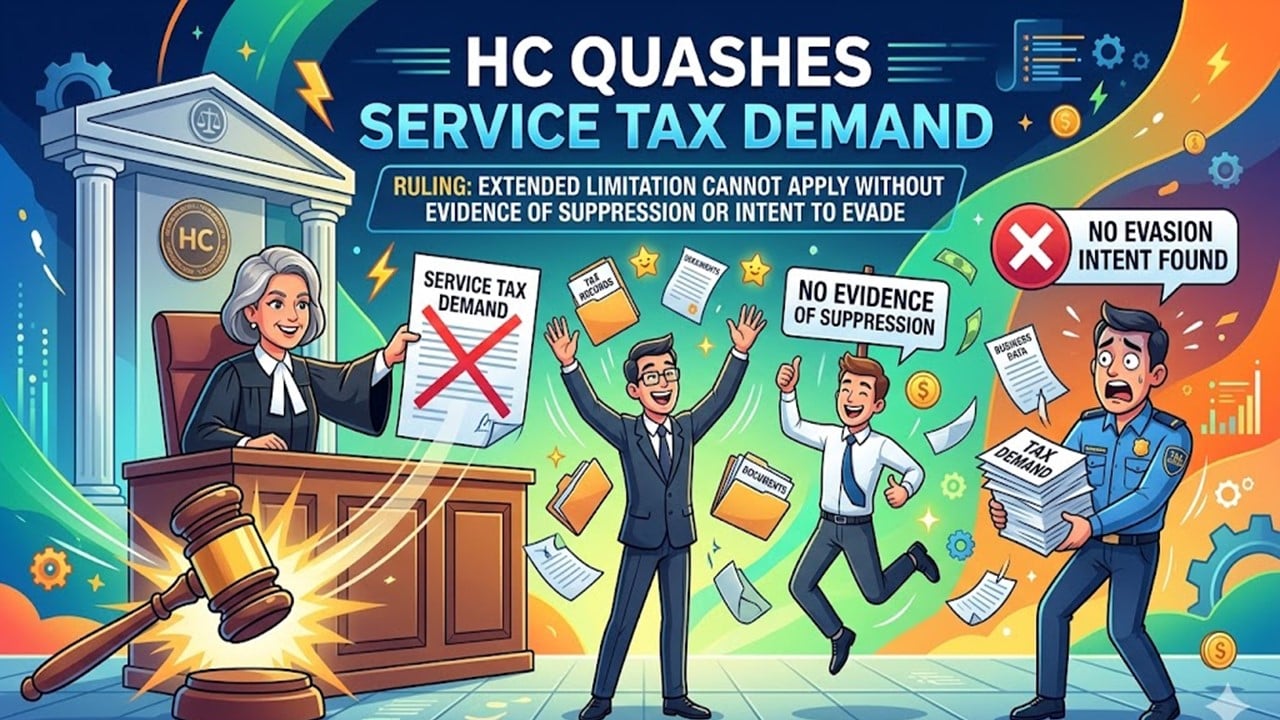
High Court Strikes Down Service Tax Order; Holds Form 26AS as Proof of Transparency Against "Suppression" Charges
High Court Quashes Service Tax Demand; No Proof to Invoke Extended Limitation
 Meetu Kumari
 Apr 24, 2026
The petitioner, Green Valley Diagnostics & Hospitals Pvt. Ltd., challenged an Order-in-Original whereby the Revenue authorities confirmed a substantial demand of Service Tax along with interest and penalties. The demand was raised by invoking the extended period of limitation under Section 73 of the Finance Act, 1994, beyond the normal period of 18 months. The department alleged that the petitioner had “suppressed” material facts with an intent to evade tax.
The petitioner, however, contended that it was under a bona fide belief that the healthcare services provided by it were exempt from Service Tax. It was further argued that all financial transactions were duly reflected in its audited books of account and Form 26AS, which were already within the knowledge of the tax authorities. Consequently, there was no question of any “suppression” or concealment of facts.
Issue Before Court: 1. Whether the Revenue could validly invoke the extended period of limitation when the taxpayer’s financial data was transparently available in Form 26AS and audited records. 2. Whether Form 26AS constitutes sufficient disclosure to negate allegations of willful suppression. 3. Whether a writ petition under Article 226 of the Constitution of India is maintainable despite the availability of an alternative statutory remedy. HC Decided:The Hon’ble Gauhati High Court quashed the Service Tax demand, holding that the invocation of the extended period of limitation was unsustainable in law.

The Court reiterated that under Section 73 of the Finance Act, the limitation period can be extended to five years only upon establishing fraud, collusion, willful misstatement, or suppression of facts with intent to evade tax. A mere difference of opinion on taxability or a bona fide belief regarding exemption does not satisfy this threshold.
The Court ruled that since the Revenue’s demand was built using the petitioner’s own audited books and Form 26AS, the charge of suppression could not be sustained. Form 26AS acts as a definitive record of financial dealings already within the Tax Department's knowledge; therefore, its completeness proves the department had the means to know the facts well within the standard limitation period. Thus, the Court invoked its writ jurisdiction under Article 226 to quash the time-barred demand and all associated penalties, concluding that when a primary tax demand is legally "out of time," the authorities exceed their jurisdiction by pursuing it. To Read Full Judgment, Download PDF Given Below
About Author


Meetu Kumari
Content Manager
 Studycafe
 Jodhpur, Rajasthan, India
 2264
2264My Recent Articles
- ITAT Condones 302-Day Delay, Restores Salary Assessment for Fresh VerificationPremium
- ITAT Condones Delay After Tax Consultant's Death, Restores Appeals for Fresh HearingPremium
- ITAT Remands Salary Addition, Says Taxability Depends on Salary Becoming Due, Not Mere ReceiptPremium
- ITAT Deletes TP Royalty Adjustment, Orders Fresh Review of Commission BenchmarkingPremium
- ITAT Quashes Reassessment Over Unsigned Section 148 Notice Issued to AssesseePremium
Loading suggestions…


Recent Posts
All Posts

Recent Posts
All Posts