GST Collections and Increased E-Way Bill Generation Suggest Steady Growth In Economic Activity:
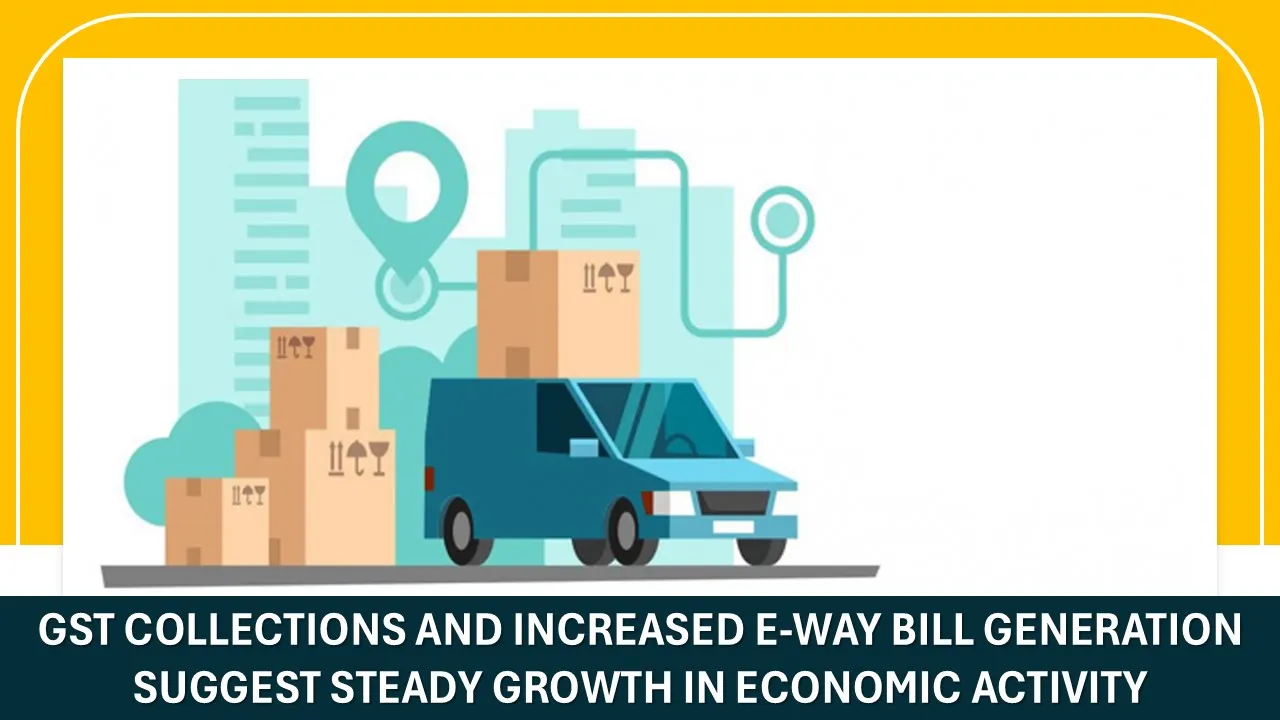
Indian economy in March 2025 reflected impressive flexibility on the back of strong domestic demand, ease inflation, and effective monetary policies.
India's Economy in March 2025: Signs of Growth Amid Global Challenges
 Saloni Kumari
 May 1, 2025
GST Collections and Increased E-Way Bill Generation Suggest Steady Growth In Economic Activity
Indian economy in March 2025 reflected impressive flexibility on the back of strong domestic demand, ease inflation, and effective monetary policies. Despite international uncertainties, most key economic indicators reflect a favourable direction for the country.
Economic Activity and Fiscal Indicators
- India's Goods and Services Tax (GST) revenue reached a record high of Rs. 1.96 lakh crore in March 2025, reaching Rs. 22.1 lakh crore for FY25, a 9.4% year-on-year increase. This growth indicates higher economic activity and improved compliance.
- Complementing this, e-way bill generation—a proxy for goods movement—soared to an all-time high of over 12 crore in March, reflecting a 20% rise from the previous month. This uptick underscores increased supply chain activity and business-to-business transactions.
- The manufacturing sector also showed good momentum, with the Purchasing Managers' Index (PMI) increasing to an eight-month high of 58.1 during March. This expansion was led by strong demand and a sharp jump in new orders.
- The services sector also showed an expansionary trend, with the Services PMI at 58.5 during March. Although this shows growth, the pace eased slightly due to weaker domestic and global demand.
- Retail inflation slowed to 4.6% in March 2025, a six-year low, led by softening food prices. The easing gave the Reserve Bank of India (RBI) some scope to help growth. The RBI, therefore, cut the repo rate by 25 basis points to 6%, the second successive rate reduction to boost domestic demand.
- Rural consumption continued to be strong, with 79.9% of the households indicating higher spending over the last year, as per NABARD's survey. This strength is due to positive agricultural results and specific government interventions.
- Consumer confidence also picked up, with RBI's Current Situation Index increasing to 95.5 in March from 93.7 in January, showing optimism regarding income and employment opportunities.
- India's banking system showed flexibility, with the gross non-performing assets (GNPA) ratio standing at 2.6% as of September 2024. Banks are found to be well-capitalised to absorb potential shocks through stress tests.
- On the external side, the deficit in the current account declined to 1.1% of GDP in Q3 FY25 from 1.8% in the preceding quarter. The foreign exchange reserves were at USD 677.8 billion as of April 11, 2025, and were an import cover of around 11 months, reflecting the nation's resilience in the external sector.
About Author


Saloni Kumari
Content Writer
Saloni is a Content Writer with 2+ years of experience at studycafe.in. She writes legal, taxation, and finance related content including GST, Income Tax etc. Skilled in translating complex judicial pronouncements and regulatory developments into clear, and reader-friendly articles. Experienced in covering judgements of ITAT, High Court, GSTAT, and news related to Income Tax, GST, and corporate law. She can be reached at [email protected].
Saloni is a Content Writer with 2+ years of experience at studycafe.in. She writes legal, taxation, and finance related content including GST, Income Tax etc. Skilled in translating complex judicial pronouncements and regulatory developments into clear, and reader-friendly articles. Experienced in covering judgements of ITAT, High Court, GSTAT, and news related to Income Tax, GST, and corporate law. She can be reached at [email protected].
 StudyCafe
 Delhi, Delhi, India
 2929
2929My Recent Articles
- Madhya Pradesh HC Quashes Section 74 GST Show Cause Notice Passed Against G R Infraprojects
- GSTAT Introduces SOP for Branch Officer-to-Branch Officer (BO-to-BO) Case Transfer Ensuring Seamless Reassignment of Cases
- GSTAT: E-Way Bills Cannot Be Invalidated Merely Because They Were Not Generated by Original Supplier
- Defective Section 129 Penalty Order Cannot Sustain Penalty Without Effective Hearing Opportunity, Holds GSTAT
- Intent to Evade Tax Not Necessary for Penalty Under Section 129 for Expired E-Way Bills, Holds GSTAT
Up Next
Loading suggestions…


Recent Posts

All Posts


Tags
No tags yet.
Recent Posts
All Posts
Tags
No tags yet.