GST Council may do away 5% Slab and shift items to 3% and 8% slabs
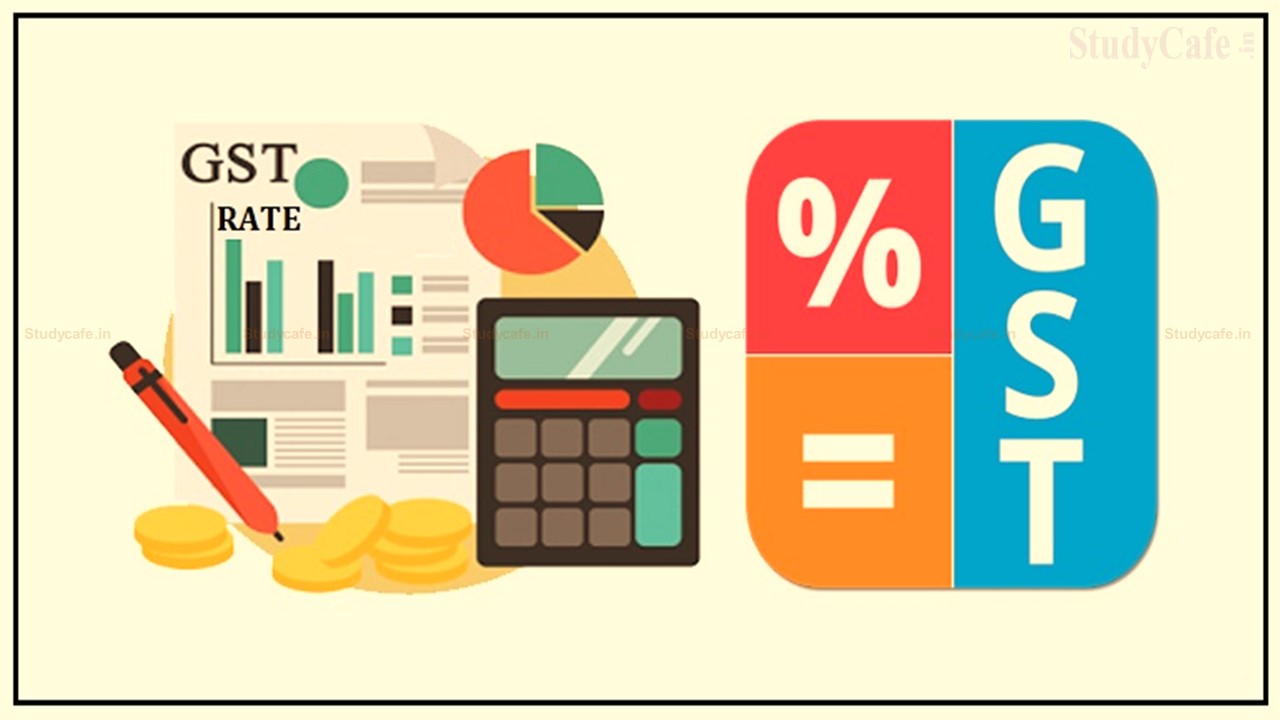
GST Council may do away 5% Slab and shift items to 3% and 8% slabs With most states on board to raise revenue so that they do not have to rely on the…
 Reetu
Reetu Apr 18, 2022
GST Council may do away 5% Slab and shift items to 3% and 8% slabs
With most states on board to raise revenue so that they do not have to rely on the Centre for compensation, the GST Council is expected to consider a proposal to do away with the 5% slab by moving some goods of mass consumption to 3% and the remaining to 8% categories at its meeting next month, according to sources.
Currently, GST has a four-tiered structure of 5%, 12%, 18%, and 28%. Furthermore, gold and gold jewellery are subject to a 3% tax. In addition, there is a list of things that are excluded from the charge, such as unbranded and unpackaged food.
According to sources, in order to increase revenue, the Council may opt to reduce the list of exempt items by transferring some non-food items to the 3% tax bracket. According to sources, discussions are underway to raise the 5% slab to either 7%, 8%, or 9%; a final decision will be made by the GST Council, which includes finance ministers from both the Centre and the states.
According to calculations, every 1% increase in the 5% slab, which primarily includes packaged food goods, will generate an additional Rs 50,000 crore in revenue each year. Although different possibilities are being considered, the Council is expected to agree on an 8% GST (Goods and Services Tax) for the majority of commodities that presently receive a 5% fee.
Essential commodities are either exempted or taxed at the lowest rate under GST, whilst luxury and demerit items are taxed at the highest rate. Luxury and sin items are subject to an additional cess on top of the highest 28 percent slab. This cess is collected to reimburse states for revenue losses caused by the implementation of the GST.
With the GST compensation scheme about to expire in June, states must become self-sufficient and no longer rely on the Centre to bridge the revenue shortfall in GST collection.
Last year, the Council formed a team of state ministers led by Karnataka Chief Minister Basavaraj Bommai to recommend methods to increase revenue by rationalising tax rates and resolving anomalies in the tax structure. The ministerial committee is expected to complete its proposals by early next month, after which they will be presented to the Council at its next meeting, which is expected to be in mid-May, for a final decision.
When the GST was implemented on July 1, 2017, the Centre pledged to compensate states for five years, until June 2022, and to protect their revenue at a rate of 14% each year over the base year revenue of 2015-16.
Over the years, the GST Council has frequently caved in to trade and industry pressures and reduced tax rates. For example, the number of commodities subject to the highest 28% tax fell from 228 to less than 35. With the Centre refusing to extend GST compensation beyond five years, states are realising that increasing income through increased taxes is the Council's only alternative.
About Author


Reetu
Content Manager
Reetu is a Content Writer with 4+ years of experience in GST, Income Tax, Finance, Company Law, Education and Career Related Content. She is a B.COM (Honrs.) Graduate.
Reetu is a Content Writer with 4+ years of experience in GST, Income Tax, Finance, Company Law, Education and Career Related Content. She is a B.COM (Honrs.) Graduate.
 Studycafe
 Delhi, Delhi, India
 8071
8071My Recent Articles
- Income Tax Guide for Indian Defence Personnel for Tax Filing, Taxable Allowances and Other Benefits
- Income Tax Return Breaking: ITR Forms released for AY 25-26
- Ex-DRT Officials Sentenced to 5 Years Rigorous Imprisonment by Madras High Court along with Rs.27 Lakh Fine
- GSTN issued Advisory on Case Sensitivity in IRN Generation
- RBI to issue Notes of Rs.10 and Rs.500 bearing Signature of Guv Malhotra
Up Next
Loading suggestions…


Recent Posts

All Posts
Recent Posts
All Posts