GSTN Launches E-Way Bill 2.0 with New Features and Dual Portal Access:
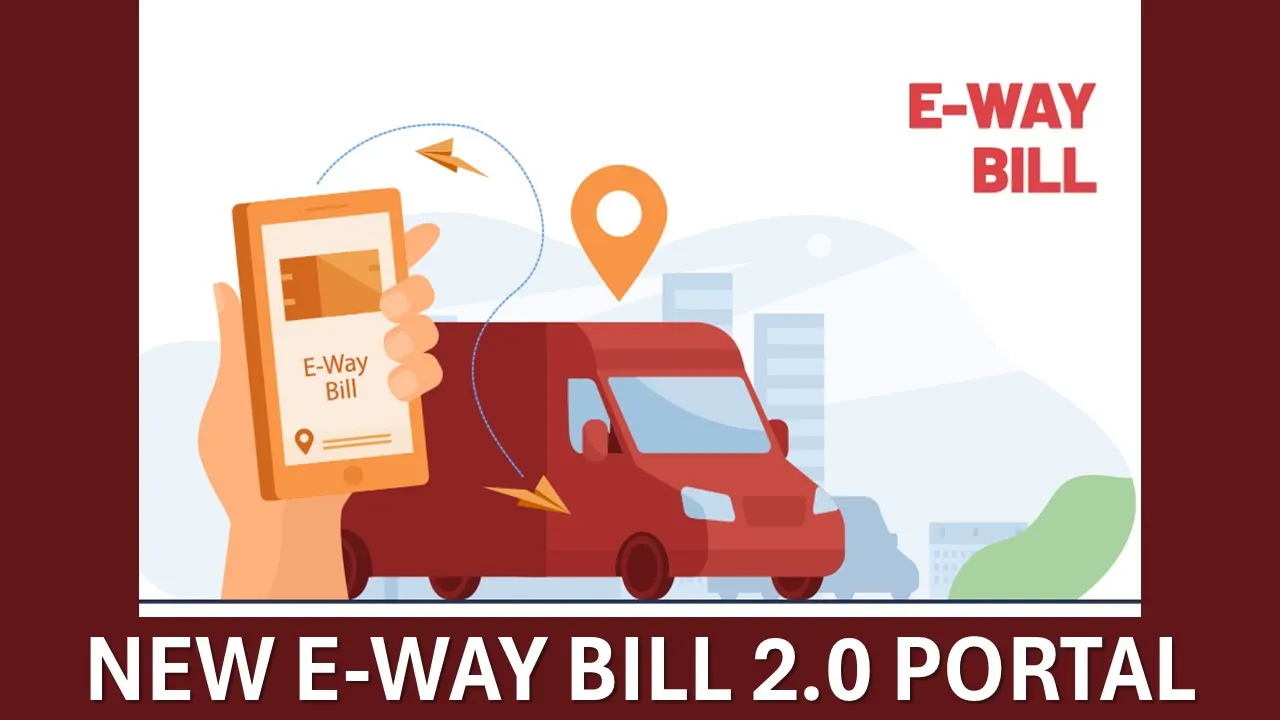
The Goods and Services Tax Network (GSTN) informs about the new E-Way Bill 2.0 portal to be launched by the NIC from July 01, 2025, at ewaybill2.gst.gov.in.
NIC to Introduce a New E-Way Bill 2.0 Portal at ewaybill2.gst.gov.in
 Saloni Kumari
 Jun 17, 2025
Table of Contents

GSTN Launches E-Way Bill 2.0 with New Features and Dual Portal Access
Goods and Services Tax Network (GSTN) is gratified to inform that the National Informatics Centre (NIC) is introducing a new E-Way Bill 2.0 portal at ewaybill2.gst.gov.in. The new E-Way Bill 2.0 will be launched on July 01, 2025. The new feature has improved E-Way Bill functionalities and enhanced interoperability between the existing E-Way Bill 1.0 Portal (ewaybillgst.gov.in) and the new portal.
Objective
The new E-Way Bill 2.0 portal was created because taxpayers wanted services to keep working even during emergencies. It allows users to access important E-Way Bill features from different portals, making it easier for taxpayers and transporters to continue their work without problems.2. New Interoperable Services
The below-mentioned additional services will be made available on the E-Way Bill 2.0 portal for E-Way Bills generated on any of these portals (E-Way Bill 1.0 or E-Way Bill 2.0):- Generation of E-Way Bill based on Part-A details entered by the supplier
- Generation of Consolidated E-Way Bills
- Extension of validity of E-Way Bills
- Update of transporter details
- Retrieval of consolidated E-Way Bills
- Generation of E-Way Bills
- Updating of vehicle details
- Printing of E-Way Bills
System Unification and Alignment
- Both portals will operate on real-time coordination, with E-Way Bill data automatically copied to both systems within seconds.
- If there’s a technical problem or downtime on the E-Way Bill 1.0 portal, taxpayers can use the E-Way Bill 2.0 portal to perform any key operation (such as updating Part B) and use the E-Way Bill slip generated from it.
- This two-portal system is made to reduce reliance on just one portal and to make sure the business keeps running smoothly.
Availability Through API
All these designated services will also be made accessible to taxpayers and logistics operators through APIs, not just on the web portal. These APIs are currently set up in a test environment (called a sandbox) so users can try them out and connect them to their systems.Key Advantages
In the future, data from both the E-Way Bill 1 and E-Way Bill 2 portals will be fully combined. This means users won’t have to rely only on the E-Way Bill 1 portal during technical issues. The E-Way Bill 2 portal is built to sync data with the main portal within seconds. You can now use both portals interchangeably; for instance, you can update E-Way Bills made on one portal using the other. If the main E-Way Bill 1 portal is down, you can still update Part B details using the E-Way Bill 2 portal. Both versions of the E-Way Bill slip are valid and can be used. Taxpayers and transporters are advised to make themselves aware of the newly launched features and connect API services if needed. If you need help or have questions, you can contact the GST Helpdesk or check the user manuals available on the portals.About Author


Saloni Kumari
Content Writer
Saloni is a Content Writer with 2+ years of experience at studycafe.in. She writes legal, taxation, and finance related content including GST, Income Tax etc. Skilled in translating complex judicial pronouncements and regulatory developments into clear, and reader-friendly articles. Experienced in covering judgements of ITAT, High Court, GSTAT, and news related to Income Tax, GST, and corporate law. She can be reached at [email protected].
Saloni is a Content Writer with 2+ years of experience at studycafe.in. She writes legal, taxation, and finance related content including GST, Income Tax etc. Skilled in translating complex judicial pronouncements and regulatory developments into clear, and reader-friendly articles. Experienced in covering judgements of ITAT, High Court, GSTAT, and news related to Income Tax, GST, and corporate law. She can be reached at [email protected].
 StudyCafe
 Delhi, Delhi, India
 2931
2931My Recent Articles
- Rs 843.97 Crore Bogus Political Party Donation Racket Unearthed in Gujarat, Income Tax Dept Files Complaint With CID (Crime)
- Retired Central GST Commissioner Kidnapped by Unknown Persons, Assailants Nabbed Within Hours
- Madhya Pradesh HC Quashes Section 74 GST Show Cause Notice Passed Against G R Infraprojects
- GSTAT Introduces SOP for Branch Officer-to-Branch Officer (BO-to-BO) Case Transfer Ensuring Seamless Reassignment of Cases
- GSTAT: E-Way Bills Cannot Be Invalidated Merely Because They Were Not Generated by Original Supplier
Up Next
Loading suggestions…


Recent Posts

All Posts
Tags
Recent Posts
All Posts