HC Rejects Advocates Plea in Corruption Case Involving Voice Sample Evidence:
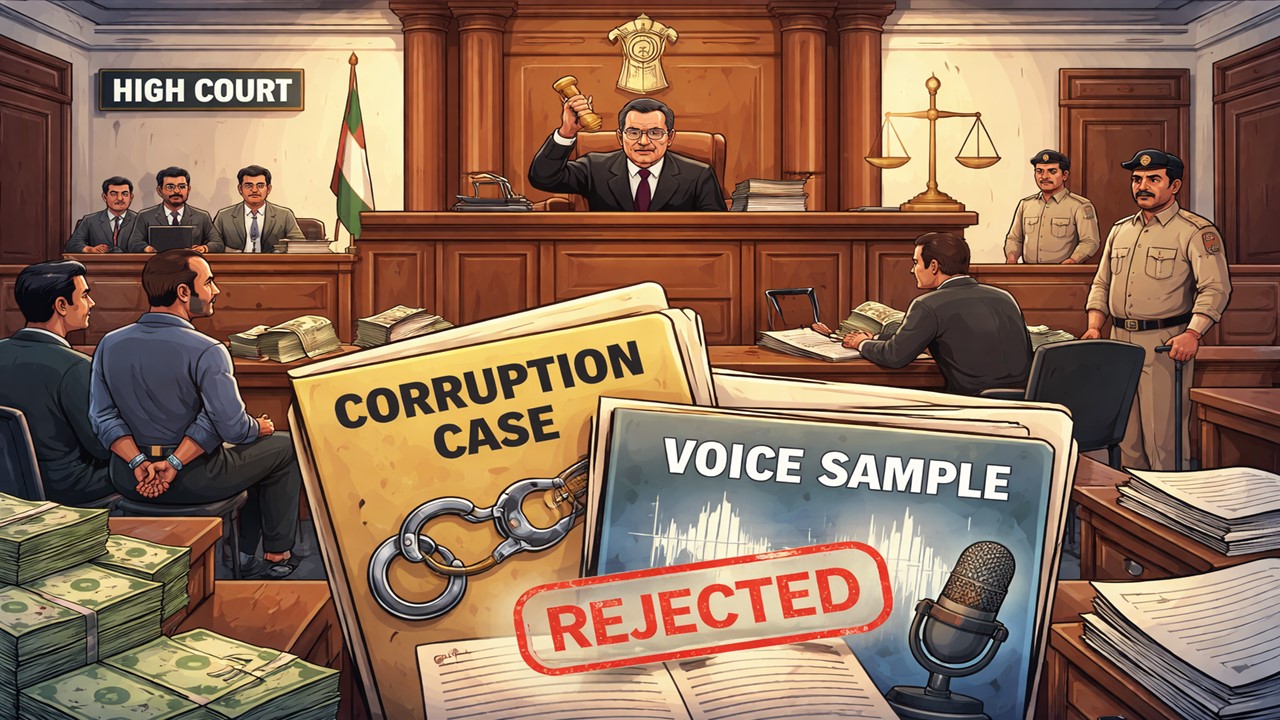
High Court rejected a plea to quash corruption proceedings against an advocate after forensic voice samples matched, proving a prima facie case.
Court Refuses to Intervene in Anti-Corruption Bureau Investigation against Advocate
 Meetu Kumari
 Mar 18, 2026
Issue Raised: Whether criminal proceedings under the Prevention of Corruption Act can be quashed when prima facie evidence, including voice analysis, indicates abetment by the accused advocate.
HC Held: The High Court refused to interfere and dismissed the application, holding that there was sufficient prima facie material to proceed with the case. It noted that the forensic voice analysis, which matched the applicant’s voice with the recorded conversations, provided a significant link connecting him to the alleged offence. At this stage, the Court observed, it is not required to conduct a detailed evaluation of evidence but only to see whether the material on record discloses a prima facie case.
The Court further clarified that merely being an advocate does not grant immunity from prosecution under the Prevention of Corruption Act. If the role attributed to the applicant falls within the scope of “abetment” under Section 12, he can be proceeded against in accordance with law. It also observed that the correctness of charges and applicability of specific provisions can be examined at the stage of framing of charges. Finding no grounds to quash the proceedings, the Court allowed the prosecution to continue.
To Read Full Judgment, Download PDF Given BelowAbout Author


Meetu Kumari
Content Manager
 Studycafe
 Jodhpur, Rajasthan, India
 2264
2264My Recent Articles
- ITAT Condones 302-Day Delay, Restores Salary Assessment for Fresh VerificationPremium
- ITAT Condones Delay After Tax Consultant's Death, Restores Appeals for Fresh HearingPremium
- ITAT Remands Salary Addition, Says Taxability Depends on Salary Becoming Due, Not Mere ReceiptPremium
- ITAT Deletes TP Royalty Adjustment, Orders Fresh Review of Commission BenchmarkingPremium
- ITAT Quashes Reassessment Over Unsigned Section 148 Notice Issued to AssesseePremium
Loading suggestions…


Recent Posts

All Posts



Recent Posts
All Posts