High Court Rejects Bail Plea in GST Input Tax Credit Fraud:
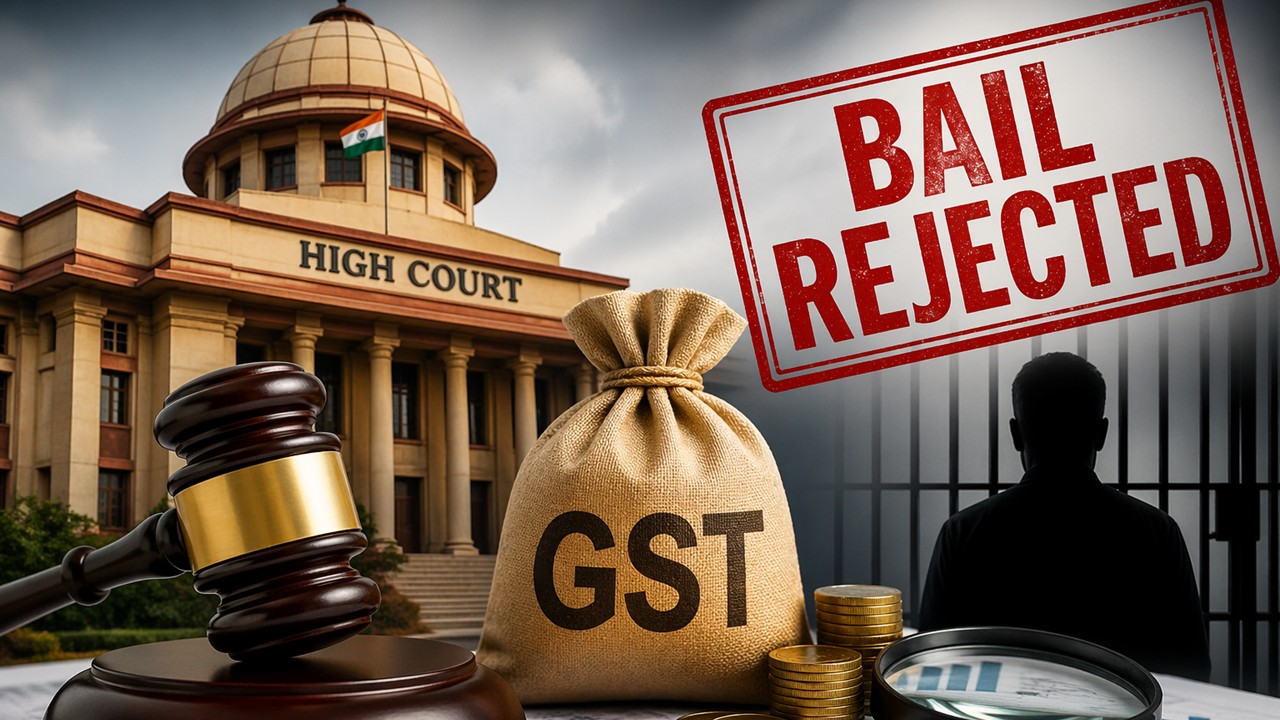
High Court refused anticipatory bail for accused in a GST fraud case, citing the severity of economic crimes and the need for custodial interrogation.
HC Rejects Anticipatory Bail in Rs. 54 Cr GST Fake Invoice Case
 Meetu Kumari
 Apr 23, 2026
High Court Rejects Bail Plea in GST Input Tax Credit Fraud
The applicants, Rohan Tanna and Chandrasekhar Chandrakar, approached the Chhattisgarh High Court seeking anticipatory bail in connection with an investigation conducted by the Directorate General of Goods and Services Tax Intelligence (DGGI). The investigation alleged that M/s Shristi Construction, a proprietorship concern, was a non-existent “paper entity” used to fraudulently generate and pass on Input Tax Credit (ITC) without any actual supply of goods. Analysis of e-way bill data reportedly confirmed that no vehicles were used for the claimed transactions, indicating that no physical movement of goods had taken place. It was further alleged that the applicants were part of a larger syndicate operating a chain of shell entities, issuing fake invoices worth approximately Rs. 54.40 crores, leading to wrongful ITC claims of about Rs. 9.79 crores and causing substantial loss to the public exchequer.
Central Issue: Whether the applicants are entitled to anticipatory bail under Section 438 CrPC (now Section 482 BNSS) in a case involving alleged large-scale GST fraud and ongoing investigation into a structured ITC evasion racket.
HC's Ruling: The Chhattisgarh High Court rejected the anticipatory bail applications. The Court observed that economic offences of this nature have a deep-rooted impact on the financial system and are to be treated as a distinct category of crime due to their effect on public revenue and national interest. It noted that the material placed on record prima facie indicated the existence of shell entities and the involvement of the applicants in managing such firms.
The Court further held that custodial interrogation was necessary to trace the full extent of the alleged ITC fraud and the network of entities involved in the “downward chain” of transactions. Emphasising that anticipatory bail is an exceptional remedy, the Court found no extraordinary circumstances justifying its grant in a case involving deliberate and organised fraud against the tax system. Accordingly, the applications were dismissed.
To Read Full Judgment, Download PDF Given Below
About Author


Meetu Kumari
Content Manager
Meetu Kumari is an Experienced Advocate and Content Writer with 4+ years of demonstrated history of working in the law practice industry. Skilled in Developing Content, Researching, and Drafting. Strong professional with a Bachelor of Science (B.Sc.) focused on Law from Gujarat National Law University.
Meetu Kumari is an Experienced Advocate and Content Writer with 4+ years of demonstrated history of working in the law practice industry. Skilled in Developing Content, Researching, and Drafting. Strong professional with a Bachelor of Science (B.Sc.) focused on Law from Gujarat National Law University.
 Studycafe
 Jodhpur, Rajasthan, India
 2264
2264My Recent Articles
- ITAT Condones 302-Day Delay, Restores Salary Assessment for Fresh VerificationPremium
- ITAT Condones Delay After Tax Consultant's Death, Restores Appeals for Fresh HearingPremium
- ITAT Remands Salary Addition, Says Taxability Depends on Salary Becoming Due, Not Mere ReceiptPremium
- ITAT Deletes TP Royalty Adjustment, Orders Fresh Review of Commission BenchmarkingPremium
- ITAT Quashes Reassessment Over Unsigned Section 148 Notice Issued to AssesseePremium
Up Next
Loading suggestions…


Recent Posts

All Posts


Recent Posts
All Posts