High Court Sets Aside GST Order After GST Consultant Neglects SCN:
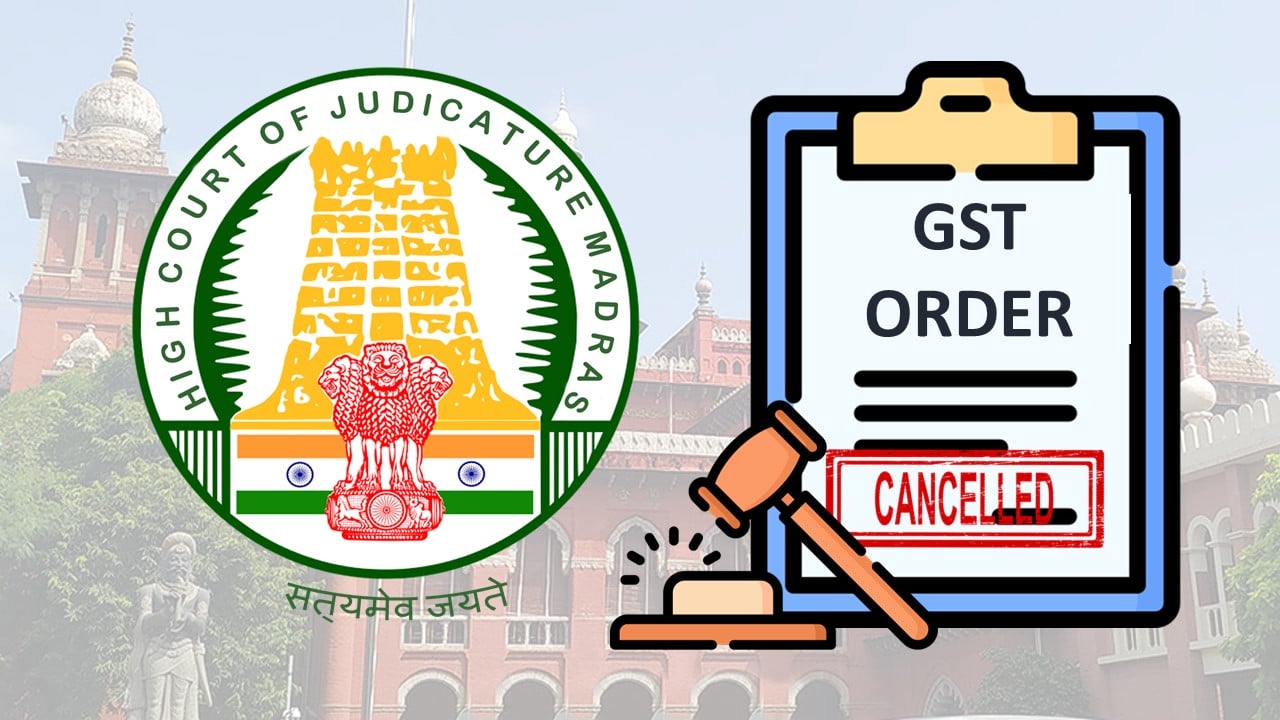
The high court set aside the order issued without giving an opportunity for a personal hearing.
High Court Sets Aside GST Order Over Neglected SCN by GST Consultant
 Nidhi
Nidhi Jul 9, 2025
Table of Contents

High Court Sets Aside GST Order After GST Consultant Neglects SCN
The petitioner filed a writ petition against an order dated 16.12.2023 and a summary order dated 25.02.2025. One of these orders was passed by the first respondent (state tax officer), and the other was passed by the second respondent (the Deputy Commissioner (ST)).
Petitioner's Arguments
The petitioner's learned counsel submitted that the petitioner received a show cause notice for the year 2017-18. This SCN was uploaded on the GST portal, and the petitioner's GST consultant did not inform the petitioner about the receipt of such notice. Due to this, after the petitioner came to know about the assessment order, He filed an appeal to the Deputy Commissioner (ST), challenging the order. However, since the petitioner's appeal was delayed by 29 days, his appeal was rejected. Additionally, the learned counsel also stated that the petitioner is willing to deposit 25% of the disputed tax if the court sets aside the order and sends it back to the Appellate Authority for fresh consideration and if the court gives direction to de-freeze the bank account which has been frozen due to the matter.Madras High Court Decision
The high court observed that the order was passed without giving a chance of a personal hearing to the petitioner. Just uploading a notice on the portal is not an effective service. The court held that the tax officer must explore other alternatives to send notices as prescribed under Section 169 of the GST Act by way of RPAD. Therefore, the court set aside the order and gave the following directions:- The matter was sent back to the second respondent, i.e., Deputy Commissioner (ST).
- The petitioner is given liberty to deposit 25% of the disputed tax within four weeks.
- The petitioner must file a reply along with the required documents within two weeks.
- The first respondent (the state tax officer) must consider the reply filed by the petitioner and then issue a 14-day notice giving a chance of a personal hearing to the petitioner.
- The first respondent is also directed to unfreeze the petitioner's bank account after the petitioner pays 25% of the disputed tax.
About Author


Nidhi
Content Writer
Nidhi is a skilled content writer specializing in personal finance. She creates clear, engaging articles on mutual funds, investments, insurance, and wealth-building strategies. With a passion for simplifying complex financial topics, Nidhi helps readers make informed money decisions with confidence. She can be reached at [email protected]
Nidhi is a skilled content writer specializing in personal finance. She creates clear, engaging articles on mutual funds, investments, insurance, and wealth-building strategies. With a passion for simplifying complex financial topics, Nidhi helps readers make informed money decisions with confidence. She can be reached at [email protected]
 Studycafe
 New Delhi, Delhi, India
 1832
1832My Recent Articles
- Karnataka High Court Gives Another Chance in GST Matter Due to Lack of Hearing
- Delay Should Be Condoned if Explanation is Unrefuted: ITAT
- Non-Service of Income Tax Notice, Ill health of taxpayer, ITAT condones Appeal filing delay
- Books of Accounts Cannot be Rejected Without Any Specific Defect: ITAT Kolkata
- Karnataka High Court Sends ITC Matter Back to GST Authorities for Reconsideration
Up Next
Loading suggestions…


Recent Posts
All Posts

Recent Posts
All Posts