Important Rule Changes That Have Taken Effect in India Since July 1, 2026:
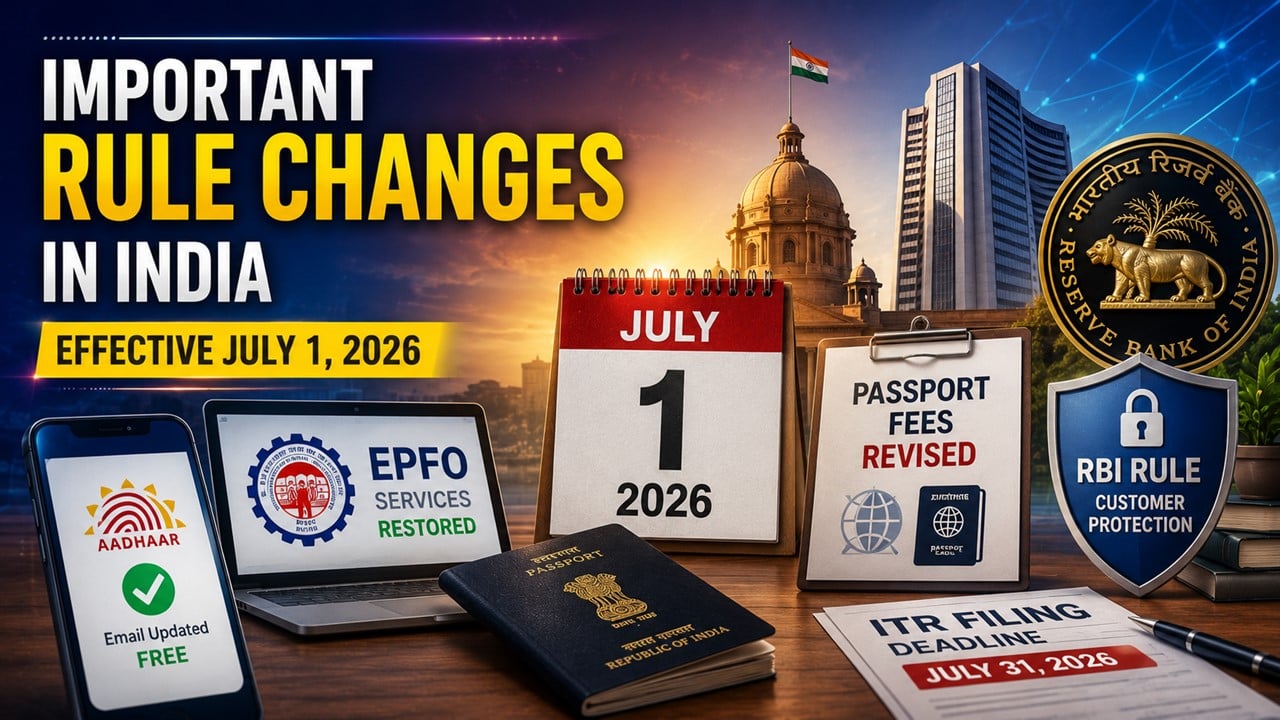
From EPFO and Aadhaar to passport fees, RBI rules and ITR filing- here's everything that changed from July 1, 2026.
India's New Rules You Should Know
 Vanshika verma
 Jul 5, 2026
Table of Contents

Over the past few days, a number of significant rule changes have been implemented throughout India. The updates on EPFO services, Aadhaar, passport fees, banking rules and income tax filing that have started to come into effect since July 1, 2026 will affect millions of people. Here's a simple look at what's changed.
EPFO Online Services Are Back
After a five-day maintenance and system upgrade, the Employees' Provident Fund Organisation (EPFO) has restored all its online services. The services were unavailable from June 26 to June 30 because of a major software and database upgrade. Since July 1, members can once again access all EPFO online facilities without any interruption.

Updating Your Aadhaar Email is Now Free
Good news for Aadhaar holders. Since July 1, the Unique Identification Authority of India (UIDAI) has made it free to update the email address linked to your Aadhaar through the Aadhaar mobile app. Earlier, users had to pay Rs 75 for this service. The fee waiver will remain available until December 31, 2026.
Passport Application Fees Have Increased
The Ministry of External Affairs has increased the fees for both normal and Tatkaal passport applications from July 1. The revised charges apply to passport applications made in India as well as abroad. This is the first major increase in passport fees since 2012.
Type of passport | Old Price | New Price (Effective July 1, 2026) |
36-page booklet (Non-tatkaal) | Rs. 1,500 | Rs. 2,500 |
36-page booklet (Tatkaal) | Rs. 3,500 | Rs. 5,000 |
60-page booklet (Non-tatkaal) | Rs. 2,000 | Rs. 3,500 |
60-page booklet (Tatkaal) | Rs. 4,000 | Rs. 6,000 |
36-page booklet for minors (Non-Tatkaal) | Rs. 1,000 | Rs. 1,750 |
Police Clearance Certificate | Rs. 500 | Rs. 750 |

New RBI Rule Protects Customers From Mis-selling
The Reserve Bank of India (RBI) has introduced a new rule to protect customers from being mis-sold financial products such as insurance policies or mutual funds. Since July 1, if a customer is wrongly sold such products, they can now claim a full refund and may also receive compensation for any financial losses suffered because of the mis-selling.
Income Tax Return Filing Deadline This Month
July is also an important month for taxpayers. Individuals must file their Income Tax Return (ITR) by July 31, 2026, to avoid late filing penalties.
People with salary income and only bank interest as additional income generally need to file ITR-1. People with more than one house, investing in stocks or mutual funds or earning more than Rs 50 lakh per annum generally have to file ITR-2. Taxpayers are advised to complete the filing process well before the deadline through the official Income Tax portal.
About Author


Vanshika verma
Content Writer
 Studycafe
 Delhi, Delhi, India
 2065
2065My Recent Articles
- ITAT Condones 216-Day Delay in Income Tax Appeal, Remands Case to CIT(A) for Fresh Hearing on Merits
- ITAT Gives Taxpayer Another Chance, Orders Fresh Assessment After Condoning Delay
- ITAT Remands Section 80G Approval Application to CIT (Exemptions) for Fresh Consideration in Light of CBDT Circular on Delay Condonation
- ITAT Sets Aside Ex-Parte CIT(A) Order Over Alleged Wrong Email Notice, Directs Fresh Hearing After Service at Registered Email Address
- Bihar Vigilance Bureau Arrests Two PHC Employees in Rs 8,600 Bribery Case
Loading suggestions…


Recent Posts
All Posts

Tags
Recent Posts
All Posts