Instant Mixes Flour of Dosa and Idli subject to 18% GST; Can't be Classified as "Sattu": Gujarat AAAR:
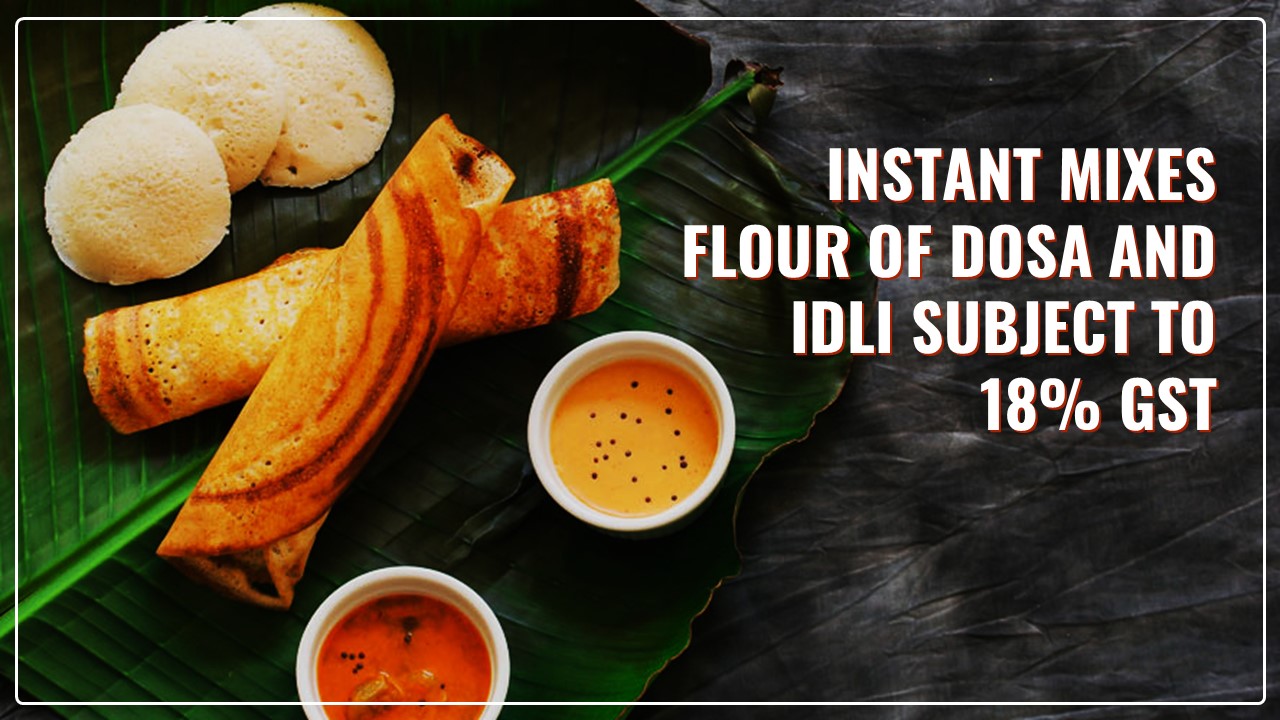
The Gujarat AAAR has ruled out that instant mixes like idli, dosa and khaman flour aren't like sattu and should have an 18% GST.
Instant Mixes Flour of Dosa and Idli cann't be classifed as Sattu and subject to 18% GST
 Editor
 Jun 11, 2024
Instant Mixes Flour of Dosa and Idli subject to 18% GST; Can't be Classified as "Sattu": Gujarat AAAR
The Gujarat Appellate Authority for Advance Ruling (GAAAR) has ruled out that instant mixes like idli, dosa, and khaman flour don't fit into the category of chhatua or sattu, and therefore should be subject to an 18% GST. Kitchen Express Overseas Ltd approached the AAAR against the ruling provided by GST AAR and contended that their flour mixes, which necessitate cooking, should be categorized as "ready to cook" rather than "ready to eat." The Compan sells seven flour mixes which include khaman, gota, dahi-wada, dalwada, dhokla, idli and dosa in powder form and they are similar to Sattu, so their products should fall under the 5% GST rate.
The appellants’ argument was dismissed by GAAAR by saying that the ingredients used in “instant flour mixes” are not those specified for Sattu under GST rules. Sattu qualifies for a 5% tax rate according to the CBIC circular, the appellant's products contain additional ingredients like spices, unlike traditional Sattu. The GAAAR emphasized that the necessity for food preparation processes doesn't exempt the products from an 18% GST. Abhishek Jain from KPMG highlighted that disputes over classification are frequent in GST litigation.
It is highlighted that despite circulars being issued differing interpretations have often compounded challenges in GST compliance. The Executive Director of a Company said that the Gujarat Appellate Authority for Advance Ruling upheld the Advance Ruling Authority's decision to classify various 'Kitchen Express' flours, such as Khaman and Dhokla under Chapter Heading 2106 90 99, subjecting them to an 18% GST rate.
This classification was done on the basis of the presence of additives like sugar, salt and spices that made them different from simple flours classified under chapters 1101, 1102 or 1106 which are taxed at 5%. It is explained that Chapter Heading 2106 90 99 covers ‘ready to cook’ food preparations and rejected the appellant's contention with respect to ‘sattu’ emphasising a higher tax rate because the appellant’s products had a significant quantity of ingredients.
My Recent Articles
- ITR Filing 2023-24: How to Download and Understand Form 26AS for Tax Filing
- Reliance Power now a Debt-Free Company; Paid all its Debts and Remaining Dues
- GST Teams step up action against Illegal Fuel resale in North Kerala
- GST Officer Voluntarily Surrenders before Jalandhar Court
- IDBI Bank Receives Rs 2,702 Crore Income Tax Refund for 2016-17
Up Next
Loading suggestions…


Recent Posts


All Posts



Tags
No tags yet.
Recent Posts
All Posts
Tags
No tags yet.