ITAT Deletes Rs 11.17 Crore ESOP & ISOP Disallowance, Allows Claim as Revenue Expenditure:
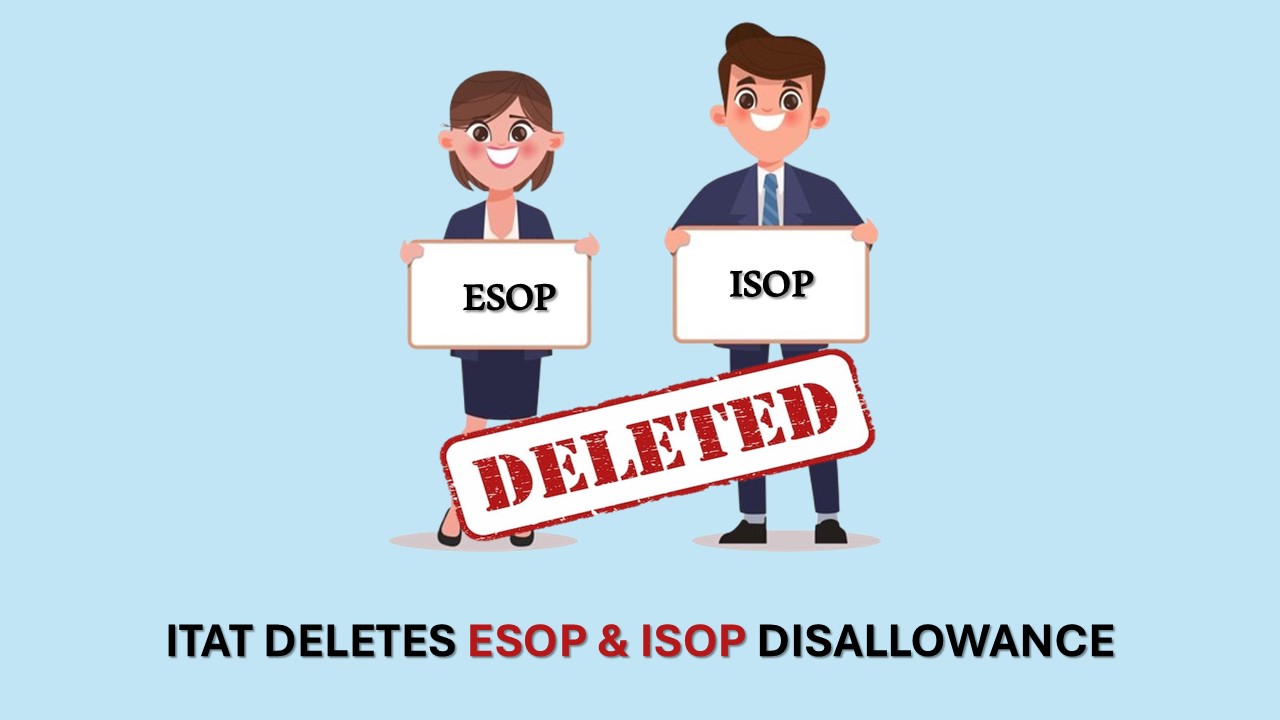
ITAT deletes Rs. 11.17 crore ESOP & ISOP disallowance, holding expenditure as deductible under Section 37(1) being wholly and exclusively for business purposes.
Tribunal holds that stock-based employee compensation costs under ESOP and ISOP are deductable under sec 37(1)
 Meetu Kumari
 Aug 14, 2025
ITAT Deletes Rs 11.17 Crore ESOP & ISOP Disallowance, Allows Claim as Revenue Expenditure
The appeal in a recent case was filed before the ITAT due to the rejection of Rs. 11.17 crore of employee benefit expenses under an Employee Stock Option Plan (ESOP) and an International Stock Ownership Plan (ISOP). These plans were established and operated by the foreign holding company, and the assessee reimbursed the share of cost relating to Indian employees in terms of vesting or contribution conditions. The monies were indeed paid, tax was deducted at source, and the expenses were accounted for. The Assessing Officer disallowed the claim under Section 37(1) as the liability was contingent, linked to employee actions such as vesting or continued service, and partly capital in nature due to its connection with share capital.
The CIT(A) supported the disallowance, noting similar findings in earlier years, and observed that the High Court of Karnataka's ruling in Biocon Limited, relied upon by the assessee, was under challenge before the Supreme Court.
Main issue: Whether the payment of ESOP and ISOP expenses to the holding company, supported by actual payment and TDS deduction, amounts to allowable revenue expenditure under Section 37(1) or is deemed to be of a contingent or capital nature.
[related id="390171]
ITAT’s Decision: The Tribunal granted the appeal and struck down the disallowance. The Tribunal held that the holding company was the source of the ESOP and ISOP, that the assessee did not issue any shares, and that the capital structure remained unchanged. ISOP had arisen out of the holding company, entailed no issue of shares by the assessee, and did not change its capital structure. The liability was held to be real and authentic during the year, shown by cross-charge invoices, foreign remittance records, and perquisite reporting in the hands of employees.
The Bench applied the principle of commercial expediency as given in Sassoon J. David & Co. (P) Ltd. v. CIT and CIT v. Walchand & Co., and relied on Biocon Ltd. to conclude that such costs are part of employee remuneration and deductible under Section 37(1). The disallowance of Rs. 11.17 crore was deleted. Interest under Section 234C was directed to be recomputed based on returned income, while reopening grounds were left open as academic.
Therefore, the appeal was partly allowed in favour of the assessee.
To Read Full Judgment, Download PDF Given Below
About Author


Meetu Kumari
Content Manager
Meetu Kumari is an Experienced Advocate and Content Writer with 4+ years of demonstrated history of working in the law practice industry. Skilled in Developing Content, Researching, and Drafting. Strong professional with a Bachelor of Science (B.Sc.) focused on Law from Gujarat National Law University.
Meetu Kumari is an Experienced Advocate and Content Writer with 4+ years of demonstrated history of working in the law practice industry. Skilled in Developing Content, Researching, and Drafting. Strong professional with a Bachelor of Science (B.Sc.) focused on Law from Gujarat National Law University.
 Studycafe
 Jodhpur, Rajasthan, India
 2264
2264My Recent Articles
- ITAT Condones 302-Day Delay, Restores Salary Assessment for Fresh VerificationPremium
- ITAT Condones Delay After Tax Consultant's Death, Restores Appeals for Fresh HearingPremium
- ITAT Remands Salary Addition, Says Taxability Depends on Salary Becoming Due, Not Mere ReceiptPremium
- ITAT Deletes TP Royalty Adjustment, Orders Fresh Review of Commission BenchmarkingPremium
- ITAT Quashes Reassessment Over Unsigned Section 148 Notice Issued to AssesseePremium
Up Next
Loading suggestions…


Recent Posts
All Posts

Recent Posts
All Posts